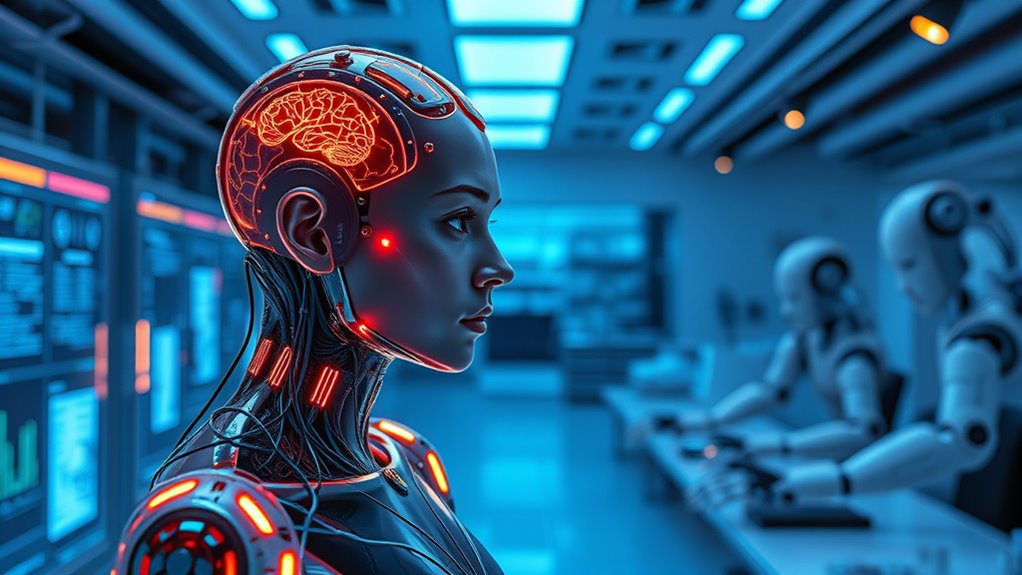

Transhumanism is shaping the future of human enhancement by blending advanced science and AI to boost your physical and mental abilities. It aims to help you transcend limitations through seamless technology integration, improving cognition, health, and skills. While exciting, these changes raise ethical questions about identity, social inequality, and privacy. To explore how responsible progress can guarantee everyone benefits, keep going to discover more insights about the future of human evolution.

Get health and wellness essentials delivered free with Prime
- Fast, free delivery on millions of items
- Prime Video, Amazon Music and more included
- Member-only deals all year
Key Takeaways
- Transhumanism aims to enhance human physical and mental capabilities through advanced technology and AI integration.
- AI-powered implants can improve learning, health monitoring, and problem-solving, transforming human experiences.
- Ethical challenges include privacy concerns, potential social inequalities, and questions about identity and autonomy.
- Society must develop responsible frameworks to ensure equitable access and prevent misuse of human enhancement technologies.
- Future progress depends on balancing technological innovation with moral considerations to promote beneficial and inclusive outcomes.

Have you ever wondered what it would be like to transcend human limitations? Imagine a future where technology seamlessly enhances your physical and mental capabilities, pushing the boundaries of what it means to be human. This is the promise of transhumanism, a movement dedicated to using advanced science and innovation to upgrade human life. One of the key aspects fueling this evolution is AI integration. By embedding artificial intelligence into our bodies and environments, we can improve cognition, memory, and decision-making processes. AI-powered implants could help you learn new skills faster, detect health issues before symptoms appear, or even assist in complex problem-solving. Such integration promises a new level of human performance, where your mind and body work in harmony with intelligent systems to access potential previously thought impossible. Additionally, automation’s role in business intelligence demonstrates how AI can rapidly analyze vast data sets, offering insights that support smarter enhancements and innovations. However, alongside these exciting prospects, come serious ethical considerations. As you embrace technological enhancements, questions about identity, autonomy, and fairness inevitably arise. Will the merging of AI and humans blur the line between natural and artificial consciousness? Could access to these enhancements become limited to the wealthy, deepening social divides? These concerns aren’t just hypothetical—they challenge the core values of equality and human dignity. It’s important to reflect on how these innovations are developed and implemented, assuring they serve everyone equally and ethically. While AI integration can offer incredible benefits, it also raises fears about dependence on machines, loss of privacy, and manipulation. For instance, if your thoughts or emotions could be monitored or influenced by external systems, your sense of self might feel compromised. Ethical considerations extend to issues like consent—are you fully aware of how these enhancements might alter your identity or experiences? As transhumanism advances, it’s essential to create robust frameworks that address these moral dilemmas, so that technology enhances human life without undermining fundamental rights. Balancing innovation with responsibility becomes necessary to forge a future where technological progress uplifts everyone, not just a select few. Ultimately, embracing AI integration in human enhancement offers extraordinary opportunities, but it demands careful reflection on the ethical implications involved. You need to stay informed and engaged in conversations about how these advancements are shaped to guarantee they align with shared human values. The journey toward transcending human limitations is as much about moral foresight as it is about technological capability. By thoughtfully steering these ethical considerations, you can help guide transhumanism toward a future that maximizes benefits while respecting the dignity and rights inherent to all humans.
Top picks for "transhumanism future human"
As an affiliate, we earn on qualifying purchases.
Frequently Asked Questions
How Soon Will Human Enhancement Technologies Become Widely Accessible?
Human enhancement technologies could become widely accessible within the next decade, but cost barriers might slow adoption. As technological advancements progress rapidly, prices are likely to decrease, making these enhancements more affordable for the average person. You may see increased availability as innovations become mainstream, but affordability will depend on how quickly costs drop and regulations evolve. Stay informed, as breakthroughs could accelerate or delay widespread access.
Are There Ethical Concerns Regarding Human Augmentation?
Think of human augmentation as walking a tightrope—balance is essential. Yes, ethical concerns exist, especially around privacy concerns and consent issues. You might worry about who controls your enhancements and how your data’s used. These concerns can threaten personal autonomy and societal trust. Addressing them requires transparent policies and informed consent, ensuring your choices aren’t compromised as technology advances. The path forward depends on safeguarding your rights every step of the way.
Will Transhumanism Eliminate Age-Related Diseases?
Transhumanism could considerably reduce or even eliminate age-related diseases through advances like genetic therapies and lifespan extension techniques. You might see a future where aging slows down or stops, allowing you to enjoy longer, healthier lives. While these innovations hold promise, they also raise ethical questions about accessibility and fairness. Overall, transhumanism aims to enhance human health and longevity, but it’s vital to contemplate potential societal impacts.
How Will Transhumanism Affect Human Identity and Consciousness?
You might find that, with 70% of experts predicting significant shifts, transhumanism challenges your sense of human identity and consciousness. It could blur the mind-body connection, making it harder to distinguish your true self from enhancements. As you embrace these changes, maintaining personal authenticity becomes essential, ensuring that your evolving consciousness stays aligned with your core values and sense of self amidst rapid technological advancements.
Could Transhumanism Lead to New Social Inequalities?
Yes, transhumanism could deepen socioeconomic disparities, as access to enhancement technologies may be limited to the wealthy, creating a divide between the enhanced and the unenhanced. Cultural acceptance varies, so some societies might embrace these changes, while others reject them, further widening inequalities. You might find yourself in a world where social status depends on technological upgrades, making it essential to address these disparities early on.
Conclusion
Imagine stepping into a vast garden where every seed you plant holds the promise of a brighter, stronger future. Transhumanism is your gardener, offering tools to nurture this growth, transforming humanity into a flourishing landscape of enhanced potential. As you tend to these seeds, you shape a world where limits fade like shadows at dawn. Embrace this journey, for you’re the architect of a tomorrow where human evolution blossoms beyond imagination.
Evergreen bestsellers Picks
bestsellers
As an affiliate, we earn on qualifying purchases.