
Staying active at any age is crucial for your health, independence, and well-being. Incorporate a mix of balance exercises, like standing on one foot or heel-to-toe walks, and strength routines using resistance bands or light weights to maintain muscle and bone health. Add cardio activities such as walking or swimming, and guarantee you warm-up and stretch regularly. Keep consistency and enjoy your activities, and you’ll see how regular exercise supports your vitality—there’s more to discover to help you thrive.
Key Takeaways
- Incorporate balance exercises like standing on one foot to reduce fall risk and boost confidence.
- Include strength routines with resistance bands or light weights twice a week to maintain muscle and bone health.
- Combine aerobic activities such as walking, swimming, or cycling for cardiovascular benefits and overall vitality.
- Start gradually, focus on proper form, and consider professional guidance for personalized, safe exercise routines.
- Aim for 20-30 minutes of activity, 3-5 times weekly, to support independence and promote healthy aging.
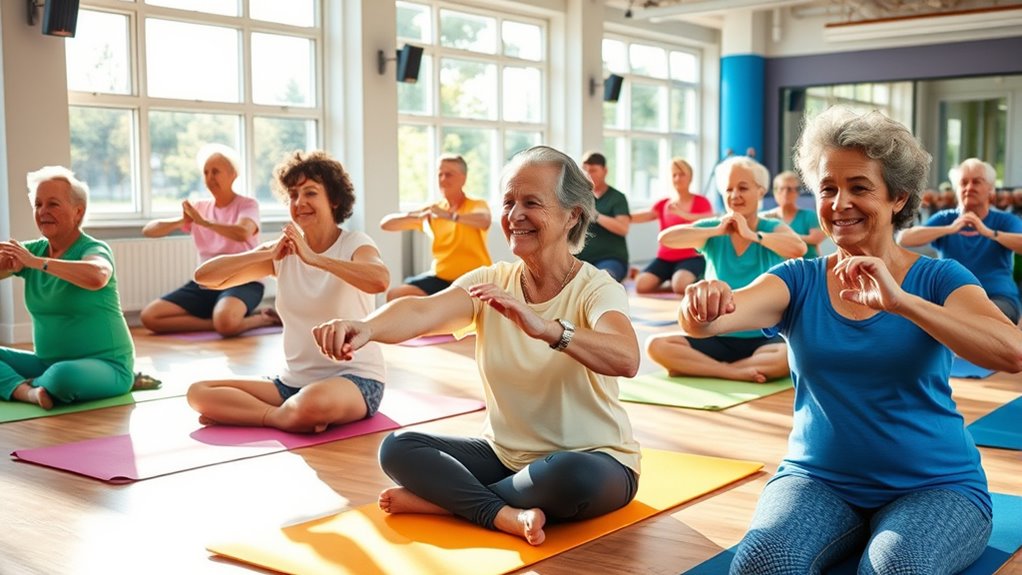
As you age, staying active becomes increasingly important for maintaining your health and independence. Engaging in regular exercise helps prevent chronic conditions, boosts your mood, and keeps your body functioning at its best. To reap these benefits, incorporating balance training and strength routines into your schedule is essential. Balance training improves your stability, reduces the risk of falls, and enhances your confidence in daily activities. You can do simple exercises like standing on one foot, heel-to-toe walks, or using balance boards. These activities challenge your stability and can be easily integrated into your daily routine. Strength routines, on the other hand, help maintain muscle mass, support bone density, and improve your overall strength. You don’t need heavy weights; resistance bands, light dumbbells, or your own body weight work well for building strength. Focus on major muscle groups—legs, arms, back, and core—and aim for two to three sessions per week. Consistent strength training also supports joint health and makes everyday tasks, like carrying groceries or climbing stairs, easier and safer.
In addition, paying attention to your attention during exercises can improve your focus and effectiveness. When starting a new exercise program, it’s essential to listen to your body and progress gradually. If you’re new to balance training or strength routines, consider working with a fitness professional who specializes in senior fitness. They can tailor exercises to your current abilities and help you avoid injuries. Remember, consistency is key. Even 20 to 30 minutes of activity, three to five times a week, can lead to significant health benefits over time. You might find that combining balance exercises with strength routines creates a well-rounded program that addresses multiple aspects of fitness simultaneously. For example, practicing standing leg lifts while maintaining your balance can strengthen your legs and improve stability at once.
Additionally, don’t forget to include some cardiovascular activities, like walking, swimming, or cycling, to improve your heart health. Always start with a warm-up and finish with stretching to prevent soreness and enhance flexibility. As you progress, you can increase the intensity or duration gradually. Staying motivated can be easier if you choose activities you enjoy and set realistic goals. Remember, age is just a number, and with consistent effort, you can maintain or even improve your strength and balance, ensuring a safer, more active life. The key is making exercise a regular part of your routine, so you can continue to enjoy independence and vitality for years to come.
Frequently Asked Questions
How Can I Stay Motivated to Exercise Regularly?
To stay motivated to exercise regularly, focus on setting achievable goals that keep you inspired. Find a workout buddy or join a group to enjoy social support, which makes exercising more enjoyable and accountable. Celebrate your progress to boost confidence and motivation. Remember, consistency is key, so make exercise a fun part of your routine. With clear goals and social connections, you’ll stay committed and feel more energized every day.
What Are Some Common Injuries for Older Exercisers?
You might worry about injuries, but focusing on fall prevention and joint protection can keep you safe. Common injuries for older exercisers include strains, sprains, and falls. To avoid these, start with gentle exercises, use proper form, and listen to your body. Incorporating balance training and low-impact activities helps prevent falls and protects your joints, so you can stay active confidently and enjoy the benefits of exercise without injury.
How Do I Modify Exercises for Chronic Conditions?
You should incorporate adaptive modifications to accommodate your chronic conditions and guarantee safety. Always consider medical considerations, like consulting your healthcare provider before starting or changing exercises. Adjust intensity, reduce range of motion, or substitute low-impact activities to protect joints and manage symptoms. Listen to your body, and don’t push through pain. These strategies help you stay active safely while managing your health effectively.
Can Exercise Help Improve Mental Health in Seniors?
Exercise acts like a spark that ignites mental health benefits in seniors. It can boost mood, reduce anxiety, and sharpen cognitive function, making your mind feel like a well-oiled machine. Regular activity promotes the release of feel-good chemicals, helping you stay mentally resilient. By staying active, you can experience cognitive improvement and enjoy a brighter, more positive outlook on life at any age.
What Should I Wear for Safe and Comfortable Workouts?
You should wear appropriate footwear that provides support and stability to prevent falls during your workout. Opt for breathable clothing made from moisture-wicking fabrics to keep you comfortable and dry. Choose loose-fitting clothes that allow easy movement and help regulate your body temperature. Always prioritize safety and comfort to make your exercise sessions enjoyable and effective, reducing the risk of injury and encouraging consistency.
Conclusion
Staying active as you age is like tending a garden—you nurture your body, and it blooms with vigor. No matter your age, the right exercise program can boost your strength, balance, and mood. Remember, every small step you take adds to a healthier, happier life. So lace up your shoes and embrace movement; your future self will thank you for planting the seeds of wellness today.