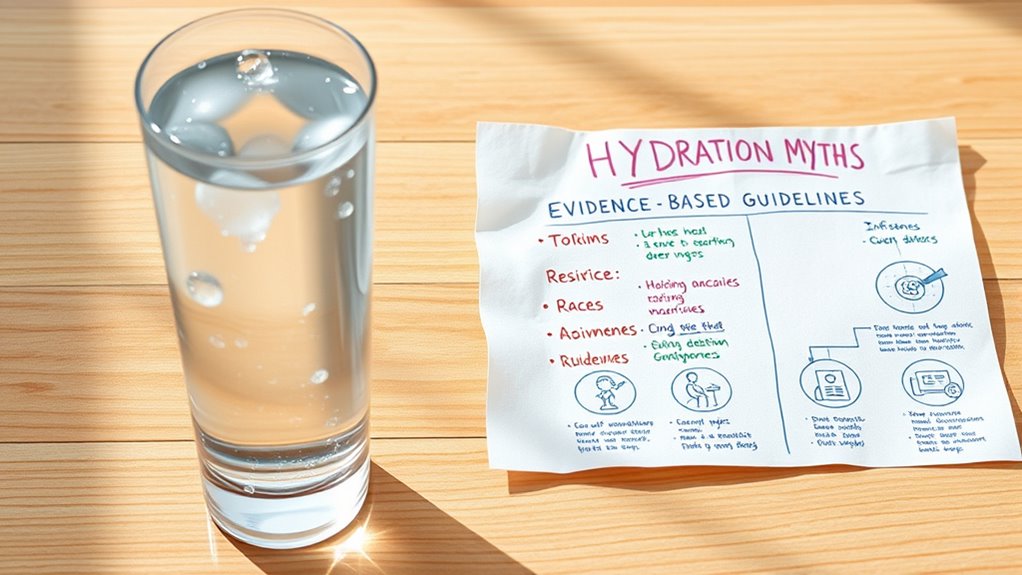

Many hydration myths, like only drinking when thirsty or needing eight glasses daily, aren’t backed by science. Thirst isn’t always an accurate signal, especially during exercise or heat, and fluid needs vary based on activity and environment. Over- or under-hydrating can cause health issues. Understanding evidence-based guidelines helps you stay properly hydrated, balancing water and electrolytes. Keep going to discover the facts that will keep you healthier and better informed.

Get health and wellness essentials delivered free — and shop member deals
- Fast, free delivery on millions of items
- Access to Prime Big Deal Days deals on October 6–7
- Prime Video, Amazon Music and more included
Key Takeaways
- Thirst is an unreliable indicator of hydration; proactive fluid intake is often necessary regardless of thirst cues.
- Electrolytes are essential for hydration; plain water may not suffice during prolonged sweating or illness.
- Daily water needs vary; urine color and individual factors are better guides than fixed rules like “eight glasses a day.”
- Sports drinks are useful mainly during intense activity; for daily hydration, water and diet usually suffice.
- Overhydration can be dangerous; balance water and electrolyte intake based on activity level and body signals.
Many common beliefs about staying hydrated are actually myths that can lead you astray. For example, some think that simply drinking water whenever you feel thirsty is enough to keep you properly hydrated. However, thirst perception isn’t always an accurate indicator of your hydration status. Your body’s thirst signals can be delayed or suppressed, especially during intense exercise or in hot environments. This means you might already be dehydrated before feeling the urge to drink, which can impact your electrolyte balance and overall health.
Electrolyte balance plays an essential role in hydration, yet many people overlook it. Electrolytes like sodium, potassium, and magnesium are indispensable for maintaining fluid levels inside and outside your cells. Drinking plain water alone might not effectively replenish lost electrolytes after sweating or illness. If you only focus on water intake without considering electrolyte needs, you risk diluting these indispensable minerals, which can cause symptoms such as muscle cramps, fatigue, or dizziness. Proper hydration isn’t just about drinking more water—it’s about maintaining a balance of electrolytes, especially during prolonged physical activity or illness.
Another myth is that you need to consume eight glasses of water a day, regardless of your activity level or environment. While staying hydrated is important, the amount of water you need can vary widely based on factors like climate, exercise, and individual health. Instead of rigidly following a set number, pay attention to your body’s signals. If you notice your urine is dark yellow, it’s a sign you need to hydrate more. Clear or light-colored urine generally indicates adequate hydration. Remember, overhydration can also be dangerous, leading to a condition called hyponatremia, where your blood sodium levels become dangerously low due to excessive water intake.
Many people also believe that sports drinks are only necessary for athletes or intense workouts. While they can be helpful in situations involving heavy sweating or extended activity, they’re not always suitable for everyday hydration needs. These drinks often contain added sugars and electrolytes, which can be beneficial in specific circumstances but unnecessary for regular hydration. For most people, water combined with a balanced diet provides sufficient electrolytes and hydration. Additionally, understanding hydration guidelines can help you tailor your fluid intake to your individual needs, ensuring optimal health.
As an affiliate, we earn on qualifying purchases.
Frequently Asked Questions
Can Certain Foods Replace Drinking Water for Hydration?
You might wonder if certain foods can replace drinking water for hydration. While foods with high moisture content, like fruits and vegetables, do help keep you hydrated, they shouldn’t fully replace water. Herbal infusions are also a good way to increase fluid intake without caffeine or sugar. However, the best way to stay properly hydrated is still drinking enough water daily, complemented by these moisture-rich foods and infusions.
Does Thirst Always Indicate Dehydration?
Thirst doesn’t always mean you’re dehydrated, as it’s part of your body’s thirst regulation and hydration cues. Sometimes, you feel thirsty due to dry mouth or habits, not actual fluid loss. Relying solely on thirst can cause you to overlook early dehydration signs. To stay properly hydrated, listen to your body’s hydration cues, but also proactively drink fluids throughout the day, especially if you’re active or in hot environments.
Are Sports Drinks Always Better Than Water?
When considering if sports drinks are always better than water, think about your activity level and electrolyte balance. For intense or prolonged exercise, sports drinks can help maintain hydration timing and restore electrolytes lost through sweat. However, for casual activities, water usually suffices. You should match your hydration method to your specific needs, ensuring proper electrolyte intake and timing to stay *best* hydrated and avoid unnecessary sugar or calorie intake.
How Does Hydration Affect Mental Performance?
Think of hydration as the engine that powers your mental clarity. When you maintain electrolyte balance and pay attention to hydration timing, your brain stays sharp and focused. Proper hydration keeps your cognitive gears turning smoothly, preventing fatigue and fog. Skipping it can lead to mental sluggishness, like a car running on empty. Staying mindful of when and how you hydrate guarantees your mind remains agile, ready to tackle any challenge.
Can Overhydration Be Dangerous?
Overhydration can be dangerous because it disrupts your electrolyte balance, leading to conditions like hyponatremia. When you drink too much water, your kidneys may struggle to keep up, diluting electrolytes and impairing their function. This imbalance can cause symptoms like headache, nausea, and even seizures. Staying within recommended fluid intake helps maintain kidney function and electrolyte stability, preventing these serious health risks.
As an affiliate, we earn on qualifying purchases.
Conclusion
Don’t fall for hydration myths—trust the evidence instead. For example, studies show that drinking when you’re thirsty is enough for most people, with only 20% needing extra fluids during exercise. Staying properly hydrated boosts your energy and focus, so listen to your body. Remember, overhydration can be just as harmful as dehydration. Stick to science-backed guidelines, and you’ll stay healthy and refreshed without unnecessary fuss.
As an affiliate, we earn on qualifying purchases.
urine color hydration test strips
As an affiliate, we earn on qualifying purchases.
As an affiliate, we earn on qualifying purchases.
Fall Picks
fall essentials
As an affiliate, we earn on qualifying purchases.