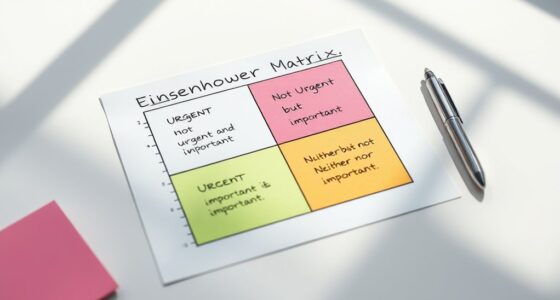
To eliminate distractions for deep work, create a dedicated, clutter-free environment and turn off notifications during focus periods. Schedule specific times to check emails and social media, reducing compulsive device use. Consider digital detoxes to break habits and fully immerse yourself in tasks. Setting boundaries like blocking distracting sites or silencing your phone helps maintain uninterrupted concentration. Keep exploring these strategies to develop the sustained attention needed for meaningful productivity.

Get health and wellness essentials delivered free with Prime
- Fast, free delivery on millions of items
- Prime Video, Amazon Music and more included
- Member-only deals all year
Key Takeaways
- Design clutter-free, dedicated workspaces to minimize visual and physical distractions.
- Turn off notifications and schedule specific times for checking emails and social media.
- Practice regular digital detoxes to reduce mental noise and dependency on devices.
- Establish focused work periods by creating interruption-free environments and routines.
- Use research-backed techniques to manage mental clutter and sustain deep concentration.

In today’s fast-paced world, distractions are everywhere, making it difficult to stay focused on what truly matters. With notifications pinging constantly, social media vying for your attention, and an endless stream of information, maintaining deep focus can feel impossible. To combat this, creating ideal focus environments becomes essential. This means designing your workspace to minimize interruptions and maximize concentration. Clear clutter from your desk, turn off notifications, and establish dedicated periods of uninterrupted work. When your environment is free from visual and auditory distractions, you’re more likely to sustain attention on complex tasks and produce meaningful results. Additionally, practicing evidence-based insights can help you develop effective strategies for managing your attention span and reducing mental clutter. A digital detox is another powerful strategy to eliminate distractions. It involves intentionally disconnecting from devices like smartphones, tablets, and computers during focused work sessions. You might set specific times when you check emails or social media, rather than allowing these to interrupt your flow constantly. A digital detox helps break the cycle of compulsive device checking, which fragments your concentration and hampers deep work. During these detox periods, you can fully immerse yourself in your tasks without the temptation of constant notifications. Over time, this habit trains your brain to prioritize deep focus over fleeting digital stimuli, making it easier to enter a state of flow. Implementing focus environments and digital detox practices isn’t just about avoiding distractions; it’s about consciously creating the conditions to thrive. When you prioritize a dedicated, distraction-free space, you send a clear message to your brain that this is the time for deep work. Combining this with regular digital detoxes ensures you’re not constantly pulled away by digital noise, allowing your mind to settle and concentrate. You can set boundaries like turning off your phone or using apps that block distracting sites during work periods. These small changes make a significant difference in reducing interruptions and helping you develop sustained attention.
As an affiliate, we earn on qualifying purchases.
Frequently Asked Questions
How Can Technology Be Used to Reduce Distractions Effectively?
You can use technology to reduce distractions by scheduling regular digital detox periods, disconnecting from social media and notifications. Productivity apps help you block distracting websites, set focused work timers, and track your progress. Turn off non-essential alerts and use these tools intentionally to maintain deep concentration. By leveraging these strategies, you create a distraction-free environment that boosts your focus and enhances your overall productivity.
What Are Some Common Distractions That Hinder Deep Work?
You often get distracted by social media and email notifications, which interrupt your focus. These common disruptions pull you away from deep work, making it hard to stay productive. To maintain concentration, you should mute notifications, set specific times to check social media, and close unnecessary tabs. By limiting these distractions, you create a more conducive environment for deep work and improved overall focus.
How Do Environmental Factors Impact Focus During Deep Work Sessions?
You might think ambient noise is unavoidable, but it considerably affects your focus during deep work. A cluttered workspace can also pull your attention away. To stay productive, use noise-canceling headphones and keep your workspace organized. These environmental factors create a calm, distraction-free zone, allowing you to concentrate fully. When your surroundings support your effort, you can dive deeper into your work without unnecessary interruptions.
Can Eliminating Distractions Improve Overall Productivity and Well-Being?
Yes, eliminating distractions boosts your productivity and well-being. When you focus on mindfulness practices, you become more aware of your attention lapses and can redirect your focus. Routine optimization helps you set dedicated deep work periods, reducing interruptions. By creating a distraction-free environment, you allow yourself to enter a state of flow more easily, leading to better results and improved mental health. Consistent effort enhances both your work output and overall well-being.
What Role Does Mindset Play in Minimizing Daily Interruptions?
Your mindset is the captain steering your ship through a sea of interruptions. A mindset shift towards focus cultivation helps you see distractions as challenges to overcome, not unavoidable obstacles. When you believe in your ability to control your attention, you build resilience against daily disruptions. This mental shift empowers you to stay present, prioritize tasks, and minimize interruptions, turning your daily routine into a smooth voyage toward productivity and well-being.
ergonomic clutter-free desk organizer
As an affiliate, we earn on qualifying purchases.
As an affiliate, we earn on qualifying purchases.
Conclusion
To stay focused and master deep work, eliminate distractions by creating a dedicated workspace and setting clear boundaries. Remember, research shows that it takes an average of 23 minutes to regain focus after an interruption. So, every time you cut distractions, you’re not just saving time—you’re enhancing your productivity and ability to think deeply. Stay disciplined, and you’ll open your full potential for meaningful, undistracted work.
As an affiliate, we earn on qualifying purchases.
As an affiliate, we earn on qualifying purchases.
Cold & flu season Picks
humidifiers
As an affiliate, we earn on qualifying purchases.