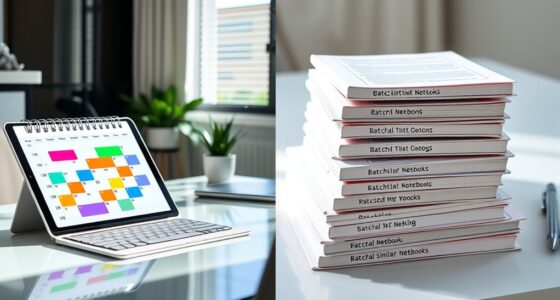
To stay focused at home, establish clear boundaries by setting designated work hours and creating a dedicated workspace. Use productivity tools like Trello or Toggl to organize tasks and track progress. Develop routines such as regular breaks and consistent wake-up times to boost focus. Keeping your environment clutter-free and switching off from work at day’s end also helps prevent burnout. To discover more effective strategies, continue exploring ways to optimize your remote work routine.

Get health and wellness essentials delivered free with Prime
- Fast, free delivery on millions of items
- Prime Video, Amazon Music and more included
- Member-only deals all year
Key Takeaways
- Establish a dedicated, clutter-free workspace to signal focus and minimize distractions.
- Set clear boundaries with designated work hours and use calendar apps to communicate availability.
- Utilize productivity tools like Trello, Asana, or Toggl for task organization and time tracking.
- Develop consistent routines, including scheduled breaks and techniques like Pomodoro, to maintain focus.
- Regularly review and adjust your schedule to improve efficiency and ensure work-life balance.

Working remotely offers flexibility, but it also requires strong time management skills to stay productive. When you’re balancing work and personal life in the same space, it’s easy to get sidetracked or overwhelmed. That’s where effective use of productivity tools can make a significant difference. These tools help you organize your tasks, set priorities, and monitor your progress, ensuring you stay on track throughout the day. Whether it’s project management apps like Trello or Asana, or time tracking tools like Toggl, leveraging technology can streamline your workflow and minimize distractions. By integrating them into your routine, you create a structured environment that promotes focus and efficiency. Incorporating mindfulness practices into your daily routine can also help you stay centered and reduce stress, making it easier to manage your time effectively.
Establishing clear boundaries between work and personal time is essential for maintaining a healthy work-life balance. When your home becomes your office, it’s tempting to work longer hours or check emails late into the evening. To prevent burnout, set designated work hours and stick to them. Use calendar apps to block out specific times for work and breaks, signaling to yourself and others when you’re unavailable. This helps you switch gears mentally and physically from work mode to personal mode, reducing stress and increasing overall satisfaction.
Creating a dedicated workspace is another key step. Find a quiet spot that signals to your brain that it’s time to focus. Keep this area organized and free of clutter, making it easier to concentrate and avoid distractions. Having an established workspace also helps you mentally separate work from leisure, which is essential for work-life balance. When you step away from your desk at the end of the day, you can truly disconnect, knowing your workday is done.
Developing a daily routine can boost your productivity and give structure to your remote workday. Start with a consistent wake-up time, and plan your tasks in advance. Break your day into manageable segments, incorporating short breaks to recharge. Use timers or the Pomodoro Technique—working for focused intervals followed by brief rests—to stay engaged and prevent fatigue. These practices help you stay disciplined and make your work hours more effective.
Finally, regularly reviewing your schedule and adjusting as needed is fundamental. If you find certain tasks are taking longer than expected or you’re struggling to maintain focus, tweak your approach. Flexibility is important, but so is accountability. By using productivity tools wisely, setting boundaries, and sticking to routines, you can master your time management skills and enjoy a balanced, fulfilling remote work experience.
As an affiliate, we earn on qualifying purchases.
Frequently Asked Questions
How Can I Prevent Home Distractions From Affecting My Productivity?
To prevent home distractions from affecting your productivity, create a dedicated workspace free from interruptions. Use noise-canceling headphones to block out background noise, helping you stay focused. Set clear boundaries with family members during work hours, and establish a routine that signals when you’re working. Minimize distractions by turning off notifications and keeping your workspace organized. These steps help you maintain concentration and boost your efficiency at home.
What Tools Are Best for Tracking Remote Work Hours?
You need the best tools to track your remote work hours, and the top choices are time tracking and productivity apps. These apps make it impossible to forget where your time goes, helping you stay accountable and efficient. Whether it’s Toggl, RescueTime, or Clockify, these tools give you real-time insights into your work habits. Use them daily to boost your productivity and keep your remote work on track effortlessly!
How Do I Set Boundaries With Family During Work Hours?
You set family boundaries during work hours by clearly communicating your schedule and importance of focus time. Explain your work hours to your family, and ask for their support in maintaining this boundary. Use visual cues like a closed door or a “do not disturb” sign. Prioritize work-life balance by sticking to specific work hours, so your family knows when you’re available and when you need to focus.
What Are Quick Tips for Overcoming Procrastination at Home?
Procrastination can feel like a mountain you’ll never climb, but you can conquer it easily. Use time blocking strategies to schedule focused work periods and short breaks, making tasks less overwhelming. Find accountability partners to stay motivated and on track. When you commit to these quick tips, you’ll break the cycle of delay, boost productivity, and feel accomplished, transforming your workday from chaos into control in no time.
How Can I Maintain Team Communication Effectively Remotely?
You can maintain effective team communication remotely by scheduling regular virtual team building activities that foster connection and trust. Use clear, consistent channels for updates and encourage open, honest dialogue. Provide effective feedback promptly to keep everyone aligned and motivated. Always check in individually and as a group, ensuring everyone feels heard and valued. This approach strengthens relationships and keeps your team engaged and productive from afar.
Trello or Asana task management tools
As an affiliate, we earn on qualifying purchases.
As an affiliate, we earn on qualifying purchases.
Conclusion
By implementing effective time management strategies, you can stay focused and productive while working from home. For example, Sarah set strict work hours and took regular breaks, which boosted her efficiency and reduced burnout. Remember, consistency is key—adjust your routines as needed to find what works best. With discipline and the right approach, you’ll master remote work, achieving your goals without sacrificing your well-being. Stay committed, and success will follow.
As an affiliate, we earn on qualifying purchases.
noise-canceling headphones for work
As an affiliate, we earn on qualifying purchases.
As an affiliate, we earn on qualifying purchases.
Fall Picks
fall essentials
As an affiliate, we earn on qualifying purchases.