Your sleep patterns change a lot from infancy to old age, affecting your health, mood, and development. Babies spend much of their sleep in REM, essential for brain growth, but their sleep is less structured and full of awakenings. As you grow, sleep becomes more regular, though challenges can persist. In older age, sleep often fragments with less REM, leading to daytime tiredness. Keep exploring to discover how you can support healthy sleep throughout your life.
Key Takeaways
- Sleep patterns evolve from high REM sleep in infancy to more structured cycles resembling adults during adolescence.
- Total sleep duration decreases gradually across childhood, adolescence, and into old age, supporting growth and health.
- Sleep disorders such as insomnia, sleep apnea, and restless leg syndrome can occur at any age, impacting overall well-being.
- Aging causes reduced REM sleep and increased light sleep, resulting in more fragmented sleep and daytime fatigue.
- Maintaining good sleep habits and seeking medical advice are essential for healthy sleep throughout the lifespan.
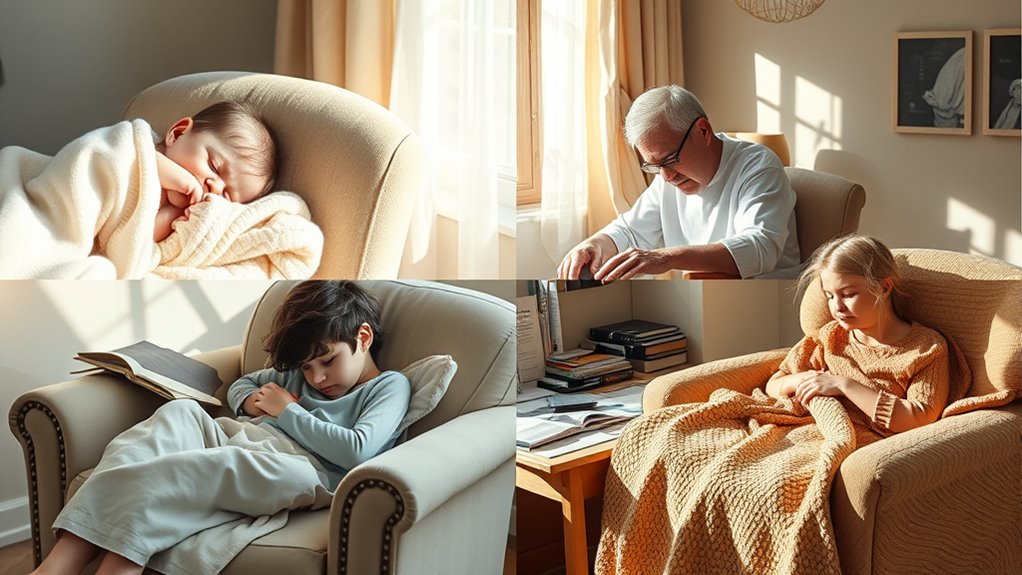
Sleep is fundamental at every stage of life, yet its patterns and needs change dramatically from infancy to old age. As you progress through life, your sleep cycles evolve, influenced by biological and environmental factors. During infancy, sleep is characterized by rapid eye movement (REM) and non-REM stages, with babies spending a considerable portion of their sleep in REM, which is indispensable for brain development. As a child grows, sleep cycles become more structured, mirroring adult patterns, but the total sleep time remains higher to support growth. You might notice that children often experience vivid dreams during REM sleep, which is a pivotal part of processing emotions and memories.
Sleep patterns evolve from infancy through old age, supporting growth, brain development, and overall health.
However, sleep isn’t always smooth sailing. Sleep disorders can affect your ability to get restorative rest at any age. For infants, common issues include sleep regressions and difficulties establishing routines, which can lead to frequent awakenings. In childhood and adolescence, disorders like insomnia, sleep apnea, or restless leg syndrome can emerge, disrupting the natural sleep cycle and impairing daytime functioning. If you’re experiencing persistent trouble falling asleep or staying asleep, it could be a sign of a sleep disorder that warrants attention. As you age, changes in sleep architecture become more pronounced. Older adults tend to spend less time in REM sleep and more time in lighter stages of sleep, making them more vulnerable to disturbances like nocturia or periodic limb movements.
In older adults, sleep disorders become increasingly common and often go untreated. Conditions like insomnia, circadian rhythm disorders, or sleep apnea may lead to fragmented sleep, daytime fatigue, and cognitive decline. Recognizing these changes is key to maintaining quality sleep. During this phase of life, your dream cycles may also diminish in frequency and intensity, partly due to alterations in sleep architecture. Despite these shifts, maintaining good sleep habits, such as regular routines, limiting caffeine and screen time before bed, and seeking medical advice when sleep problems persist, can markedly improve sleep quality. Furthermore, recent advancements in AI-driven security systems are helping to monitor sleep patterns more effectively, offering new ways to address sleep disturbances.
Understanding how sleep transforms across your lifespan helps you adapt your habits and seek help when needed. Whether you’re a parent, a teenager, or an older adult, being aware of your sleep patterns and potential disorders empowers you to prioritize restful sleep. After all, healthy sleep supports your mental, emotional, and physical well-being at every age.

Pink Stork Baby Sleep Drops, Naturally Support Sleep Without Melatonin for Infants, Toddlers, and Kids, Aid Sleep with Chamomile and Magnesium, Baby Essentials for Bedtime, 1 oz, 30 Servings
Healthy sleep leads to happy, healthy babies! Pink Stork has delivered the latest addition to our Pink Stork…
As an affiliate, we earn on qualifying purchases.
As an affiliate, we earn on qualifying purchases.
Frequently Asked Questions
How Does Sleep Architecture Change During Adolescence?
During adolescence, your sleep architecture shifts due to adolescent circadian shifts, making you prefer later bedtimes. You experience a delay in REM sleep onset and spend less time in deep sleep stages, which can lead to teenage sleep deprivation. These changes cause you to feel more alert at night and tired during the day, often disrupting your overall sleep quality. Addressing these shifts is essential for maintaining healthy sleep patterns.
What Are Common Sleep Disorders in Elderly Adults?
You might face common sleep disorders like sleep apnea and restless legs syndrome as you age. Sleep apnea causes breathing interruptions that jolt your sleep, while restless legs create an unbearable urge to move your limbs at night. These disorders disrupt your rest, leading to fatigue and health issues. Recognizing these problems early can help you seek treatment, so your nights become peaceful once again, restoring your energy and well-being.
How Does Shift Work Impact Sleep Across Different Ages?
Shift work disrupts your sleep patterns across all ages, leading to sleep deprivation and reduced sleep quality. Younger individuals might struggle with adjusting to irregular hours, while older adults may find it harder to recover from sleep loss. Irregular schedules interfere with your circadian rhythm, causing fatigue, decreased alertness, and health issues. To minimize these effects, try to maintain consistent sleep routines and get enough restorative sleep whenever possible.
Can Sleep Patterns Predict Future Health Issues?
Think of your sleep patterns as a crystal ball, revealing clues about your future health. Sleep deprivation can be a warning sign, increasing risks for issues like heart disease or diabetes. Dream analysis might also uncover underlying stress or mental health struggles. Paying attention to irregular sleep habits now helps you spot potential problems early, guiding you toward healthier choices and preventing future health issues from creeping up like shadows in the night.
What Role Does Sleep Play in Cognitive Aging?
Sleep plays a crucial role in your cognitive aging by supporting memory consolidation and neural plasticity. When you get quality sleep, your brain processes and stores new information, helping maintain sharpness and learning ability. It also promotes neural flexibility, which is essential for adapting to changes as you age. Skimp on sleep, and you risk impairing these processes, potentially accelerating cognitive decline over time.

Elviros CPAP Pillow for Side Sleeping, Sleep Apnea Memory Foam Pillow for All CPAP Masks Users to Reduce Air Leaks & Masks Pressure, Adjustable Height with Cooling Breathable Cover
Suitable for Various CPAP Masks: This CPAP pillow is designed to accommodate all styles of CPAP masks and…
As an affiliate, we earn on qualifying purchases.
As an affiliate, we earn on qualifying purchases.
Conclusion
As you journey through life’s stages, sleep transforms in ways you can’t always see coming. From the innocence of infancy to the wisdom of old age, each phase holds surprises that could change how you experience rest. Will your sleep patterns adapt smoothly, or will unexpected challenges arise? The next chapter of your sleep story is waiting to be written—are you ready to discover what lies ahead? The future of your sleep is more intriguing than you think.

Hyland's Restful Legs PM, Nighttime Formula, Calms Agitated Legs so You Can Sleep, 50 Quick Dissolving Tablets
RELIEF OF AGITATED LEGS: Natural relief for the uncontrollable urge to jerk or move legs with accompanying occasional…
As an affiliate, we earn on qualifying purchases.
As an affiliate, we earn on qualifying purchases.

AGTPEK Kids Fitness Tracker Watch with Parent-Child Task & Reward System, Ultra-Lightweight Activity Tracker with Calorie Step Counter, Heart Rate & Sleep Monitor for Boys Girls 6-12 (Black)
MOTIVATE KIDS WITH TASKS & REWARDS: The kids fitness tracker turns exercise, learning and chores into a fun…
As an affiliate, we earn on qualifying purchases.
As an affiliate, we earn on qualifying purchases.