

Businesses are increasingly shifting to renewable energy like solar and wind to reduce costs and boost sustainability. They leverage incentives such as tax credits and rebates to lower upfront investments. By integrating these technologies strategically, you can save on energy bills, reduce your carbon footprint, and strengthen your brand image. Advances in technology further simplify this changeover, making it more affordable and practical. Continuing this journey can open even more benefits and opportunities for your business.

Get health and wellness essentials delivered free with Prime
- Fast, free delivery on millions of items
- Prime Video, Amazon Music and more included
- Member-only deals all year
Key Takeaways
- Businesses are adopting solar and wind power to reduce carbon footprints and enhance sustainability.
- Financial incentives like tax credits and rebates lower renewable energy installation costs.
- Proper planning ensures seamless integration of renewable resources into existing operations.
- Transitioning to renewables boosts brand image and aligns with corporate sustainability goals.
- Long-term cost savings and technological advances make renewable energy an economically viable choice.
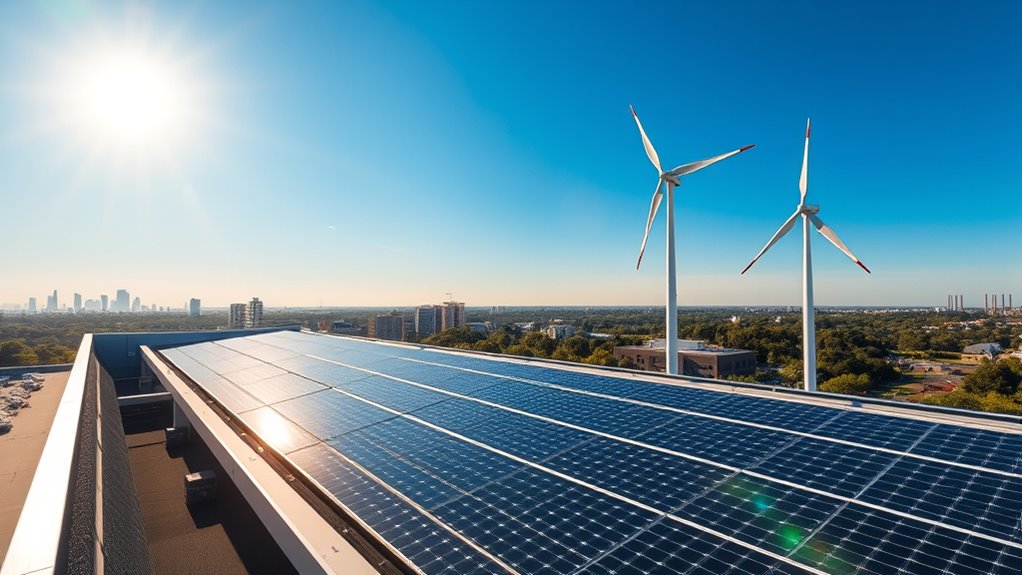
Are we truly prepared to shift from fossil fuels to renewable energy sources? This question is on everyone’s mind as businesses increasingly recognize the need to reduce their carbon footprint. Moving to renewable energy isn’t just about doing the right thing for the environment; it’s also about staying competitive and future-proofing operations. One of the most effective ways to make this shift is by harnessing solar incentives, which can substantially lower the costs of installing solar panels. These incentives, offered by federal and state programs, help offset the upfront investment, making solar installations more accessible for businesses of all sizes. As you explore your options, you’ll find that many governments provide tax credits, rebates, and other financial benefits that accelerate your return on investment. And with advances in wind technology, harnessing wind power is becoming more feasible and cost-effective. Modern wind turbines are now more efficient, capable of generating substantial energy even in low-wind areas, meaning your business can capitalize on this renewable resource without extensive land requirements or high operational costs.
Embracing these renewable options requires understanding the landscape of incentives and technological advancements. Solar incentives are particularly compelling because they directly reduce equipment costs and can sometimes cover a large portion of installation expenses. This makes solar energy a popular choice for businesses aiming to lower energy bills and reduce reliance on grid power. Wind technology, on the other hand, offers the advantage of producing large amounts of clean energy, especially in regions with consistent wind patterns. Installing a wind turbine can provide a steady energy supply, lessen your dependence on traditional utilities, and even generate revenue if you sell excess power back to the grid. Both options align well with corporate sustainability goals and can enhance your brand’s image by demonstrating a commitment to environmental responsibility.
However, moving to renewable energy isn’t just about choosing the right technology; it’s also about planning for the integration of these renewable sources into your existing infrastructure. You’ll need to consider factors like location, local regulations, and potential logistical challenges. Fortunately, many renewable energy providers now offer extensive consultation services to help you navigate these complexities. As you move forward, keep in mind that the combination of solar incentives and advances in wind technology is making it easier than ever for businesses to adopt clean energy solutions. The initial effort and investment pay off over time through lower energy costs, improved sustainability credentials, and a stronger position in an increasingly eco-conscious marketplace. Additionally, understanding the cost reduction strategies associated with renewable energy can further optimize your investment. So, if you’re ready to lead the charge in the renewable energy transition, understanding and leveraging these tools is essential to make your business greener, more resilient, and aligned with the future of energy.
solar panel installation kit for businesses
As an affiliate, we earn on qualifying purchases.
As an affiliate, we earn on qualifying purchases.
Frequently Asked Questions
What Are the Initial Costs for Businesses Switching to Renewable Energy?
Your initial costs for switching to renewable energy include equipment costs and startup subsidies. Equipment costs cover solar panels, wind turbines, or other renewable tech, which can be significant upfront. However, startup subsidies and incentives can help offset these expenses, making the shift more affordable. While the upfront investment might seem high, many businesses find that long-term savings on energy bills and environmental benefits outweigh initial costs.
How Do Renewable Energy Incentives Differ by Country or Region?
You notice how government policies and financial incentives seem to align differently across countries or regions, shaping your renewable energy options. Some regions offer generous tax credits, grants, or subsidies, while others focus on regulatory support or renewable mandates. These regional differences reflect local priorities and capacities, influencing your decision to invest. Understanding these variations helps you maximize incentives, making your shift smoother and more cost-effective, ultimately accelerating your green efforts.
What Challenges Do Small Businesses Face in Adopting Renewable Energy?
You might face financing barriers that make it hard to afford renewable energy systems and technological limitations that restrict access to the latest innovations. Small businesses often struggle with high upfront costs and lack of expertise to navigate complex installation processes. Additionally, uncertainties about return on investment and limited access to grants or incentives can slow down your progression to greener energy sources. Overcoming these hurdles requires strategic planning and support.
How Can Companies Measure the ROI of Renewable Energy Investments?
You can measure the ROI of renewable energy investments by starting with energy audits to assess current consumption and potential savings. For example, a retail store reduced costs after installing solar panels, tracked through carbon accounting reports showing decreased emissions and energy bills. Regularly monitoring these metrics helps you evaluate financial benefits, environmental impact, and overall efficiency, ensuring your renewable investments deliver tangible returns over time.
What Are the Long-Term Environmental Benefits of Transitioning to Renewable Energy?
By shifting to renewable energy, you considerably reduce your environmental impact, lowering greenhouse gas emissions and air pollution. This change helps preserve ecosystems, protecting wildlife and natural habitats from harmful pollutants and climate change effects. Over the long term, your efforts support ecosystem preservation, promote cleaner air and water, and contribute to a healthier planet. These environmental benefits create a sustainable future, ensuring natural resources remain available for generations to come.
As an affiliate, we earn on qualifying purchases.
Conclusion
As you embrace the shift to renewable energy, you’re planting seeds for a greener future that will blossom for generations. Every step you take is like turning a dial towards brighter, cleaner days, transforming the world from a smog-filled storm to a clear blue sky. Your commitment fuels a powerful wave of change, sweeping away old habits and illuminating new paths. Keep riding this wave — together, you’re sculpting a sustainable, radiant world where nature and progress dance hand in hand.
solar incentives and tax credits for businesses
As an affiliate, we earn on qualifying purchases.
As an affiliate, we earn on qualifying purchases.
renewable energy integration solutions
As an affiliate, we earn on qualifying purchases.
As an affiliate, we earn on qualifying purchases.
Fall Picks
fall essentials
As an affiliate, we earn on qualifying purchases.