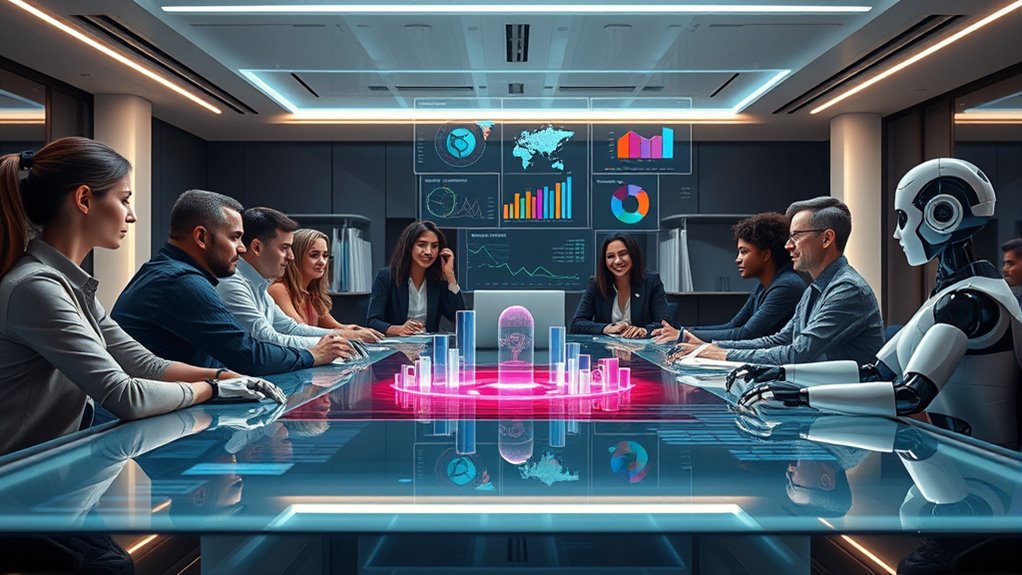

AI is reshaping your workplace by streamlining tasks, boosting collaboration, and personalizing learning experiences. It helps automate routine processes, freeing you to focus on strategic work. AI-powered tools facilitate faster communication and teamwork across teams, even remotely. It also supports employee growth through tailored training programs that adapt to your skills and pace. As AI continues to evolve, it’s changing how you work and connect — explore further to see how you can benefit from these advances.
Key Takeaways
- AI enables personalized training, improving employee skills and collaboration through tailored learning experiences.
- Automated AI tools streamline workflows, enhancing efficiency and reducing manual tasks in teams.
- AI-driven communication platforms facilitate real-time collaboration across remote and diverse workforces.
- Advanced AI security measures protect sensitive organizational data during collaborative processes.
- AI fosters continuous learning and adaptation, helping organizations stay competitive in evolving industries.
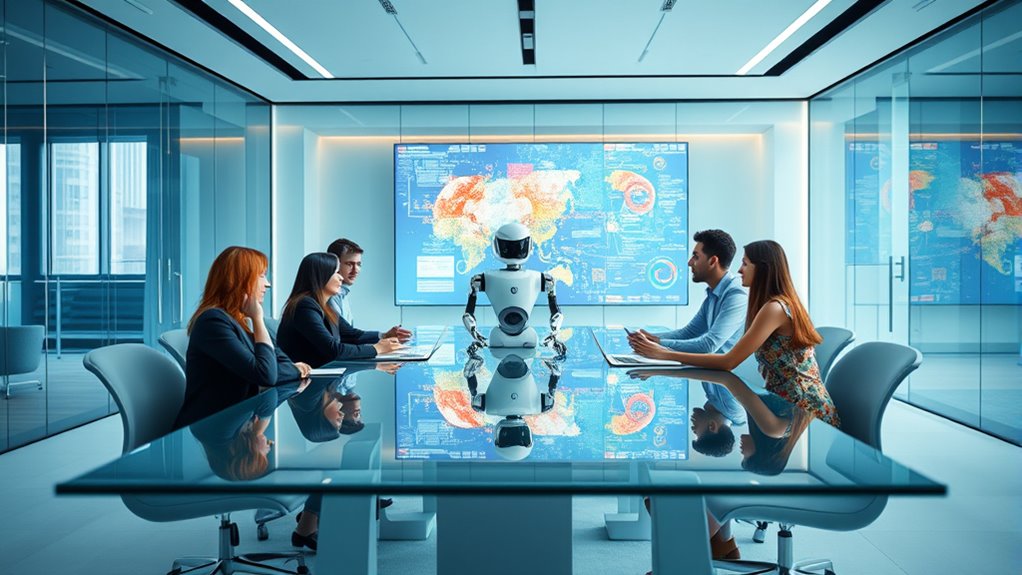
Artificial Intelligence is transforming the way we work, streamlining processes and enhancing productivity across industries. One of the most noticeable changes is how AI reshapes employee training. Instead of traditional classroom sessions, AI-powered platforms provide personalized learning experiences tailored to your skill level and learning pace. You can access on-demand modules, interactive simulations, and real-time feedback, making training more engaging and efficient. This not only accelerates skill development but also guarantees that your knowledge stays current with evolving industry standards. As AI analyzes your performance, it can identify gaps in your understanding and recommend targeted resources, helping you grow faster and more effectively. This personalized approach means you spend less time on irrelevant content and more on mastering what truly matters to your role. Additionally, Intelligent Tutoring Systems (ITS) can adapt their instructional strategies based on your responses, further optimizing your learning experience.
However, integrating AI into workplace training also raises concerns about data security. When AI systems collect and analyze your performance data, sensitive information about your skills and development progress is stored digitally. Guaranteeing this data remains secure is vital to protect your privacy and prevent unauthorized access. Companies need to implement robust security measures, such as encryption and strict access controls, to safeguard employee information. Transparent data policies are equally important, so you understand what data is being collected, how it’s used, and your rights to privacy. When data security is prioritized, you can confidently participate in AI-driven training programs without fearing breaches or misuse of your personal information.
Beyond training, AI’s role in data security extends to protecting the entire organization. AI tools can detect unusual activity, flag potential breaches, and respond swiftly to cyber threats, helping maintain a secure workplace environment. This proactive approach reduces the risk of data leaks and ensures that sensitive business information remains confidential. As you collaborate with AI systems, you benefit from a safer digital workspace, where your work and the company’s proprietary data are better protected. Nonetheless, it’s important to stay vigilant and informed about data privacy challenges and best practices, especially as AI technologies evolve and new threats emerge.
AI-powered employee training platform
As an affiliate, we earn on qualifying purchases.
As an affiliate, we earn on qualifying purchases.
Frequently Asked Questions
How Does AI Impact Employee Job Security?
AI can raise job security concerns, but it also pushes you to adapt your skills for the evolving workforce. Instead of fearing automation, focus on how you can leverage AI to enhance your productivity. Workforce adaptation becomes essential, as new roles emerge and existing ones change. By staying proactive, you can maintain job security and even find opportunities for growth amid technological advancements.
What Skills Are Needed to Work Alongside AI?
You need strong collaborative skills and emotional intelligence to work effectively alongside AI. Did you know that 85% of jobs will require soft skills like these? To succeed, focus on communicating clearly, adapting to new tech, and understanding team dynamics. Your ability to collaborate and show empathy will help you leverage AI tools while fostering a positive work environment. These skills make you indispensable in an AI-driven workplace.
How Does AI Ensure Data Privacy in Workplaces?
AI helps guarantee data privacy in workplaces through data encryption, which secures sensitive information from unauthorized access. You also implement access controls, restricting data to only those who need it. These measures prevent breaches and protect employee and company data. By actively managing encryption protocols and access permissions, you maintain confidentiality and comply with privacy regulations, fostering trust and safeguarding your organization’s information.
Can AI Replace Human Creativity and Intuition?
You might think AI can fully replace human creativity and intuition, but studies show only 15% of tasks rely on pure automation. While machine learning fuels creative automation, it lacks the emotional depth and nuanced judgment humans bring. AI can assist and inspire, but it can’t replicate the spontaneity, empathy, and innovation that only you, with your unique perspective, can provide in the workspace.
What Ethical Considerations Arise With AI Implementation?
You must consider ethical issues like bias mitigation and moral responsibilities when implementing AI. It’s essential to guarantee AI systems are fair and don’t reinforce existing prejudices. As you develop and deploy AI, you have a duty to prioritize transparency and accountability, making sure that your actions align with societal values. Addressing these ethical concerns helps build trust and prevents harm, ensuring AI benefits everyone responsibly.

The Ultimate Microsoft Teams 2025 Guide for Beginners: Mastering Microsoft Teams: A Beginner’s Guide to Powerful Collaboration, Communication, and Productivity in the Modern Workplace
As an affiliate, we earn on qualifying purchases.
As an affiliate, we earn on qualifying purchases.
Conclusion
As you embrace AI in your workplace, remember it’s like a helpful compass guiding you through new territory. It streamlines tasks, boosts collaboration, and sparks innovation, transforming how you work and connect with others. While change can feel overwhelming at first, staying adaptable will help you navigate this exciting journey. With AI by your side, you’re not just keeping up—you’re paving the way for a smarter, more efficient future.

AI for Cybersecurity: Research and Practice
As an affiliate, we earn on qualifying purchases.
As an affiliate, we earn on qualifying purchases.
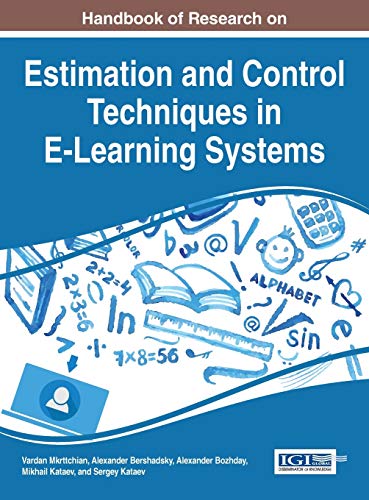
Handbook of Research on Estimation and Control Techniques in E-Learning Systems
As an affiliate, we earn on qualifying purchases.
As an affiliate, we earn on qualifying purchases.