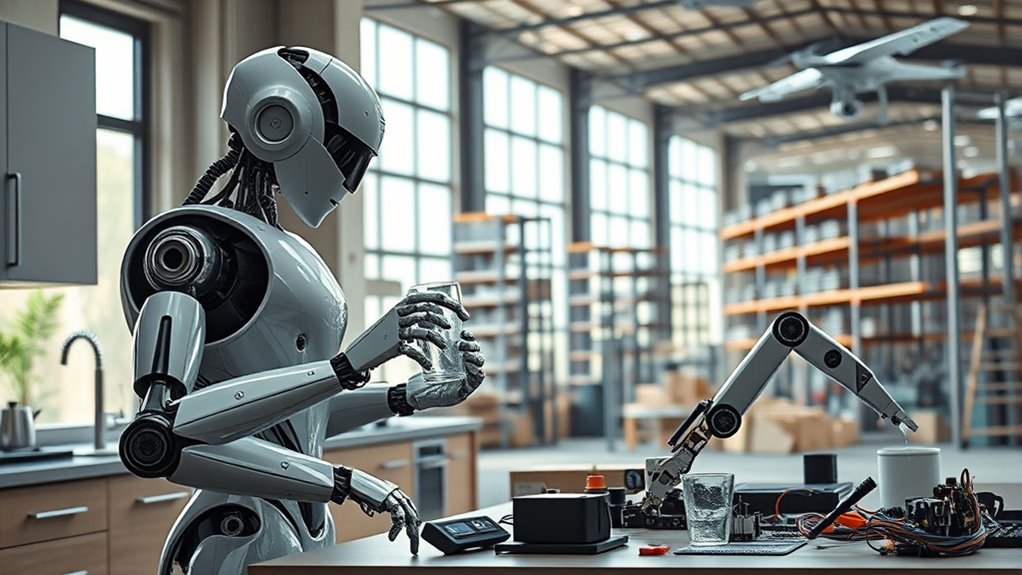

Robotics are transforming your daily life, from smart home devices to industrial automation. In your home, robotic chefs, smart refrigerators, and sensors help manage routines, improve efficiency, and save energy. These technologies automate tasks, monitor conditions in real-time, and optimize your living environment. As innovations continue, you’ll see even more seamless integration of robots that make everyday life easier and more sustainable. Keep exploring to discover how robotics will further shape your world.

Get health and wellness essentials delivered free with Prime
- Fast, free delivery on millions of items
- Prime Video, Amazon Music and more included
- Member-only deals all year
Key Takeaways
- Robotics automate household tasks, such as cooking, cleaning, and managing home environments for increased convenience.
- Smart sensors enable real-time monitoring and control of household conditions and energy use.
- Robotic systems enhance industrial productivity by automating manufacturing, logistics, and quality control processes.
- Integration of robots in daily life promotes healthier lifestyles through automation of meal prep and health monitoring.
- Advances in robotics drive sustainable practices by optimizing resource use and reducing waste in both homes and industries.

Robotic integration in household automation also extends to kitchen appliances, such as robotic chefs or smart refrigerators that track expiration dates and suggest recipes. These innovations reduce the effort needed to prepare meals and help you maintain a healthier lifestyle. As robotic technology advances, you’ll find it easier to manage your home environment, streamline daily routines, and even reduce your energy consumption. The ongoing development of household automation continues to push the boundaries of what robots can do for you daily, turning your home into a more efficient, comfortable space. Additionally, smart sensors embedded in various devices enable real-time monitoring and adjustments, further enhancing convenience and energy efficiency.
As an affiliate, we earn on qualifying purchases.
Frequently Asked Questions
How Do Robots Learn New Tasks Automatically?
You might wonder how robots learn new tasks automatically. They use machine learning, which allows them to improve through experience. Adaptive algorithms help robots analyze data, recognize patterns, and adjust their actions accordingly. This process enables robots to learn new tasks without explicit programming, making them more versatile and efficient. With ongoing data input, they become better at handling unfamiliar situations, continuously enhancing their capabilities.
What Are the Ethical Concerns With Robotics Integration?
Imagine robots as double-edged swords, offering great benefits but also potential harm. You should be aware of privacy concerns, as robots collect personal data that could be misused. Moral dilemmas also arise, like deciding how much autonomy to grant robots. Balancing innovation with ethical responsibility is vital to prevent misuse, protect individual rights, and guarantee society benefits without compromising core moral values.
How Affordable Are Advanced Household Robots?
Advanced household robots are becoming more affordable as technology advances and manufacturing costs decrease. Based on current cost comparison and affordability trends, you might find entry-level models priced around a few thousand dollars, with more sophisticated options costing considerably more. While they’re still a substantial investment, prices are gradually dropping, making these robots increasingly accessible for everyday use. Over time, expect even more budget-friendly options to emerge.
What Safety Measures Protect Humans Around Industrial Robots?
Think of industrial robots as cautious dancers, moving carefully around humans. You’re protected by strict safety standards like ISO 10218, which set guidelines for safe human-robot interaction. Safety measures include physical barriers, emergency stop buttons, and sensors that detect human presence. These precautions guarantee that robots work efficiently without risking human safety, creating a harmonious environment where both humans and robots can collaborate confidently.
How Will Robotics Impact Future Employment Opportunities?
You’ll see robotics creating new job opportunities through AI collaboration, as humans and robots work together to innovate and improve efficiency. While some jobs may face displacement, new roles in robot maintenance, programming, and oversight will emerge. Embracing these changes means adapting your skills, focusing on tasks that require human judgment and creativity. Overall, robotics will transform the job landscape, offering both challenges and exciting opportunities for growth.
smart refrigerator with expiration tracking
As an affiliate, we earn on qualifying purchases.
As an affiliate, we earn on qualifying purchases.
Conclusion
As you go about your day, it’s no surprise that robots quietly become part of your routine, seamlessly blending home and industry. Sometimes, it feels like the lines between human and machine blur, yet their presence is no coincidence—it’s a reflection of your evolving world. In this dance of progress, you realize that robotics aren’t just tools; they’re a mirror to your own ingenuity, shaping a future that feels both inevitable and extraordinary.
As an affiliate, we earn on qualifying purchases.
industrial robotic automation system
As an affiliate, we earn on qualifying purchases.
As an affiliate, we earn on qualifying purchases.
Halloween Picks
halloween
As an affiliate, we earn on qualifying purchases.