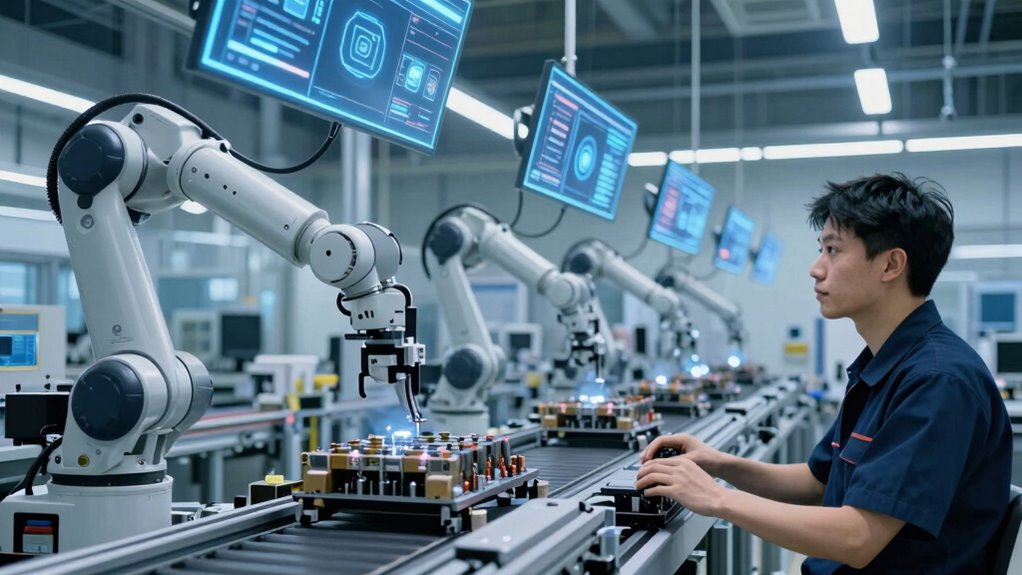

Automation shifts your expectations by emphasizing collaboration rather than job replacement. You start to see systems as tools that augment your decision-making, not just automate tasks. There’s a focus on trust, transparency, and ethical use, which encourages you to view automation as a way to empower your role. As these changes unfold, you’ll understand how human oversight remains critical in ensuring automation aligns with societal values. Keep exploring to discover how these shifts shape your future work environment.

Get health and wellness essentials delivered free with Prime
- Fast, free delivery on millions of items
- Prime Video, Amazon Music and more included
- Member-only deals all year
Key Takeaways
- Automation shifts focus from replacing jobs to enhancing human oversight and decision-making capabilities.
- It fosters an expectation of increased efficiency, accuracy, and collaboration in work processes.
- Transparency and ethical design become essential to build trust before automation impacts employment.
- The perception evolves toward viewing automation as a supportive tool rather than a job eliminator.
- Society anticipates responsible implementation that prioritizes fairness, safety, and human moral judgment.

Have you ever wondered what automation really promises for the future of work and daily life? It’s tempting to think that automation will simply replace jobs, but the real shift begins with changing expectations. Before any tasks are handed over to machines, you start to imagine a world where efficiency and precision redefine how work gets done. This mental shift influences how businesses and workers alike perceive their roles, often emphasizing human oversight rather than total replacement. You might expect automation to handle repetitive tasks, but it’s equally about supporting decision-making processes where human judgment remains essential. The idea isn’t to eliminate humans but to augment their capabilities, leading to a new standard of collaboration between humans and machines. This shift raises important ethical considerations, especially around how decisions are made and who bears responsibility when things go wrong. You realize that trusting autonomous systems involves more than just technological reliability; it demands transparency and accountability. As expectations evolve, so does the conversation about ethical considerations—balancing the benefits of automation with the potential risks to privacy, fairness, and safety. You’re encouraged to see automation as a tool for empowerment, not just efficiency, fostering a mindset that values human oversight. While machines can process vast amounts of data faster than humans, they lack the moral compass and contextual understanding that guide ethical decision-making. That’s why your role shifts from performing routine tasks to overseeing automated processes, ensuring they operate within ethical boundaries. This oversight becomes *integral* in sectors like healthcare, finance, and public services, where automated decisions impact lives. As these expectations grow, organizations start to prioritize training workers to develop skills that complement automation, rather than compete with it. You begin to see a future where the focus is on designing systems that are transparent, fair, and aligned with societal values. This proactive approach helps manage public trust and mitigates fears of job displacement. Incorporating technological capabilities such as automation into workflows can also enhance overall efficiency, especially when combined with a clear understanding of the role of human oversight. Additionally, understanding the importance of ethical frameworks is crucial for organizations to implement responsible automation. Recognizing the significance of ethical frameworks can guide organizations in creating responsible and trustworthy automated systems. As the exploration of digital concepts continues, the importance of understanding both technological and ethical dimensions becomes increasingly clear. Ultimately, your expectations about automation are not solely about what it can do but about what it should do, emphasizing human oversight and ethical considerations as cornerstones. By shifting your perspective from automation as a job killer to a collaborative partner, you recognize that the real promise lies in how it elevates human work and decision-making. It’s about shaping a future where technology and ethics go hand in hand, creating a more responsible and efficient way to live and work.
human oversight automation tools
As an affiliate, we earn on qualifying purchases.
As an affiliate, we earn on qualifying purchases.
Frequently Asked Questions
How Do Automation Expectations Vary Across Different Industries?
You’ll find automation expectations vary across industries due to differing levels of industry adaptation and technological optimism. In tech and manufacturing, expectations rise quickly as these sectors embrace automation to boost efficiency. Conversely, in healthcare or education, skepticism often slows adoption, leading to more cautious expectations. Your perception of automation’s potential influences how quickly you believe industries will adapt, with optimistic views accelerating change and cautious ones prompting more measured, deliberate integration.
What Role Does Employee Training Play in Managing Automation Expectations?
You play a crucial role in workforce adaptation by prioritizing skill development through employee training. This helps manage automation expectations, ensuring your team feels prepared rather than overwhelmed. Investing in ongoing learning fosters confidence and resilience, allowing your staff to embrace technological changes smoothly. As you support continuous growth, you create a flexible, future-ready workforce that adapts seamlessly to automation’s evolving landscape, ultimately boosting productivity and morale.
How Do Companies Communicate Automation Changes to Their Staff?
You should communicate automation changes clearly and transparently to your staff, emphasizing how it impacts their roles and benefits overall. Use consistent messaging to foster employee engagement, addressing concerns through open forums or Q&A sessions. Implement change management strategies to guide them smoothly through the shift, making sure they understand the purpose behind automation and how it supports their work. This approach builds trust and eases adaptation.
Are There Legal Considerations Linked to Automation Expectations?
Yes, there are legal considerations linked to automation expectations. You need to guarantee legal compliance by respecting labor laws, data privacy, and employment regulations. Ethical concerns also play a role, as you must consider transparency and fairness in automation implementations. Failing to address these aspects can lead to legal disputes or reputational damage. So, always review your automation plans with legal and ethical standards in mind to avoid potential issues.
How Do Automation Expectations Influence Long-Term Business Strategies?
Imagine your business as a ship charting uncharted waters; automation expectations are the stars guiding your course. When you adopt an automation mindset, you anchor your strategic planning in innovation, shaping long-term goals that embrace technological evolution. This foresight helps you steer smoothly through change, ensuring your business remains resilient and competitive. By aligning automation expectations with your vision, you set a steady course toward sustainable growth and future-proof success.
ethical AI decision-making software
As an affiliate, we earn on qualifying purchases.
As an affiliate, we earn on qualifying purchases.
Conclusion
As you stand on the cusp of change, remember the story of Icarus—dreaming of flight but risking too close to the sun. Automation elevates your expectations, promising new heights, yet it also warns of pitfalls if you’re unprepared. Embrace the shift with foresight and adaptability, knowing that just as Daedalus warned Icarus, wise foresight can help you soar safely into the future, transforming challenges into opportunities before they redefine your world.
As an affiliate, we earn on qualifying purchases.
collaborative automation systems
As an affiliate, we earn on qualifying purchases.
As an affiliate, we earn on qualifying purchases.
Halloween Picks
halloween
As an affiliate, we earn on qualifying purchases.