
Social media shapes how you connect, communicate, and see the world, going beyond just likes and shares. It enables instant global interaction and creates new communities, but also raises privacy concerns as companies track your data. Your mental health can be affected by constant comparison and curated lifestyles, making it essential to set boundaries. Understanding these deeper impacts helps you navigate social media mindfully—if you want to explore more, you’ll uncover ways to balance its influence on your life.
Key Takeaways
- Social media transforms communication, enabling instant global connections and fostering new communities beyond superficial interactions.
- It raises privacy concerns due to extensive data collection and potential misuse, impacting individual control over personal information.
- Digital platforms influence mental health by promoting comparison, validation-seeking, and curated portrayals, leading to anxiety and loneliness.
- Mindful use of social media can maximize benefits like information sharing while minimizing risks to privacy and well-being.
- Society must balance opportunities for connection with awareness of privacy and mental health challenges to ensure responsible social media engagement.
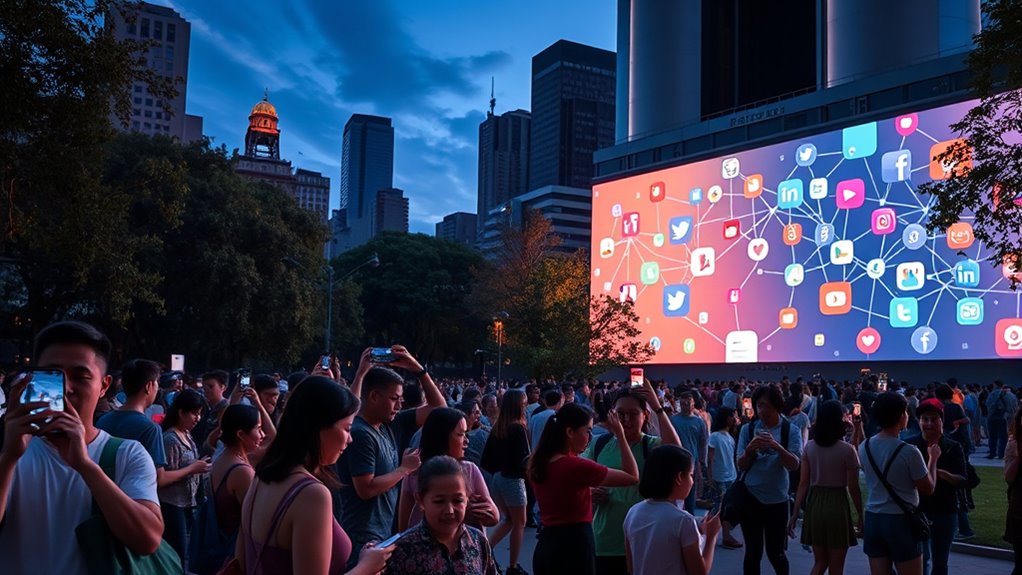
Have you ever wondered how social media has transformed the way we connect and communicate? It’s hard not to notice how platforms like Instagram, TikTok, and Facebook have changed our everyday interactions. But beyond the surface, social media’s influence runs deeper, affecting aspects of our lives we might not always see right away. One significant area impacted is digital privacy. When you share details about your life online, you often do so without fully considering how much personal information is becoming accessible. Social media companies collect vast amounts of data to personalize your experience, but this data collection also raises concerns about your digital privacy. You might not realize that your posts, location data, and browsing habits are being stored, analyzed, and sometimes sold to third parties. This can lead to targeted advertising or, worse, identity theft. Consequently, you could feel a loss of control over your own information, which can be unsettling. Protecting your digital privacy requires awareness and proactive steps, like adjusting privacy settings, being cautious about what you share, and understanding how your data is used. Additionally, engaging in creative practice can serve as a healthy outlet to reduce online stress and maintain mental well-being. Simultaneously, social media’s impact on mental health is profound. The constant stream of images, updates, and notifications can create a cycle of comparison and validation-seeking. You might find yourself scrolling endlessly, chasing likes and comments that temporarily boost your confidence but often leave you feeling more anxious or inadequate. This reliance on external approval can erode your self-esteem over time. Additionally, exposure to curated versions of others’ lives can foster feelings of envy or loneliness, making you feel isolated despite being more “connected” than ever. The pressure to maintain a perfect online persona can also contribute to stress and anxiety, especially if you’re struggling with your mental health offline. It’s essential to recognize these effects and set boundaries. Limiting screen time, taking digital detoxes, and seeking real-life connections can help protect your mental well-being. Remember, social media is a tool that can enhance your life, but it shouldn’t replace genuine relationships or compromise your mental health. In the end, social media’s impact on society is complex. It offers incredible opportunities for connection and information sharing, but it also presents risks related to digital privacy and mental health. Being mindful about how you engage online can help you harness its benefits while minimizing the downsides. Stay informed about your digital privacy rights, and prioritize your mental health by setting healthy boundaries. By doing so, you maintain control over your online presence and protect your well-being in an increasingly connected world.
Frequently Asked Questions
How Does Social Media Influence Mental Health Over Time?
Social media can affect your mental health over time by impacting your self-esteem and increasing stress. Constant exposure to curated content may make you feel inadequate or anxious. Taking a digital detox helps you reset and regain perspective, improving your mental well-being. By limiting your online time, you give yourself space to build confidence and reduce negative feelings, leading to healthier habits and a more positive outlook on yourself.
What Role Does Social Media Play in Shaping Political Opinions?
You’re often influenced by social media in shaping your political opinions through echo chambers that reinforce your existing beliefs. It exposes you to fake news, making it harder to distinguish fact from fiction. As a result, you may become more polarized or misinformed. Social media’s algorithms tend to prioritize content that aligns with your views, increasing your exposure to biased information and shaping your political perspective over time.
How Do Social Media Algorithms Affect User Behavior?
Did you know that over 70% of social media users are caught in filter bubbles or echo chambers? Algorithms influence your behavior by showing you content that aligns with your beliefs, reinforcing biases and limiting diverse perspectives. This personalization encourages you to engage more with familiar ideas, often deepening polarization. So, your online experience becomes less about discovery and more about reinforcing existing views, shaping how you see the world.
What Are the Privacy Risks Associated With Social Media Use?
You risk exposing your personal information and compromising data privacy when using social media. Sharing too much personal details can lead to identity theft, scams, or unwanted surveillance. Be cautious about what you post and review your privacy settings regularly. Protect your data privacy by limiting access to your information and understanding how platforms handle your personal information. Staying vigilant helps you maintain control over your personal data online.
How Does Social Media Impact Traditional Forms of Communication?
You might notice social media changing how you communicate, often replacing face-to-face interactions with digital exchanges. It influences your sense of digital etiquette, sometimes leading to less personal connection and more casual conversations. While it makes staying in touch easier, it can diminish the depth of face-to-face interactions, impacting your social skills and emotional understanding. Be mindful of balancing online communication with real-world interactions to maintain meaningful relationships.
Conclusion
While social media offers many benefits, it also gently guides us to new ways of thinking and connecting. It’s important to stay mindful of its subtle influence, ensuring it enriches rather than diminishes our real-world experiences. By finding balance and setting boundaries, you can enjoy the positives without letting it quietly overshadow your true connections. Remember, a mindful approach helps you harness social media’s potential while keeping your well-being front and center.