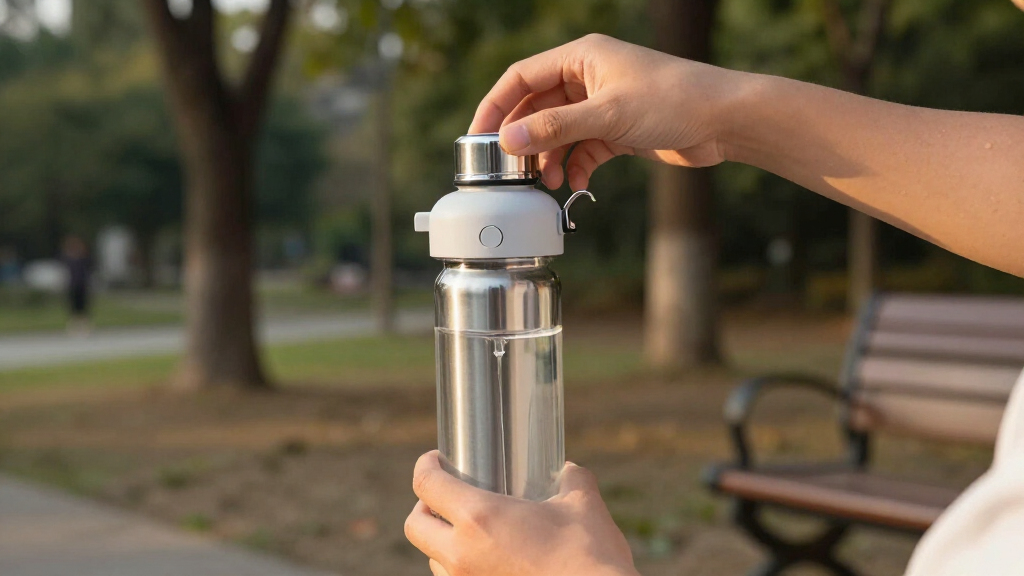

The best portable water purifiers balance treatment capability, usable output, portability, and maintenance rather than winning on pore size alone. My best overall pick is the Survivor Filter PRO because its hand-pump design and multi-stage treatment suit both backcountry trips and emergency storage. The Sawyer Mini is the value standout for buyers who prioritize low weight and simple field maintenance, while the ITEHIL electric model is my premium pick for powered convenience and solar-charging flexibility. The main tradeoffs are manual effort versus battery dependence, personal drinking versus group production, and filtration claims versus verified protection from viruses. Continue reading for the full breakdown and buyer-specific recommendations.
Key Takeaways
- Survivor Filter PRO ranks first because it offers a broader balance of portability, manual reliability, and multi-stage treatment than the more specialized Katadyn and Purewell pumps.
- ITEHIL leads the premium tier, while the BKLES electric purifier is better suited to emergency kits that benefit from an integrated light and six-stage setup.
- Sawyer Mini offers the strongest value-to-weight balance; the LifeStraw Personal is simpler for drinking directly from a source but less flexible for collecting treated water.
- Waterdrop is the group-capacity choice with its 1.5-gallon bag, whereas the smaller SimPure 3L system makes more sense when pack space matters.
- A 0.01-micron claim does not settle the safety question; buyers still need to check verified contaminant reduction, cartridge limits, and whether viral protection matches the intended water source.
| Survivor Filter PRO Portable Water Filter | 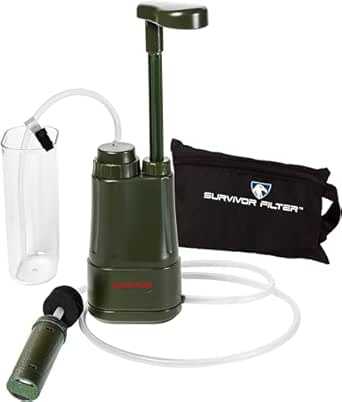 | Best Overall | Weight: 12.8 ounces | Flow Rate: 500ml per minute | Filtration Pore Size: 0.01 micron | VIEW LATEST PRICE | See Our Full Breakdown |
| ITEHIL Portable Electric Water Filter | 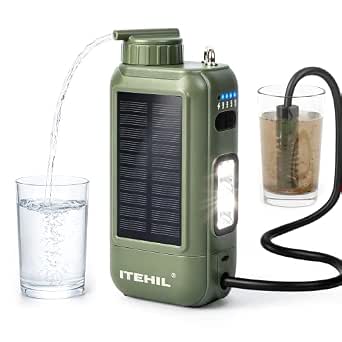 | Best Powered Convenience | Filtration Precision: 0.01 micron | Filter Life: 6 months | Treatment Capacity: 265 gallons | VIEW LATEST PRICE | See Our Full Breakdown |
| BKLES 3-in-1 Water Filter System |  | Best Emergency Multitasker | Filtration Stages: 6 | Membrane Configuration: Dual ultrafiltration membranes | Filtration Precision: 0.01 micron | VIEW LATEST PRICE | See Our Full Breakdown |
| Sawyer Products SP128 MINI Water Filtration System | 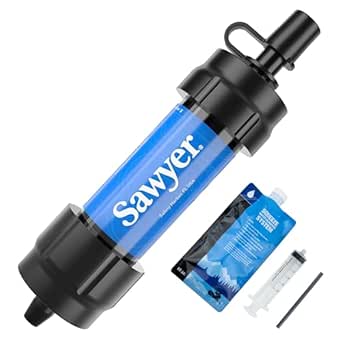 | Best Ultralight Filter | Weight: 2 ounces | Filter Rating: 0.1 micron absolute | Filtration Capacity: Up to 100,000 gallons | VIEW LATEST PRICE | See Our Full Breakdown |
| SimPure Portable Gravity-Fed Water Filter with 3L Bag |  | Best Hands-Free Camp Filter | Bag Capacity: 3 liters | Filter Lifespan: 5,000 liters | Filter Lifespan in Gallons: 1,320 gallons | VIEW LATEST PRICE | See Our Full Breakdown |
| LifeStraw Personal Water Filter | 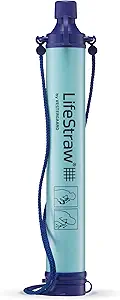 | Best Ultralight Emergency Straw | Filter capacity: 4,000 liters (1,000 gallons) | Contaminants addressed: Bacteria, parasites, and microplastics | Material: BPA-free materials | VIEW LATEST PRICE | See Our Full Breakdown |
| Katadyn Hiker Pro Transparent Hand Pump Water Filter | 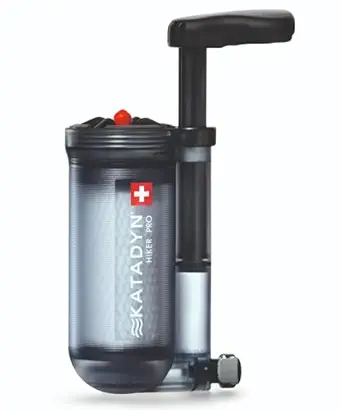 | Best Hand-Pump Control | Filter type: Hand-pump water filter | Maximum flow rate: 1 liter per minute | Weight: 11.2 oz | VIEW LATEST PRICE | See Our Full Breakdown |
| LifeStraw Personal Water Filter 2-Pack |  | Best Two-Person Backup | Quantity: 2 personal filters | Capacity per filter: 4,000 liters (1,000 gallons) | Filter medium: Hollow-fiber membrane | VIEW LATEST PRICE | See Our Full Breakdown |
| LifeStraw Go Series Water Filter Bottle 2-Pack |  | Best Filter Bottles for Travel Partners | Bottle capacity: 22 oz each | Number of bottles: 2 | Colors: Icelandic Blue and Aegean Sea | VIEW LATEST PRICE | See Our Full Breakdown |
| Waterdrop Gravity Water Filter Straw with 1.5-Gallon Bag | 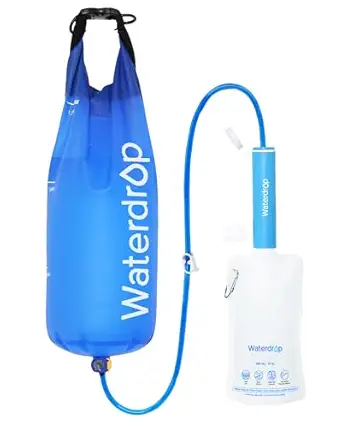 | Best Gravity System for Base Camp | Filtration stages: 5-stage | Filtration rating: 0.1 micron | Bag capacity: 1.5 gallons | VIEW LATEST PRICE | See Our Full Breakdown |
| BKLES Electric Water Purifier Camping, Survival & Emergency Preparedness |  | Best for Nighttime Emergencies | Filtration stages: 6 | Filtration method: Ultrafiltration membrane, PP cotton, KDF, and activated carbon | Flow rate: 0.67 liters per minute | VIEW LATEST PRICE | See Our Full Breakdown |
| Purewell Water Hand Purifier Pump |  | Best High-Flow Manual Pump | Filtration method: Activated carbon and ultrafiltration | Filter pore size: 0.01 micron | Flow rate: Up to 1,400 milliliters per minute | VIEW LATEST PRICE | See Our Full Breakdown |
| portable water purifier | Weight | Flow Rate |
|---|---|---|
| Survivor Filter PRO Portable W | 12.8 ounces | 500ml per minute |
| ITEHIL Portable Electric Water | — | 0.18 gallons per minute |
| BKLES 3-in-1 Water Filter Syst | 450 grams | 800–1,000ml per minute |
| Sawyer Products SP128 MINI Wat | 2 ounces | — |
| SimPure Portable Gravity-Fed W | 2.8 ounces | 27 liters per hour |
| LifeStraw Personal Water Filte | — | — |
| Katadyn Hiker Pro Transparent | 11.2 oz | — |
| LifeStraw Personal Water Filte | — | — |
| LifeStraw Go Series Water Filt | — | — |
| Waterdrop Gravity Water Filter | — | — |
| BKLES Electric Water Purifier | 12.32 ounces | 0.67 liters per minute |
| Purewell Water Hand Purifier P | 1 pound | Up to 1,400 milliliters per minute |
More Details on Our Top Picks
Survivor Filter PRO Portable Water Filter
I rank the Survivor Filter PRO first because its 0.01-micron, three-stage system addresses viruses, bacteria, parasites, and heavy metals without relying on electricity. That broader treatment scope makes it a stronger emergency choice than the Sawyer MINI, which targets bacteria, protozoa, and microplastics but not viruses. Its 500ml-per-minute output is practical for filling bottles, while the compact body remains manageable in a backpack or preparedness kit. The price of that independence is repeated hand pumping, which becomes tiring when supplying several people; the SimPure gravity system requires less attention for camp use. Its stated 100,000-liter capacity is generous, although cartridges and components still need maintenance. I see this as the best-balanced portable purifier here for buyers prioritizing treatment breadth over effortless operation.
Pros:- 0.01-micron filtration targets viruses, bacteria, and parasites
- Three-stage system also addresses heavy metals
- 500ml-per-minute flow balances portability and useful output
- Non-electric design remains usable during extended outages
Cons:- Manual pumping can become tiring when treating water for multiple people
- More moving parts and setup than a straw-style filter
- Filters eventually require replacement despite the high stated capacity
Best for: Solo travelers, campers, and emergency planners who need broad contaminant treatment without depending on batteries
Not ideal for: Large groups that need several liters at once, because continuous manual pumping adds work
- Weight:12.8 ounces
- Flow Rate:500ml per minute
- Filtration Pore Size:0.01 micron
- Capacity:100,000 liters
- Material:BPA-free ABS
- Dimensions:3.2 x 2 x 6.5 inches
- Maximum Supported TDS:1,000 ppm
- Operating Temperature:32°F to 120°F
- Power Source:Non-electric
Our verdict“I recommend this as the most balanced choice for buyers who want broad purification coverage and dependable manual operation.”
ITEHIL Portable Electric Water Filter
The ITEHIL Portable Electric Water Filter is my pick for buyers who want purified water without squeezing a pouch or operating a hand pump. Its rechargeable 5,200mAh battery and solar or USB-C charging give it more off-grid flexibility than a conventional electric unit. Compared with the BKLES 3-in-1, however, ITEHIL lacks a manual pumping fallback, so a depleted battery can stop production. The 0.01-micron system is described as addressing viruses, bacteria, heavy metals, and odors, but its 0.18-gpm flow is better suited to individuals or couples than thirsty groups. A six-month cartridge interval also creates more recurring upkeep than the Sawyer MINI’s long-life membrane. I rank it below the manual Survivor Filter PRO because of that power dependence, yet its push-button operation makes daily campsite filtering much easier.
Pros:- Electric operation eliminates repetitive hand pumping
- 0.01-micron filtration is designed to address multiple contaminant types
- 5,200mAh battery supports up to four hours of continuous use
- Solar and USB-C charging provide flexible power options
Cons:- No manual filtration mode if the battery is depleted
- 0.18-gpm output can feel slow when filling containers for a group
- Listed six-month filter life creates recurring replacement needs
Best for: Solo campers and couples who value push-button filtering and want solar charging as an off-grid backup
Not ideal for: Expedition groups or long-term emergency users who cannot risk battery dependence or frequent cartridge replacement
- Filtration Precision:0.01 micron
- Filter Life:6 months
- Treatment Capacity:265 gallons
- Battery Capacity:5,200mAh
- Flow Rate:0.18 gallons per minute
- Filtration Media:Ahlstrom membrane and hollow fiber
- Charging:Solar and USB-C
- Maximum Supported TDS:1,000 ppm
- Operating Temperature:32°F to 104°F
Our verdict“I would choose the ITEHIL for convenient solo or two-person use when reliable access to charging is likely.”
BKLES 3-in-1 Water Filter System
I place the BKLES 3-in-1 in the emergency-multitasker slot because it combines electric filtration, manual pumping, solar charging, lighting, an SOS signal, and phone charging. That three-mode operating design offers more redundancy than the ITEHIL, which has two charging methods but no hand-pump fallback. Its six-stage, dual 0.01-micron system and 800–1,000ml-per-minute output also make it faster on paper than ITEHIL’s 0.18-gpm rate. The compromise is complexity: more functions mean more components to maintain, battery runtime varies, and reverse phone charging consumes energy otherwise available for filtering. At 450 grams, it is far heavier than the two-ounce Sawyer MINI. I rank it behind simpler options for ordinary hiking, but its 1,800-gallon capacity and emergency-focused extras make sense for vehicle kits, base camps, and outage preparation.
Pros:- Electric and manual operation provide useful redundancy
- Solar and USB-C charging support off-grid use
- 800–1,000ml-per-minute listed flow can serve small groups efficiently
- LED, SOS, and reverse-charging functions consolidate emergency gear
Cons:- Heavier and more complex than basic pump, squeeze, or gravity filters
- Battery runtime varies with filtration, lighting, and phone-charging use
- Replacement filters add ongoing cost and supply dependence
Best for: Vehicle campers, base-camp users, and households building an emergency kit with redundant operating modes
Not ideal for: Ultralight backpackers who would rather carry a simple filter than a 450-gram multifunction device
- Filtration Stages:6
- Membrane Configuration:Dual ultrafiltration membranes
- Filtration Precision:0.01 micron
- Flow Rate:800–1,000ml per minute
- Treatment Capacity:1,800 gallons
- Weight:450 grams
- Charging Methods:Solar and USB-C
- Operating Modes:Electric and hand pump
- Additional Features:LED light, SOS light, and reverse mobile charging
Our verdict“I favor this model for emergency kits where redundancy and auxiliary functions matter more than minimum weight.”
Sawyer Products SP128 MINI Water Filtration System
At two ounces, the Sawyer MINI is the easiest option here to justify in a tightly packed hiking kit. Its 0.1-micron absolute filter targets bacteria, protozoa, and microplastics, while the pouch, straw, and bottle-compatible format offer several drinking setups. Compared with the 12.8-ounce Survivor Filter PRO, it saves substantial pack weight and removes the need to pump. The tradeoff is treatment scope: it is not specified for virus or heavy-metal removal, so I would not rank it as the best choice for questionable urban or floodwater sources. Its flow can slow as debris accumulates, and backwashing with the included plunger becomes part of routine ownership. The supplied 16-ounce pouch is also modest beside SimPure’s three-liter bag. I recommend the Sawyer as the best ultralight choice, not the broadest purifier.
Pros:- Two-ounce weight suits ultralight and backup kits
- 0.1-micron absolute filter removes bacteria, protozoa, and microplastics
- Works with the included pouch, straw, or compatible bottles
- Rated for up to 100,000 gallons with proper maintenance
Cons:- Not specified to remove viruses or heavy metals
- Flow can decline and requires regular backwashing
- Small included pouch is inefficient for treating camp-scale quantities
Best for: Weight-conscious hikers and solo travelers filtering relatively clear backcountry water where viruses are not the main concern
Not ideal for: International travelers or disaster-response users who need stated protection from viruses, chemicals, or heavy metals
- Weight:2 ounces
- Filter Rating:0.1 micron absolute
- Filtration Capacity:Up to 100,000 gallons
- Bacteria Removal:99.99999%
- Protozoa Removal:99.9999%
- Microplastics Removal:100%
- Included Pouch:16 ounces
- Included Accessories:7-inch straw and cleaning plunger
Our verdict“I recommend the Sawyer MINI for minimal pack weight when biological backcountry contaminants are the primary threat.”
SimPure Portable Gravity-Fed Water Filter with 3L Bag
The SimPure gravity-fed system suits camps where treating a useful batch matters more than drinking directly from a stream. Once its three-liter bag is suspended, gravity does the work, giving users hands-free filtration at up to 27 liters per hour. That is more convenient for cooking and refilling bottles than repeatedly squeezing the Sawyer MINI’s 16-ounce pouch. SimPure also weighs only 2.8 ounces, keeping it far lighter than either powered model. Still, it needs a branch, stand, or other elevated anchor, and its 5,000-liter lifespan is much shorter than Sawyer’s stated 100,000-gallon rating. The 0.1-micron membrane is described as filtration rather than virus treatment, which limits its appeal for high-risk water. I give it the group-camp role because its three-liter batch capacity offsets those constraints when a suitable hanging point is available.
Pros:- Three-liter bag treats more water per setup than personal pouches
- Gravity operation requires no pumping, squeezing, or battery
- 27-liter-per-hour flow is useful for campsite bottle filling
- 2.8-ounce filter weight remains friendly to backpacking
Cons:- Needs an elevated hanging point and time for gravity to work
- 0.1-micron membrane is not specified for virus removal
- 5,000-liter lifespan trails the Sawyer MINI’s stated capacity
Best for: Couples and small camping groups that want hands-free batch filtration for drinking and cooking
Not ideal for: Travelers facing virus-risk water or routes without a reliable place to suspend the gravity bag
- Bag Capacity:3 liters
- Filter Lifespan:5,000 liters
- Filter Lifespan in Gallons:1,320 gallons
- Flow Rate:27 liters per hour
- Weight:2.8 ounces
- Filter Rating:0.1 micron
- Filtration Technology:Ultrafiltration membrane
- Operation:Gravity-fed
Our verdict“I would pick the SimPure for lightweight, hands-free camp filtration when batch volume matters more than virus treatment.”
LifeStraw Personal Water Filter
I rank the LifeStraw Personal Water Filter as the simplest emergency option here because it combines a small carry footprint with a 4,000-liter filter capacity. Unlike the Katadyn Hiker Pro, it needs no pumping: I can recommend it for a solo hiker who wants to drink directly from a stream or keep a backup filter in a vehicle kit. It removes bacteria, parasites, and microplastics, but the stripped-down design creates clear limits. There is no bottle, storage bag, or group-serving system, so collecting water for cooking is awkward. The Waterdrop Gravity Filter is a better campsite choice because its 1.5-gallon bag works unattended. This LifeStraw earns its place through portability and simplicity, not versatility, and manual suction may feel slow when substantial water is needed.
Pros:- Filters bacteria, parasites, and microplastics
- Rated for up to 4,000 liters of water
- Compact format fits easily in hiking and emergency kits
- BPA-free construction
Cons:- Provides no integrated bottle or clean-water storage
- Direct drinking and manual suction are poorly suited to group use
- Lacks the pump or gravity feed offered by more versatile systems
Best for: Solo hikers and emergency-kit builders who want a compact filter for drinking directly from freshwater sources
Not ideal for: Groups and campsite cooks who need to collect, store, or dispense several liters at once
- Filter capacity:4,000 liters (1,000 gallons)
- Contaminants addressed:Bacteria, parasites, and microplastics
- Material:BPA-free materials
- Filter format:Personal drinking straw
- Operation:Manual suction
- Included water storage:None
- Color:Blue
Our verdict“I recommend this LifeStraw as a lightweight personal backup, while frequent camp users should choose a pump or gravity system.”
Katadyn Hiker Pro Transparent Hand Pump Water Filter
The Katadyn Hiker Pro fills the gap between direct-sip straws and slower gravity setups. Its hand pump produces up to 1 liter per minute, letting a backpacker fill separate containers rather than crouch beside the water source as the LifeStraw Personal Water Filter requires. I also favor the transparent housing for buyers who want a visible view of the system while pumping. At 11.2 ounces, it remains packable, though it is heavier and has more working parts than a basic straw. The Waterdrop Gravity Filter carries more water with less active effort, while this Katadyn gives the user better control over collection and output. Its main penalties are repeated pumping and ongoing maintenance, which become tiring when supplying several people or processing a full day’s camp water.
Pros:- Fills separate bottles and containers instead of requiring direct drinking
- Delivers up to 1 liter per minute
- Transparent housing makes the filter system easier to monitor
- An 11.2-ounce weight remains practical for backpacking
Cons:- Requires continuous hand pumping during water collection
- Needs maintenance for dependable long-term operation
- Less convenient than a gravity system for processing camp-sized volumes
Best for: Backpackers who want to fill bottles from natural sources and prefer controlled hand pumping over direct sipping
Not ideal for: Large camping groups that need unattended, high-volume water processing without repeated manual pumping
- Filter type:Hand-pump water filter
- Maximum flow rate:1 liter per minute
- Weight:11.2 oz
- Housing:Transparent
- Power source:Manual hand pump
- Intended activities:Camping, backpacking, hiking, and survival
Our verdict“I recommend the Katadyn for backpackers who value controlled bottle filling enough to accept pumping and maintenance.”
LifeStraw Personal Water Filter 2-Pack
I give the LifeStraw Personal Water Filter 2-Pack a separate role from the single LifeStraw because two independent filters provide partner coverage and emergency redundancy. Each person can drink directly from a source without sharing one mouthpiece, and each filter carries a stated capacity of 4,000 liters. Compared with the Sawyer Mini, this package emphasizes immediate direct-sip simplicity rather than a broader bottle-and-pouch setup. The tradeoff is the same limitation found in the single LifeStraw, doubled rather than solved: neither unit stores clean water or serves a camp kitchen. Proper maintenance also matters if buyers expect the stated life of up to five years. It does not remove viruses or chemical contaminants, so I would reserve it for freshwater situations where its bacteria, parasite, and microplastic filtration matches the likely hazard.
Pros:- Supplies two independent personal filters for redundancy
- Removes bacteria, parasites, microplastics, dirt, sand, and cloudiness
- Each filter is rated for up to 4,000 liters
- Lightweight straw format is easy to divide between two packs
Cons:- Does not remove viruses or chemical contaminants
- Neither filter includes a vessel for collecting clean water
- Reaching the stated lifespan depends on proper maintenance
Best for: Hiking partners, couples, or households assembling emergency kits with one independent filter per person
Not ideal for: International travelers or disaster planners who need protection from viruses and chemical contamination
- Quantity:2 personal filters
- Capacity per filter:4,000 liters (1,000 gallons)
- Filter medium:Hollow-fiber membrane
- Removal claim:99.999999% of bacteria and parasites
- Additional filtration:Microplastics, dirt, sand, and cloudiness
- Use method:Drink directly from sources or filled containers
- Potential service life:Up to 5 years with proper maintenance
- Virus and chemical removal:Not provided
Our verdict“I recommend this two-pack for partners who want simple individual backups, not for threats involving viruses or chemicals.”
LifeStraw Go Series Water Filter Bottle 2-Pack
The LifeStraw Go Series 2-Pack is my travel-oriented choice because it combines filtration and storage in two familiar 22-ounce bottles. That makes it easier to use in airports, hotels, and on day hikes than the bare LifeStraw 2-Pack, which offers no vessel. An activated-carbon capsule also improves taste, a benefit the basic straws lack, while the membrane addresses bacteria, parasites, and microplastics. Convenience comes with recurring upkeep: the carbon capsule lasts only 100 liters, far less than the membrane’s 4,000-liter rating, so replacements occur on different schedules. Each bottle’s 22-ounce volume may also require frequent refills during hot or strenuous outings. Compared with the Waterdrop Gravity Filter, this set is easier for two people to carry separately but far less efficient for shared camp water or cooking.
Pros:- Includes two portable 22-ounce filter bottles
- Filters bacteria, parasites, and microplastics
- Activated carbon improves taste
- BPA-free bottles reduce reliance on disposable water bottles
Cons:- The 22-ounce capacity requires frequent refilling during high water demand
- Carbon capsules need replacement much sooner than the membrane filters
- Two-stage maintenance is more involved than caring for a basic filter straw
Best for: Travel partners and day hikers who want separate filtered bottles that also improve water taste
Not ideal for: Backcountry groups and heavy water drinkers who need more than 22 ounces between refills
- Bottle capacity:22 oz each
- Number of bottles:2
- Colors:Icelandic Blue and Aegean Sea
- Membrane lifespan:Up to 1,000 gallons (4,000 liters)
- Carbon capsule lifespan:Up to 26 gallons (100 liters)
- Contaminants addressed:Bacteria, parasites, and microplastics
- Taste treatment:Activated-carbon capsule
- Bottle material:BPA-free
Our verdict“I recommend this set for two travelers who prioritize bottle convenience and better taste over high-volume water collection.”
Waterdrop Gravity Water Filter Straw with 1.5-Gallon Bag
I rank the Waterdrop Gravity Water Filter highest for stationary camp use because its 1.5-gallon hanging bag can supply several drinks or cooking tasks from one fill. That is a major practical advantage over the LifeStraw Personal Filter, which handles one drinker at the source, and over the 22-ounce LifeStraw Go bottles. The five-stage, 0.1-micron system also targets taste alongside harmful substances, while a stated lifespan of up to 1,400 gallons supports extended use. Speed is less compelling: its maximum 700-milliliter-per-minute flow trails the Katadyn Hiker Pro’s 1-liter rate, although gravity demands less active work. Buyers must backwash the filter, and flow can decline with heavy use. Its threaded connections also limit compatibility, making this better as a planned camp system than a universal attachment for assorted containers.
Pros:- A 1.5-gallon bag handles shared drinking and cooking needs
- Gravity operation reduces hands-on work after the bag is hung
- Five-stage 0.1-micron filtration addresses harmful substances and taste
- Backwashable design has a stated lifespan of up to 1,400 gallons
Cons:- Backwashing adds a recurring maintenance step
- Flow can slow as the filter accumulates debris
- Thread requirements restrict compatibility with some bags and bottles
Best for: Base-camp groups and emergency-preparedness households that want a large hanging reservoir for shared water
Not ideal for: Fast-moving solo hikers who prioritize the smallest pack size and broad bottle compatibility
- Filtration stages:5-stage
- Filtration rating:0.1 micron
- Bag capacity:1.5 gallons
- Maximum flow rate:700 ml per minute
- Rated lifespan:Up to 1,400 gallons
- Maintenance method:Backwashing
- Compatible vessels:Water bags and bottles with matching threads
- Design:Recyclable gravity-fed filter straw
Our verdict“I recommend the Waterdrop for shared campsite water, provided buyers accept backwashing and connection limits.”
BKLES Electric Water Purifier Camping, Survival & Emergency Preparedness
The BKLES Electric Water Purifier earns its place by combining powered filtration with a built-in emergency light, a useful pairing for blackouts, roadside kits, and camp chores after dark. Its six-stage filter stack uses ultrafiltration, PP cotton, KDF, and activated carbon, while several charging options make it more flexible than a single-source electric model. Compared with the Purewell Water Hand Purifier Pump, it requires less physical effort and weighs less, but its 0.67-liter-per-minute flow is much slower. The stated 17-liter capacity also suits individuals or small parties better than busy group camps. Its main compromise is power dependence: solar, vehicle, and power-bank compatibility provide options, yet the pump still becomes less useful when every charging source is depleted.
Pros:- Six filtration stages combine sediment, carbon, KDF, and ultrafiltration media
- Multiple power inputs work with USB Type-C, power banks, solar panels, and vehicles
- Built-in emergency light adds practical value during outages and nighttime camps
- Low 12.32-ounce weight makes it easy to pack
Cons:- Slower flow than the manually pumped Purewell model
- Cannot operate normally without a usable electrical source
- Filter replacement is required after 180 days or 1,000 liters
Best for: Solo campers, couples, and emergency-kit builders who want push-button filtration plus a light for nighttime use
Not ideal for: Large groups or remote expeditions where high output and dependable operation without electricity matter most
- Filtration stages:6
- Filtration method:Ultrafiltration membrane, PP cotton, KDF, and activated carbon
- Flow rate:0.67 liters per minute
- Capacity:17 liters
- Weight:12.32 ounces
- Dimensions:4.72 x 3.54 x 6.69 inches
- Output per charge:Up to 168 liters
- Power options:USB Type-C, mobile power, solar panel, or vehicle power
- Operating temperature:5°C to 40°C
Our verdict“Choose this BKLES model for lightweight, low-effort filtration after dark, but skip it when off-grid reliability or group-scale output matters more.”
Purewell Water Hand Purifier Pump
The Purewell Water Hand Purifier Pump is the stronger choice when several people need filtered water and access to electricity cannot be assumed. Its claimed flow of up to 1.4 liters per minute is more than twice the BKLES Electric Water Purifier’s listed rate, which can shorten refill stops for families or small groups. Manual pumping also avoids batteries, cables, and charging plans. In return, the Purewell weighs one pound and demands repeated physical effort, making it less appealing for solo ultralight hikers than a Sawyer Mini or LifeStraw. Its 0.01-micron ultrafiltration and activated-carbon system targets particles while improving chemical tastes and odors. Buyers should still match the filter to local water risks, and murky source water may shorten its stated 793-gallon service life.
Pros:- Flow rate of up to 1.4 liters per minute supports multiple users
- Manual operation remains available when batteries and charging sources fail
- Replaceable 0.01-micron ultrafiltration and carbon media address particles, tastes, and odors
- ABS and stainless-steel construction is suited to repeated outdoor use
Cons:- One-pound weight is substantial beside personal straw and squeeze filters
- Manual pumping adds effort during large-volume water collection
- Actual filter life can fall below 793 gallons when source water contains heavy sediment
Best for: Families, small camping groups, and emergency planners who need faster output without relying on charged batteries
Not ideal for: Ultralight solo hikers or buyers with limited hand strength, since the one-pound unit requires continuous manual pumping
- Filtration method:Activated carbon and ultrafiltration
- Filter pore size:0.01 micron
- Flow rate:Up to 1,400 milliliters per minute
- Filter lifespan:Up to 793 gallons
- Dimensions:6.69 x 3.14 x 1.96 inches
- Weight:1 pound
- Materials:ABS and stainless steel
- Maximum source-water TDS:1,000 ppm
Our verdict“Pick the Purewell when fast, battery-free group filtration outweighs the extra weight and pumping effort.”
How We Picked
I compared these products using manufacturer-stated treatment capability, flow method, source access, packed size, maintenance requirements, and expected usefulness during power outages or extended trips. I gave more weight to repeatable treated-water production than to unusually small pore-size claims by themselves. Pumps ranked well when they could draw from shallow sources, gravity systems gained points for group use, and personal straws were judged mainly on simplicity and weight. I also separated mechanical filtration from broader purification claims, since bacteria, protozoa, viruses, chemicals, and poor taste require different treatment approaches. No ranking assumes that two products with similar micron ratings provide identical protection.
My highest positions went to products with few major use-case gaps, reasonable upkeep, and a clear advantage over lighter or more automated alternatives. That logic placed the Survivor Filter PRO ahead of the Katadyn Hiker Pro and Purewell pumps for all-around preparedness, while ITEHIL earned the premium role through powered operation and charging flexibility. Sawyer ranked as the best value because its low weight and adaptable format serve more situations than a drink-only straw at a similar level of portability. Waterdrop and SimPure received group-oriented roles rather than higher general rankings because gravity bags are productive at camp but less convenient while moving. I treated replacement-filter access, cleaning, freeze sensitivity, and battery reliance as ownership costs rather than minor footnotes.
Factors to Consider When Choosing Portable Water Purifiers
I would choose among portable water purifiers by starting with the water hazard, then matching the treatment method to how the water will be collected and shared. Micron size is only one part of the decision, and the smallest advertised number is not automatically the best purchase. A strong choice also needs a workable flow rate, maintenance routine, and power plan. The sections below explain where buyers commonly overspend, underprepare, or choose a format that clashes with the trip.
Match the Treatment Method to the Water Hazard
I start by asking whether the likely water contains mainly sediment and microorganisms or may also contain viruses, agricultural runoff, fuel, salt, or heavy metals. A typical 0.1-micron hollow-fiber filter targets bacteria and protozoa but should not be assumed to remove viruses. Even an advertised 0.01-micron membrane deserves a close look at verified reduction claims, test standards, and the conditions under which those results apply. Carbon can improve taste and reduce selected chemicals, but a small carbon stage is not a universal answer for contaminated water. Neither ordinary backpacking filters nor carbon cartridges make seawater safe to drink. When viral contamination is plausible, I would choose a product with documented viral reduction or pair filtration with boiling or an appropriate disinfectant.
Choose a Format That Fits the Water Source
A drinking straw is light, but it can force the user to kneel beside a source and provides little help when water must be carried away. I prefer a hose-equipped pump for shallow pools because it can reach water that is awkward to scoop into a bag. Gravity systems make more sense at a fixed campsite, where one fill can serve cooking, hydration, and several people without constant pumping. A filter bottle suits travel and day hikes because collection, treatment, and storage happen in one container. Published flow figures are difficult to compare when brands use different water quality and pressure during measurement. I would judge practical convenience by asking how many containers must be filled, how low the source may be, and whether treatment must happen while walking.
Balance Powered Speed Against Off-Grid Reliability
Electric purifiers reduce physical effort and may process water with less attention, which is useful for families, base camps, and mobility-limited users. Their tradeoff is dependence on a charged battery, working electronics, cables, and compatible replacement parts. A solar panel can extend autonomy, but its small size and weather dependence make it a backup charging route rather than instant energy. Hand pumps require effort yet offer predictable operation without electricity, while gravity filters exchange speed for passive treatment. Personal straws have the fewest moving parts but cannot match the collection versatility of pumps or bags. For an emergency kit, I favor two independent treatment methods, such as a filter plus boiling equipment or chemical disinfectant.
Plan for Cleaning, Freezing, and Replacement Parts
The purchase price matters less if a clogged cartridge is expensive, difficult to clean, or unavailable when a trip begins. I look for clear backflushing or cleaning instructions, replaceable prefilters, and cartridges that can be bought without replacing the entire device. Silty water can slow almost any filter, so letting sediment settle or using a simple cloth prefilter can preserve useful flow. A wet hollow-fiber element may be damaged by freezing, even when no exterior crack is visible, making cold-weather storage a safety issue. Carbon stages often have shorter service lives than the main membrane and may need separate replacement. I would also check the maker’s sanitation directions because damp storage can create odors and microbial growth.
Compare Carry Weight With Real Treated-Water Output
Ultralight buyers often focus on dry weight while overlooking the extra dirty-water pouch, clean bottle, hose, charger, or backup treatment that completes the system. I compare the whole packed setup, not the filter body alone. For groups, a heavier gravity bag can still be more efficient because it reduces repeated collection trips and lets several people share one cartridge. A two-pack of personal straws adds redundancy but does not create stored water for camp meals, pets, or wound cleaning. Paying more makes sense when it buys documented contaminant reduction, repairable components, or reliable cartridge supply, rather than extra accessories that duplicate gear already packed. My value calculation also includes cost per replacement cycle and whether the product remains useful when batteries or proprietary bags fail.
Frequently Asked Questions
Do I Need Virus Protection From a Portable Water Purifier?
I would base that decision on the source rather than the trip label. Remote mountain water is often discussed mainly in relation to bacteria and protozoa, while water affected by sewage or dense human activity can present a greater viral concern. Standard 0.1-micron backpacking filters should not be treated as dependable virus barriers. International travel, flooding, and disaster response can justify documented viral reduction or a combined method. When the product’s claims are unclear, I would filter visible material and add boiling or correctly used chemical disinfection.
Is a 0.01-Micron Filter Automatically Better Than a 0.1-Micron Filter?
No, because the printed pore size does not describe the entire device, test method, flow under field conditions, or seal quality. A smaller membrane may support broader microorganism reduction, but it may also have slower flow or faster clogging in muddy water. I would compare verified reduction claims, usable cartridge life, and cleaning instructions alongside the micron figure. Carbon stages and prefilters perform different jobs, so a multi-stage system can offer better taste and sediment control without every stage having the same pore size. The better choice is the one with credible protection for the expected hazard and a maintenance routine the buyer will actually follow.
Is an Electric Water Purifier Worth the Extra Cost?
An electric model makes sense when low-effort water production matters more than minimum weight or mechanical simplicity. It can suit base camps, family emergencies, vehicle kits, and users who find hand pumping difficult. I would still account for charging time, battery aging, cold-weather performance, and the possibility of electronic failure. Solar charging is useful as a backup but should not be treated as a guaranteed source of rapid power. A manual pump or chemical treatment provides a sensible non-powered fallback if the electric unit is the primary system.
Should I Buy a Personal Straw, Filter Bottle, Pump, or Gravity Bag?
I would choose a personal straw for the lowest possible carry burden when drinking directly at the source is acceptable. A bottle is friendlier for beginners and travelers because it stores water and avoids separate dirty-water handling. Pumps work well around shallow or hard-to-scoop sources, though they demand repeated manual effort. Gravity bags are the strongest choice for groups and stationary camps, but they require a place to hang the bag and can be cumbersome during short stops. The deciding question is whether the buyer needs immediate personal drinking or collected water for cooking, sharing, and later use.
How Should I Store a Portable Water Purifier Between Trips?
I would clean and dry the system according to its maker’s directions rather than placing it wet into a sealed emergency bin. Hollow-fiber filters may need sanitizing, while carbon cartridges can have different storage and replacement rules. A used membrane must be protected from freezing temperatures because trapped water can expand and damage the fibers. Electric units should be recharged periodically, inspected for battery swelling, and stored with their cables and adapters. For emergency readiness, I would label the kit with the cleaning date, cartridge status, and next battery check.
Conclusion
For most buyers, I would choose the Survivor Filter PRO as the best overall option because its manual pump and multi-stage design cover more situations than a drink-only straw or powered-only system. The Sawyer Mini is my best value pick for hikers who want low weight, field-cleanable filtration, and more collection flexibility than the LifeStraw Personal. Buyers willing to pay for automated operation should choose the ITEHIL as the best premium model; compared with the BKLES electric purifier, its solar-charging feature gives it a clearer off-grid role.
For beginners, I favor the LifeStraw Go Series bottle because it combines collection, filtration, and drinking in a familiar format. The LifeStraw Personal is the better compact emergency backup, while its two-pack is the sensible version for couples or separate kits rather than a performance upgrade. Among traditional pumps, the Katadyn Hiker Pro fits buyers who prioritize straightforward backcountry pumping, while the Purewell hand pump appeals to shoppers seeking an advertised 0.01-micron alternative to the higher-ranked Survivor model.
For group camps, I would take the Waterdrop gravity system when its 1.5-gallon capacity matters more than packed bulk; the smaller SimPure 3L is better for pairs and short camps. The BKLES 3-in-1 system has the clearest role as a versatile non-electric preparedness kit, while the BKLES electric purifier suits emergency buyers who value powered filtration and an integrated light. My final choice would follow the expected pathogen risk first, then the collection format, maintenance burden, and need for a non-powered backup.