At-home blood pressure monitors make it easier to track readings between appointments, but cuff fit, display design, data storage, and smart features vary widely. I rank the OMRON Silver Upper Arm Blood Pressure Monitor as my best overall pick for a straightforward upper-arm option, while the OMRON Platinum stands out for AFib detection and the iHealth Track for app-connected tracking with a wide-range cuff. The main tradeoff is between simple controls and richer data tools, with wrist monitors offering portability but requiring especially careful positioning. Cuff fit and a consistent measuring routine matter more than a long feature list. Read on for the full breakdown and help matching a monitor to your needs.

Get health and wellness essentials delivered free — and shop member deals
- Fast, free delivery on millions of items
- Access to Prime Big Deal Days deals on October 6–7
- Prime Video, Amazon Music and more included
Key Takeaways
- Upper-arm models lead this lineup for routine home checks: most of the options use an upper-arm cuff, while the amazon.com/dp/B0CCXHL3JJ?tag=thisistheantidote-20&ascsubtag=dc-1158504″ target=”_blank” rel=”nofollow sponsored noopener”>Oklar Rechargeable Wrist Monitor is the compact alternative that demands more attention to arm position.
- The OMRON Platinum is the specialist pick, not the default: its AFib detection may suit buyers who want that feature, while the Silver offers a simpler path for routine tracking.
- App features separate connected monitors from basic ones: iHealth Track, iHealth Neo, iHealth Track Pro, and Dario Gen-2 put more emphasis on digital tracking than straightforward display-led models.
- A wide-range cuff can matter more than extra functions: iHealth Track and Amazon Basic Care call out wide-range cuffs, making arm measurement and the stated cuff range a key comparison point.
- Portability and display visibility create different compromises: the wrist-based Oklar is easier to pack, while Invaxe highlights a large backlit display for people who prioritize reading results at home.
| Oklar Upper Arm Blood Pressure Monitor for Home Use |  | Best for Simple Two-Person Tracking | Monitor type: Upper-arm blood pressure monitor | Users: 2 | Reading storage: Up to 240 total; 120 per user | VIEW LATEST PRICE | See Our Full Breakdown |
| iHealth Track Smart Upper Arm Blood Pressure Monitor with Wide-Range Cuff |  | Best for Color-Coded, App-Linked Readings | Measurement type: Upper-arm blood pressure | Display: Large, multicolor backlit display | On-device memory: Up to 99 readings | VIEW LATEST PRICE | See Our Full Breakdown |
| Amazon Basic Care Blood Pressure Monitor with Wide-Range Arm Cuff |  | Best Value for Straightforward Household Monitoring | Measurement: Automatic upper-arm blood pressure | Memory: 2 users; up to 120 readings each | Cuff size: 8.6–16.5 in (22–42 cm) arm circumference | VIEW LATEST PRICE | See Our Full Breakdown |
| iHealth Neo Wireless Upper Arm Blood Pressure Monitor |  | Best Rechargeable Option for App-Based Records | Monitor type: Upper-arm blood pressure monitor | Operation: One-button | Measurement time: 30–60 seconds | VIEW LATEST PRICE | See Our Full Breakdown |
| iHealth Track Pro Upper Arm Blood Pressure Monitor |  | Best for At-a-Glance Readings with Flexible Power | Measurement type: Upper-arm blood pressure | Operation: One-touch automatic | Display: Wide-angle LED with red, yellow, and green indicators | VIEW LATEST PRICE | See Our Full Breakdown |
| AILE Automatic Upper Arm Blood Pressure Monitor |  | Best for Two-User Simplicity | Measurement type: Automatic upper arm | Cuff fit: 8.7–16.5 inches (22–42 cm) | Memory: 99 readings per user; 2 users | VIEW LATEST PRICE | See Our Full Breakdown |
| OMRON Bronze Upper Arm Blood Pressure Monitor |  | Best for App-Based Tracking | Monitor type: Upper arm | On-device storage: Up to 14 readings | Connectivity: Bluetooth | VIEW LATEST PRICE | See Our Full Breakdown |
| Oklar Rechargeable Wrist Blood Pressure Monitor |  | Best Compact Rechargeable Option | Measurement time: About 35 seconds | Memory capacity: Up to 240 readings for two users | Cuff size: 4.92–8.46 inches | VIEW LATEST PRICE | See Our Full Breakdown |
| OMRON Platinum Upper Arm Blood Pressure Monitor with AFib Detection |  | Best for AFib Screening and Morning Trends | Monitor type: Upper arm | AFib detection: Screens with each measurement | Users: 2 | VIEW LATEST PRICE | See Our Full Breakdown |
| OMRON Silver Upper Arm Blood Pressure Monitor |  | Best for Everyday Alerts | Monitor type: Upper arm blood pressure monitor | Memory: Up to 30 readings on the monitor | Connectivity: Bluetooth | VIEW LATEST PRICE | See Our Full Breakdown |
| Alcedo Upper Arm Blood Pressure Monitor for Home Use |  | Best for Two-Person Tracking | Type: Upper-arm blood pressure monitor | Display: LCD | Voice readings: Adjustable volume | VIEW LATEST PRICE | See Our Full Breakdown |
| OMRON Iron Upper Arm Blood Pressure Monitor |  | Best for Straightforward OMRON Readings | Brand: OMRON | Type: Upper-arm blood pressure monitor | Cuff fit: Arms 9–17 inches | VIEW LATEST PRICE | See Our Full Breakdown |
| Dario Gen-2 Blood Pressure Monitor with Smart App and Carry Case |  | Best for App-Based Sharing | Display: Backlit LCD with color-coded blood pressure indicator | Connectivity: Bluetooth | App: Dario App | VIEW LATEST PRICE | See Our Full Breakdown |
| Invaxe Automatic Upper Arm Blood Pressure Monitor with Large Backlit Display |  | Best for a Large, Easy-to-Read Screen | Users: 2 | Storage: 199 readings per user | Display: 4.5-inch backlit LCD | VIEW LATEST PRICE | See Our Full Breakdown |
| Sinocare Upper Arm Blood Pressure Monitor for Home Use |  | Best for Posture Guidance | Cuff fit: Arms 8.6–16.5 inches in circumference | Display: 3.6-inch screen | Blood pressure accuracy: ±3 mmHg (±0.4 kPa) | VIEW LATEST PRICE | See Our Full Breakdown |
| at-home blood pressure monitor | Cuff fit | Display | Power |
|---|---|---|---|
| Oklar Upper Arm Blood Pressure | — | Backlit LED | 3 AA batteries or Type-C cable |
| iHealth Track Smart Upper Arm | 8.7–16.5 in (22–42 cm) | Large, multicolor backlit display | 4 AAA batteries |
| Amazon Basic Care Blood Pressu | — | — | — |
| iHealth Neo Wireless Upper Arm | — | — | — |
| iHealth Track Pro Upper Arm Bl | 8.7–16.5 in (22–42 cm) | Wide-angle LED with red, yellow, and green indicators | 3 AA batteries or USB-C |
| AILE Automatic Upper Arm Blood | 8.7–16.5 inches (22–42 cm) | — | 4 AAA batteries or external power |
| OMRON Bronze Upper Arm Blood P | 9–17 inches | — | — |
| Oklar Rechargeable Wrist Blood | — | Large backlit LED | Built-in rechargeable battery |
| OMRON Platinum Upper Arm Blood | 9–17 inches | — | AC adapter or 4 AA batteries |
| OMRON Silver Upper Arm Blood P | 9–17 inches | — | — |
| Alcedo Upper Arm Blood Pressur | Arms 8.7–16.5 inches in circumference | LCD | — |
| OMRON Iron Upper Arm Blood Pre | Arms 9–17 inches | — | — |
| Dario Gen-2 Blood Pressure Mon | — | Backlit LCD with color-coded blood pressure indicator | — |
| Invaxe Automatic Upper Arm Blo | Arms 9–17 inches | 4.5-inch backlit LCD | 4 AAA batteries or USB cable |
| Sinocare Upper Arm Blood Press | Arms 8.6–16.5 inches in circumference | 3.6-inch screen | 4 AAA batteries or Type-C charging port; cable not included |
More Details on Our Top Picks
Oklar Upper Arm Blood Pressure Monitor for Home Use
One-button operation and a backlit LED display make the Oklar a straightforward choice for households that want readings without app setup. Its 240-reading capacity is split between two users, giving each person room to keep a useful home record. Compared with the Amazon Basic Care Blood Pressure Monitor, which stores 120 readings per person, Oklar offers twice the individual history, though Amazon Basic Care includes hypertension and irregular-heartbeat indicators. Oklar can run on AA batteries or its included Type-C cable, but it is not rechargeable; the cable supplies power rather than charging an internal battery. The cuff fits arms from 8.7 to 15.7 inches, a narrower range than several alternatives here, including the iHealth Track. Choose it for uncomplicated shared use, but check cuff fit before buying.
Pros:- One-button operation keeps routine measurements simple
- Backlit LED display is easier to read in dim rooms
- Stores up to 120 readings for each of two users
- Can operate on AA batteries or Type-C power
Cons:- Type-C power does not recharge the monitor
- Cuff range is narrower than the iHealth Track and Amazon Basic Care options
Best for: Two adults who want a simple monitor with separate, substantial reading histories and do not need app syncing.
Not ideal for: People with upper arms outside the 8.7–15.7-inch cuff range, or buyers seeking a rechargeable monitor or app-based records.
- Monitor type:Upper-arm blood pressure monitor
- Users:2
- Reading storage:Up to 240 total; 120 per user
- Display:Backlit LED
- Cuff range:8.7–15.7 in (22–40 cm)
- Power:3 AA batteries or Type-C cable
- Rechargeable:No
Our verdict“Pick the Oklar for uncomplicated two-person tracking and a large on-device history, provided its cuff fits and you do not need rechargeable power.”
iHealth Track Smart Upper Arm Blood Pressure Monitor with Wide-Range Cuff
The iHealth Track is a good fit for buyers who want readings that are easy to scan and a path to longer-term app tracking. Its large color-coded display provides a quick visual cue, while Bluetooth sends readings to compatible iOS and Android devices. On-device storage is limited to 99 readings, so it keeps less history locally than the Oklar Upper Arm Blood Pressure Monitor, which holds 240 across two users. The Track counters with a wider cuff range of 8.7–16.5 inches and an alert for detected heart rhythm disturbances. That alert is a prompt to seek appropriate medical guidance, not a diagnosis. App tracking depends on a compatible phone, and the supplied instructions deserve careful attention before use. Choose this model for connected recordkeeping, not for buyers who want a phone-free setup.
Pros:- Large multicolor backlit display makes readings easier to scan
- Bluetooth app support adds a way to track readings beyond device memory
- Cuff fits upper arms measuring 8.7–16.5 inches
- Alerts users to detected heart rhythm disturbances
Cons:- App tracking requires a compatible smartphone and Bluetooth
- Stores only 99 readings on the device, fewer than the Oklar
- Instructions need careful review to support accurate measurement
Best for: Adults who want color-guided readings, a wide-range cuff, and Bluetooth tracking on a compatible smartphone.
Not ideal for: People who prefer not to use a smartphone, or households wanting more than 99 readings stored directly on the monitor.
- Measurement type:Upper-arm blood pressure
- Display:Large, multicolor backlit display
- On-device memory:Up to 99 readings
- Connectivity:Bluetooth 4.0 or later
- App compatibility:iOS 12.0 or later; Android 9.0 or later
- Cuff fit:8.7–16.5 in (22–42 cm)
- Power:4 AAA batteries
- Warranty:12 months
Our verdict“Choose the iHealth Track if app-linked tracking and a color-coded display matter more than extensive on-device memory.”
Amazon Basic Care Blood Pressure Monitor with Wide-Range Arm Cuff
The Amazon Basic Care earns its place as a no-frills household monitor with useful alerts and clear shared-user memory. One-button automatic measurement keeps the routine simple, while its 120 readings per person and date-and-time stamps make it easier to follow changes over time. Its cuff fits arms from 8.6 to 16.5 inches, a broader range than the Oklar’s, and the package includes a storage case and batteries. Unlike the iHealth Track, it does not list app connectivity, so records stay on the device and in any separate log you keep. Hypertension and irregular-heartbeat indicators add context, but they do not interpret results or replace professional advice. This is a practical pick for home use; skip it if you need child use or phone-based syncing.
Pros:- One-button automatic operation simplifies routine readings
- Stores up to 120 readings for each of two users
- Wide cuff range fits arms measuring 8.6–16.5 inches
- Includes hypertension and irregular-heartbeat indicators, plus a storage case
Cons:- Intended for adults only
- No app connectivity is listed for exporting or sharing readings
- Indicators do not replace professional interpretation of results
Best for: Adults in a two-person household who want broad cuff fit, on-device history, and basic reading alerts without app setup.
Not ideal for: Families seeking a monitor for children or buyers who want Bluetooth syncing and app-based record sharing.
- Measurement:Automatic upper-arm blood pressure
- Memory:2 users; up to 120 readings each
- Cuff size:8.6–16.5 in (22–42 cm) arm circumference
- Features:Hypertension indicator, irregular-heartbeat detection, date and time stamps
- Included items:Monitor, cuff, storage case, batteries, instructions, quick start guide, FAQ, results log
- Warranty:3-year limited warranty
- Intended use:Adults
Our verdict“Choose Amazon Basic Care for uncomplicated adult monitoring with broad cuff fit and separate household records, rather than connected tracking.”
iHealth Neo Wireless Upper Arm Blood Pressure Monitor
Among these five monitors, the iHealth Neo is the clearest choice for buyers who want rechargeable portability rather than replaceable batteries. Its slim build and one-button operation suit regular home measurements, while a reading takes about 30 to 60 seconds. Bluetooth syncing to MyVitals supports storing, exporting, and sharing records, a more connected approach than the Amazon Basic Care, whose listed tracking stays on the device. The rechargeable battery is rated for up to 130 measurements per charge, so users can avoid keeping spare AA or AAA batteries on hand. The tradeoff is that syncing and sharing depend on the MyVitals app, and the supplied product data does not specify cuff range or on-device memory. Choose it for portable app-linked use, not if you want records without a phone.
Pros:- Rechargeable lithium battery supports portable use
- One-button measurements take about 30–60 seconds
- MyVitals can store, export, and share readings
- Thin design takes less space than a bulkier home-only setup
Cons:- Syncing and data sharing require the MyVitals app
- Product data does not specify cuff range or on-device storage capacity
Best for: People who take regular readings across home and travel and want rechargeable power with app-based storage and sharing.
Not ideal for: Buyers who avoid smartphone apps, need a stated cuff range before purchase, or prefer extensive local memory without syncing.
- Monitor type:Upper-arm blood pressure monitor
- Operation:One-button
- Measurement time:30–60 seconds
- Connectivity:Bluetooth 4.0
- App:MyVitals
- Battery:950 mAh rechargeable lithium battery
- Measurements per charge:Up to 130
- Calibration:No calibration required
Our verdict“Pick the iHealth Neo for rechargeable, app-connected monitoring on the go, but not if you want phone-free records or clearly stated cuff sizing.”
iHealth Track Pro Upper Arm Blood Pressure Monitor
The Track Pro pairs one-touch operation with a wide-angle LED display that uses red, yellow, and green indicators, making it a strong fit for people who want to read results directly from the monitor. It stores up to 120 readings on the device and can sync with iHealth MyVitals, giving it more local capacity than the iHealth Track, which stores 99. The cuff covers arms from 8.7 to 16.5 inches, and power can come from AA batteries or USB-C. That flexibility is useful at home, though USB-C is a power option rather than a stated rechargeable battery. The product guidance calls for following the manual carefully for accurate use. Compared with the rechargeable iHealth Neo, the Track Pro favors flexible power and on-device history over rechargeable portability.
Pros:- One-touch automatic operation keeps the measurement process simple
- Wide-angle, color-coded LED display makes readings easier to scan
- Stores up to 120 readings and supports MyVitals syncing
- Runs on 3 AA batteries or USB-C power
Cons:- No rechargeable battery is specified; USB-C is a power option
- Accurate use depends on following the instruction manual carefully
Best for: Adults who want an easy-to-read color display, local reading history, and the option to power the monitor by batteries or USB-C.
Not ideal for: Buyers who want a rechargeable monitor, or anyone unwilling to follow setup and measurement instructions closely.
- Measurement type:Upper-arm blood pressure
- Operation:One-touch automatic
- Display:Wide-angle LED with red, yellow, and green indicators
- Memory:Up to 120 readings on device
- App:iHealth MyVitals
- Power:3 AA batteries or USB-C
- Cuff fit:8.7–16.5 in (22–42 cm)
- Warranty:12 months
Our verdict“Choose the Track Pro for clear on-device readings and flexible power, but choose the Neo instead if rechargeable operation is your priority.”
AILE Automatic Upper Arm Blood Pressure Monitor
The AILE is a straightforward choice for households that want separate reading histories without app setup. Its two-user memory holds up to 99 dated readings per person, far more on-device history than the OMRON Bronze keeps before relying on its app. One-touch operation and a large screen also suit people who want readings without navigating phone menus. The adjustable upper-arm cuff covers a broad 8.7–16.5-inch range, while the OMRON Silver’s listed fit starts at 9 inches. The tradeoff is a more basic feature set: AILE lists no Bluetooth tracking, irregular-heartbeat alerts, or elevated-reading indicator. It also needs four AAA batteries unless you use the external power option. I’d choose it for uncomplicated shared home tracking, not for app-based reporting or additional screening features.
Pros:- Stores up to 99 dated readings for each of two users
- One-touch automatic measurement and a large digital display
- Cuff fits arms from 8.7 to 16.5 inches
- Offers an external power option as an alternative to batteries
Cons:- No listed Bluetooth app connectivity or report-sharing features
- No listed irregular-heartbeat detection or elevated-reading alert
- Requires four AAA batteries when not using external power
Best for: Two-person households that want easy operation and separate dated reading histories stored directly on the monitor.
Not ideal for: People who want Bluetooth trend sharing, irregular-heartbeat alerts, or an elevated-reading indicator built into the monitor.
- Measurement type:Automatic upper arm
- Cuff fit:8.7–16.5 inches (22–42 cm)
- Memory:99 readings per user; 2 users
- Power:4 AAA batteries or external power
- Weight:13.4 ounces
- Dimensions:5.5 × 3.8 × 2.7 inches
- Displayed measurements:Systolic pressure, diastolic pressure, and pulse
Our verdict“Choose the AILE if two people want simple upper-arm readings and generous on-device memory without app features.”
OMRON Bronze Upper Arm Blood Pressure Monitor
The OMRON Bronze suits buyers who want blood pressure alerts and a phone-based record without paying for more advanced screening features found on the OMRON Platinum. It flags elevated readings and irregular heartbeats, then sends measurements to OMRON Connect over Bluetooth for trend tracking and report sharing. The compromise is its 14-reading onboard memory: without the app, it keeps much less history than the AILE’s 99 readings per user. That makes a smartphone part of the intended routine if you want a longer record. The wide-range D-ring cuff fits arms from 9–17 inches, and batteries and a storage case are included. I’d put it ahead of simpler monitors for connected tracking, but below the Platinum for shoppers specifically seeking AFib screening.
Pros:- Alerts users to elevated readings and irregular heartbeats
- Bluetooth connection supports tracking and report sharing through OMRON Connect
- Compatible with Apple Health and Google Fit
- Includes a wide-range D-ring cuff, storage case, and four AA batteries
Cons:- Stores only 14 readings on the monitor
- Long-term tracking and unlimited storage depend on the smartphone app
- Does not list the Platinum’s AFib screening feature
Best for: Smartphone users who want elevated-reading and irregular-heartbeat alerts plus app-based tracking and doctor-ready reports.
Not ideal for: People who do not want to use a smartphone or need substantial reading history stored on the monitor itself.
- Monitor type:Upper arm
- On-device storage:Up to 14 readings
- Connectivity:Bluetooth
- App compatibility:OMRON Connect, Apple Health, and Google Fit
- Cuff fit:9–17 inches
- Features:Advanced Accuracy Technology, irregular-heartbeat detection, and hypertension indicator
- Included items:Monitor, wide-range D-ring cuff, storage case, instruction manual, quick start guide, and 4 AA batteries
Our verdict“Pick the Bronze if you want OMRON alerts and app-linked records, and are comfortable using a phone to keep a longer history.”
Oklar Rechargeable Wrist Blood Pressure Monitor
The Oklar stands apart from the upper-arm choices here by prioritizing wrist-based portability and rechargeable power. Its built-in battery and included Type-C cable avoid routine battery replacement, while a backlit display and voice broadcast can help users read results in dim rooms or without relying on small screen text. It also stores up to 240 readings for two users, exceeding the AILE’s on-device capacity. That convenience comes with a key fit and format tradeoff: the cuff is designed for wrists measuring 4.92–8.46 inches, not upper arms, and the charging adapter is not included. Compared with the OMRON Silver’s upper-arm ComFit cuff, this is the more compact setup, but buyers should select wrist measurement only if it suits their needs and follow the device instructions for positioning.
Pros:- Built-in rechargeable battery with Type-C charging cable
- Stores up to 240 readings for two users
- Backlit LED display and voice broadcast support accessible reading
- Measures in about 35 seconds
Cons:- Wrist measurement is a different format from the upper-arm monitors in this lineup
- Cuff fits wrist sizes only from 4.92 to 8.46 inches
- Charging adapter is not included
Best for: People who specifically need a portable wrist monitor, want rechargeable power, and value spoken results or a backlit display.
Not ideal for: Buyers seeking an upper-arm monitor, people whose wrists fall outside the stated cuff range, or anyone expecting a wall adapter in the box.
- Measurement time:About 35 seconds
- Memory capacity:Up to 240 readings for two users
- Cuff size:4.92–8.46 inches
- Power:Built-in rechargeable battery
- Charging cable:Type-C
- Display:Large backlit LED
- Auto shutoff:After 60 seconds of inactivity
- Charging adapter:Not included
Our verdict“Choose the Oklar for a rechargeable, easy-to-read wrist monitor rather than a traditional upper-arm setup.”
OMRON Platinum Upper Arm Blood Pressure Monitor with AFib Detection
The Platinum is the most feature-focused upper-arm option in this group for buyers who want AFib screening with every measurement alongside a dedicated High Morning Average Indicator. That gives it a different purpose from the OMRON Bronze, which offers irregular-heartbeat alerts but does not list the same AFib screening or morning-average feature. Bluetooth support adds trend tracking and report sharing, while separate profiles and 100 stored readings per user provide more local history than the Bronze’s 14 readings. The tradeoff is greater reliance on connected features for app reports, and its 9–17-inch cuff may not fit arms outside that range. I’d choose it for people who want these specific tracking and screening functions, not for someone seeking the simplest or most basic monitor.
Pros:- Screens for AFib with each measurement
- High Morning Average Indicator supports attention to morning readings
- Stores up to 100 readings for each of two users
- Bluetooth app can track trends and share reports
Cons:- App tracking and report sharing require a Bluetooth-connected smartphone
- Cuff fit is limited to arm circumferences of 9–17 inches
- On-device history is capped at 100 readings per user
Best for: People who want AFib screening with each measurement, a morning-average indicator, and shared app-based trend reports.
Not ideal for: Buyers who need a cuff outside the 9–17-inch range or want a basic monitor without app-connected tracking features.
- Monitor type:Upper arm
- AFib detection:Screens with each measurement
- Users:2
- On-device storage:Up to 100 readings per user
- App connectivity:Bluetooth; OMRON Connect app
- Cuff fit:9–17 inches
- Power:AC adapter or 4 AA batteries
- Included accessories:Cuff, AC adapter, storage case, instruction manual, quick start guide, and four AA batteries
Our verdict“Choose the Platinum if AFib screening and morning-trend tracking matter more to you than a simpler, less feature-heavy monitor.”
OMRON Silver Upper Arm Blood Pressure Monitor
The OMRON Silver is a practical middle ground for people who want upper-arm readings, built-in alerts, and optional app tracking without the Platinum’s specific AFib and morning-average features. It flags elevated readings and irregular heartbeats, and Bluetooth can send results to OMRON Connect for tracking and sharing. Compared with the Bronze, its 30-reading device memory gives more room for readings before app use becomes necessary, though it still falls short of the AILE’s 99 readings per user. The ComFit cuff fits arms from 9–17 inches, and the included case and batteries make it ready to set up. Its main compromise is that longer-term records and reports depend on a smartphone connection, and buyers seeking AFib screening should look to the Platinum instead.
Pros:- Alerts users to elevated blood pressure readings and irregular heartbeats
- Bluetooth connection supports tracking and sharing through OMRON Connect
- Compatible with Apple Health and Google Fit
- Includes ComFit cuff, storage case, guides, and four AA batteries
Cons:- Stores only 30 readings on the monitor
- Unlimited app-based tracking requires a smartphone connection
- Does not list the Platinum’s AFib screening or morning-average indicator
Best for: People who want an upper-arm monitor with elevated-reading and irregular-heartbeat alerts, plus the option to track records by phone.
Not ideal for: Those who need AFib screening, more than 30 readings stored on-device, or a cuff fit outside 9–17 inches.
- Monitor type:Upper arm blood pressure monitor
- Memory:Up to 30 readings on the monitor
- Connectivity:Bluetooth
- App:OMRON Connect
- Cuff fit:9–17 inches
- Compatibility:Apple Health and Google Fit
- Included items:Monitor, ComFit cuff, storage case, instruction manual, quick start guide, and four AA batteries
Our verdict“Pick the Silver for everyday upper-arm monitoring with useful alerts and optional phone tracking, but choose the Platinum for AFib screening.”
Alcedo Upper Arm Blood Pressure Monitor for Home Use
The Alcedo is a practical fit for households where two people want separate reading histories without relying on an app. It stores 120 readings per user and automatically averages three measurements, giving each person a useful record and a less single-reading-focused view. Its adjustable voice readings and clear LCD can also help people who find small screens harder to read, while cuff-position and movement detection offer prompts to check setup. Compared with the Dario Gen-2, Alcedo skips Bluetooth and sharing, but its setup stays centered on one-button home use. The tradeoff is limited digital record management: there is no connectivity or app feature specified, so sharing results with a clinician means doing so outside the device.
Pros:- Stores up to 120 readings for each of two users
- Automatically averages three measurements
- Adjustable voice readings and a clear LCD support easier access to results
- Cuff fits arms measuring 8.7–16.5 inches, with positioning and movement detection
Cons:- No app or wireless connectivity is specified
- No power details are provided in the supplied product information
Best for: Two-person households that want separate stored histories, averaged readings, and optional spoken results without using a smartphone app.
Not ideal for: People who want Bluetooth syncing or easy app-based sharing of readings; no connectivity features are specified.
- Type:Upper-arm blood pressure monitor
- Display:LCD
- Voice readings:Adjustable volume
- Measurement averaging:Automatically averages 3 readings
- Users:2
- Memory:120 readings per user
- Cuff fit:Arms 8.7–16.5 inches in circumference
- Reading guidance:Cuff-position and movement detection
Our verdict“Choose the Alcedo if two people want a straightforward monitor with separate histories and averaged readings, but skip it if app syncing matters.”
OMRON Iron Upper Arm Blood Pressure Monitor
The OMRON Iron suits buyers who want a familiar, one-touch routine and a couple of prompts that can help flag reading conditions. Its body movement alerts provide a reminder to stay still, and irregular-heartbeat detection adds a signal to discuss with a healthcare professional; it is not a diagnosis. The included wide-range cuff fits arms 9–17 inches, close to the Invaxe’s range, while OMRON’s supplied quick-start guide makes initial setup less involved. Compared with the Alcedo, Iron’s listed feature set emphasizes measurement alerts rather than voice readings and multi-user memory. That simplicity is also its main limit: the supplied details do not specify stored readings or wireless syncing, so it may not suit buyers who want a lasting digital log.
Pros:- One-touch operation keeps the routine simple
- Body movement alerts can prompt users to stay still during measurement
- Detects irregular heartbeats during routine readings
- Includes a wide-range D-ring cuff and quick-start guide
Cons:- No reading storage or user profiles are specified
- No wireless connectivity or app features are specified
Best for: People who prefer a simple one-touch upper-arm monitor with movement alerts and irregular-heartbeat detection, and do not need an app-based history.
Not ideal for: Households seeking specified multi-user memory or wireless tracking; neither data storage nor connectivity is listed.
- Brand:OMRON
- Type:Upper-arm blood pressure monitor
- Cuff fit:Arms 9–17 inches
- Operation:One-touch
- Measurement guidance:Body movement alerts
- Heartbeat feature:Irregular-heartbeat detection
- Included accessories:Monitor, wide-range D-ring cuff, instruction manual, quick-start guide
Our verdict“Pick the OMRON Iron for a simple monitor with helpful measurement alerts, not for app tracking or a documented reading archive.”
Dario Gen-2 Blood Pressure Monitor with Smart App and Carry Case
The Dario Gen-2 is the clear choice here for people who want their readings to live in a digital log rather than only on the monitor. Bluetooth connects it to the Dario app for tracking and sharing, and its device memory holds up to 400 dated, timed records across two users. That makes it more suited to ongoing recordkeeping than the OMRON Iron, whose supplied details do not specify storage or connectivity. A backlit, color-coded display also makes results easier to read at home, while the carry bag helps keep the kit together. The tradeoff is dependence on a phone for app features, and the included batteries are not matched by an AC adapter. Irregular-heartbeat alerts are informational, not a substitute for clinical assessment.
Pros:- Bluetooth app supports tracking and sharing readings
- Stores up to 400 dated and timed records for two users
- Backlit LCD with a color-coded blood pressure indicator
- Includes batteries and a carry bag
Cons:- AC adapter is not included
- App-based tracking depends on using a compatible phone
- Irregular-heartbeat detection does not replace a cardiac examination
Best for: People who want two-user records, app-based tracking, and the option to share readings with a healthcare professional or caregiver.
Not ideal for: Buyers who want a monitor that works as a self-contained paperless log without a smartphone, or who expect an AC adapter in the box.
- Display:Backlit LCD with color-coded blood pressure indicator
- Connectivity:Bluetooth
- App:Dario App
- Device memory:Up to 400 records with dates and times
- User mode:Dual user
- Heartbeat feature:Irregular-heartbeat detection
- Included accessories:Carry bag and batteries
- Power adapter:AC adapter not included
- Regulatory status:FDA-cleared
Our verdict“Choose Dario Gen-2 if app sharing and a large two-user history matter more than keeping the monitor independent of a smartphone.”
Invaxe Automatic Upper Arm Blood Pressure Monitor with Large Backlit Display
The Invaxe makes the most sense for users who prioritize seeing results clearly at the monitor. Its 4.5-inch backlit display is larger than the Sinocare’s 3.6-inch screen, which can make a quick check easier in a dim room or for someone who struggles with smaller readouts. It also stores 199 readings per user, averages the last three measurements, and supports two users, so it offers a more substantial built-in history than the Sinocare’s 99 readings per profile. Irregular-heartbeat detection and battery-or-USB power add useful flexibility. The tradeoff is that USB power does not mean an adapter is included: the supplied details list no AC adapter. Buyers seeking app syncing should look to the Dario Gen-2 instead.
Pros:- Large 4.5-inch backlit LCD is easy to read
- Stores 199 readings for each of two users and averages the last three
- Runs on four AAA batteries or USB power
- Includes a storage bag and detects irregular heartbeats
Cons:- AC adapter is not included
- No app or wireless connectivity is specified
Best for: Households with two users who want a large backlit screen, a substantial onboard history, and flexible battery or USB power.
Not ideal for: People who need app syncing or a complete wall-power setup out of the box; connectivity is not listed and an AC adapter is not included.
- Users:2
- Storage:199 readings per user
- Display:4.5-inch backlit LCD
- Cuff fit:Arms 9–17 inches
- Power:4 AAA batteries or USB cable
- Heartbeat feature:Irregular-heartbeat detection
- Included accessories:Cuff, 4 AAA batteries, USB cable, storage bag, user manual
- Warranty:Lifetime
Our verdict“Choose Invaxe for a large screen and generous two-user onboard memory, but choose Dario Gen-2 if you want app-based tracking.”
Sinocare Upper Arm Blood Pressure Monitor for Home Use
The Sinocare puts simple reading guidance ahead of a large archive or phone features. Its posture detection, one-button operation, and color-coded indicators give users prompts at setup and a quick visual cue when results appear. Two profiles keep readings separate, though its 99-reading limit per user is more modest than the Invaxe’s 199 and the Dario Gen-2’s 400-record capacity. The 3.6-inch screen is also smaller than Invaxe’s 4.5-inch display, so users who want especially large text may prefer that model. Sinocare offers a cuff range of 8.6–16.5 inches and battery or Type-C power, but the charging cable is not included. Its accuracy figures are specified; follow the instructions for consistent measurement technique.
Pros:- Posture detection supports more consistent setup
- Color-coded indicators make results easier to scan
- Two user profiles store up to 99 readings each
- Supports four AAA batteries or Type-C power
Cons:- Type-C cable is not included
- The 99-reading limit per user is lower than Invaxe’s 199 and Dario Gen-2’s 400 records
- The 3.6-inch screen is smaller than Invaxe’s 4.5-inch display
Best for: First-time home users who want posture prompts, color-coded results, and two separate reading histories in a straightforward monitor.
Not ideal for: People who need a large display, a long onboard history, or a ready-to-use Type-C cable in the box.
- Cuff fit:Arms 8.6–16.5 inches in circumference
- Display:3.6-inch screen
- Blood pressure accuracy:±3 mmHg (±0.4 kPa)
- Pulse rate accuracy:±5%
- Power:4 AAA batteries or Type-C charging port; cable not included
- User profiles:2
- Reading storage:Up to 99 readings per user
- Features:Posture detection, irregular-heartbeat alerts, color-coded indicators
Our verdict“Choose Sinocare for posture guidance and clear visual cues, but opt for Invaxe if screen size and a larger stored history matter more.”
How We Picked
I ranked these monitors around the decisions that affect regular home use: measurement format, cuff fit, reading visibility, ease of operation, and data handling. Upper-arm designs received priority for buyers seeking a conventional home setup; wrist models were treated as a more portable option rather than an equal substitute. I also looked at which products identify useful differentiators in their names and stated features, such as wide-range cuffs, wireless connectivity, rechargeable power, AFib detection, or a backlit display.
The order reflects how broadly useful a monitor appears for the intended buyer, balanced against its compromises. The Silver leads as a straightforward upper-arm choice; the Platinum ranks higher for buyers who specifically value AFib detection, but its specialist feature is not a need for everyone. Connected, rechargeable, and display-focused models follow when their added convenience serves a distinct use case, while basic alternatives remain relevant for buyers who want fewer extras. Product names alone cannot establish clinical validation, accuracy, cuff compatibility, or app support, so I recommend checking those details with the manufacturer and a healthcare professional before purchase.
Factors to Consider When Choosing At-home Blood Pressure Monitors
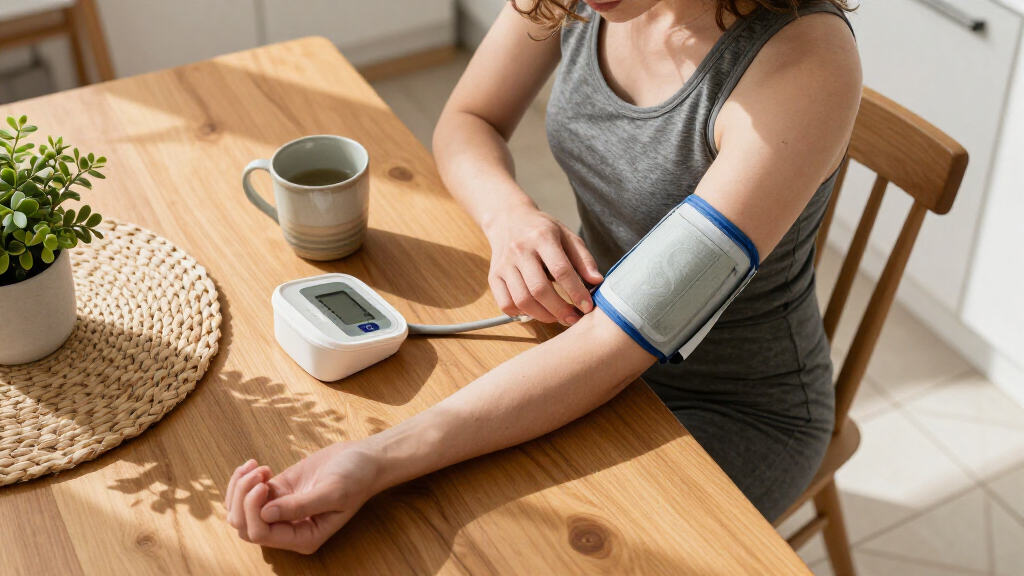
Before choosing among these at-home blood pressure monitors, I would start with the practical details that shape reliable, repeatable readings. A feature is only useful if the cuff fits, the instructions are clear, and the monitor suits the way you plan to record results.
Match the cuff to your arm, not just the product name
Measure your upper arm and compare that measurement with the cuff range listed for the exact model. A cuff that is too small or too large can compromise readings, so a label such as “wide-range” is a prompt to check the stated range, not proof it will fit everyone. If your arm size falls near a range boundary, ask a clinician or the manufacturer which cuff is appropriate rather than guessing. Also check whether a replacement cuff is available and whether the monitor supports other cuff sizes. This step can matter more than app features or memory capacity because an otherwise convenient device is a poor choice if its cuff does not fit.
Choose upper-arm or wrist based on routine and positioning
Upper-arm monitors are the more common choice for home tracking, while wrist models can appeal if portability or upper-arm cuff use is difficult. Wrist readings depend on holding the device at heart level, which can make positioning errors easier during unsupervised checks. An upper-arm model still needs correct cuff placement and a supported, relaxed arm. If you are considering a wrist monitor, ask your healthcare professional whether it suits your circumstances and practise the positioning instructions before relying on its readings. The compact form is useful only if you can use it consistently and correctly.
Prioritize repeatable technique over extra readings
Home results are most useful when you measure under similar conditions and follow the device instructions each time. Sit quietly before measuring, keep your back supported and feet flat, and avoid talking during the reading; follow your clinician’s advice on timing and frequency. A single unexpected result should not prompt you to change medication or make a diagnosis on your own. Ask your clinician how many readings to take and how to share them. A simple monitor used consistently can provide more useful information than a feature-rich one used irregularly.
Decide whether app tracking will help or get in the way
Connected options such as models from iHealth and Dario may suit people who want readings stored or organized digitally. Before choosing one, check phone compatibility, whether an account is required, how the app handles data, and whether you can export or share readings in a format your clinician accepts. App support and features can change over time, so verify current details with the manufacturer. If you prefer not to use a phone during health routines, a clear on-device display and usable memory may be a better fit. Do not assume wireless connectivity automatically means easier sharing or better clinical interpretation.
Pay extra for a feature only when it fits a real need
Features such as AFib detection, rechargeable power, a carry case, or enhanced display visibility can solve specific problems, but none replaces professional assessment. A model with AFib detection may be worth considering if your clinician sees value in that feature, yet the alert is not a diagnosis and should not be treated as one. Rechargeable power reduces disposable battery use, while standard batteries may be easier to replace during travel or a power interruption. A backlit display can help when readings are hard to see, but it does not make cuff fit or technique less important. Compare the ongoing routine and support needs of each feature, not just the number of items on the box.
Check validation, memory, and support before buying
Confirm that the exact model is listed on a recognized validated-device registry or ask a healthcare professional for a suitable model recommendation. Product descriptions may highlight convenient functions without establishing clinical validation, so verify the model number rather than relying on brand reputation alone. Consider whether more than one person will use the monitor, how separate readings are stored, and whether the display makes it easy to distinguish users. Check the warranty, customer support contact, and availability of replacement cuffs or power accessories. These details can matter months after purchase, particularly if the monitor becomes part of a regular health routine.
Frequently Asked Questions
Should I choose an upper-arm monitor or the Oklar wrist monitor?
I would start with an upper-arm model unless portability or difficulty using an upper-arm cuff gives you a strong reason to choose a wrist device. Wrist readings are more sensitive to arm position, so the device must be held at heart level according to its instructions. Ask your clinician whether a wrist monitor is appropriate for you, especially if you have a condition that may affect circulation or make positioning difficult. If you choose one, practise the technique and compare its use with professional guidance. A compact design is not a benefit if it makes consistent measurements harder.
Is the OMRON Platinum AFib feature a reason to buy it?
It may be a reason if a healthcare professional recommends a monitor with AFib detection or you have a specific use for that feature. The Platinum’s named differentiator sets it apart from more straightforward models such as the OMRON Silver, but an alert is not a diagnosis. Confirm what the feature detects, how results should be interpreted, and what to do if the monitor flags a possible issue. Do not use it to replace medical evaluation or prescribed care. If you do not need the added function, a simpler monitor may be easier to operate.
How do I know whether a wide-range cuff will fit me?
Measure your upper arm as instructed by the manufacturer and compare the result with the exact cuff range for the monitor. “Wide-range” does not mean universal, and ranges can differ between products, including the iHealth Track and Amazon Basic Care models. Avoid choosing by appearance or assuming a cuff can be stretched to fit. If your measurement sits at the edge of the listed range, contact the manufacturer or ask a healthcare professional for guidance. Check replacement-cuff availability before buying if your size may change or you need a different cuff later.
Do I need an app-connected monitor to share readings with my clinician?
No. A connected monitor can make it easier to organize readings, but it is not the only way to share them. A paper log or a monitor’s on-device memory may work if your clinician accepts that format and you can record the dates and times accurately. For the iHealth and Dario options, check the current app requirements, phone compatibility, export functions, and data practices before relying on a digital workflow. Ask your clinician which information they want and how they prefer to receive it. Choose an app only if it makes your tracking routine more manageable.
What should I do if my home readings differ from the clinic’s?
Do not assume one device or one reading is right without checking your technique and the monitor. Bring the device to an appointment and ask a healthcare professional to compare its readings with the clinic equipment. Review cuff size, placement, posture, timing, and whether you rested before measuring. Keep a record of readings as directed rather than repeatedly checking in response to an unexpected number. Follow your clinician’s instructions about when a result needs prompt attention, and do not change medication based only on home readings.
Conclusion
For most buyers seeking a straightforward upper-arm setup, I would start with the OMRON Silver as the best overall, while checking cuff fit and validation for the exact model. The best value choice depends on which basic functions and cuff range match your needs; compare the Amazon Basic Care and simpler upper-arm options rather than paying for features you will not use. For a best premium, feature-focused pick, the OMRON Platinum is the standout when AFib detection is relevant to your care plan. Beginners may prefer a clear, display-led monitor with uncomplicated controls, such as the OMRON Bronze, while buyers who want app-based records can look to iHealth Track or Dario Gen-2. For specific needs, consider the Oklar wrist model for portability or the Invaxe for its large backlit display, but check positioning guidance and fit before deciding. Whichever model you choose, confirm clinical validation, use the cuff correctly, and ask your clinician how to interpret your readings.
Cold & flu season Picks
humidifiers
As an affiliate, we earn on qualifying purchases.