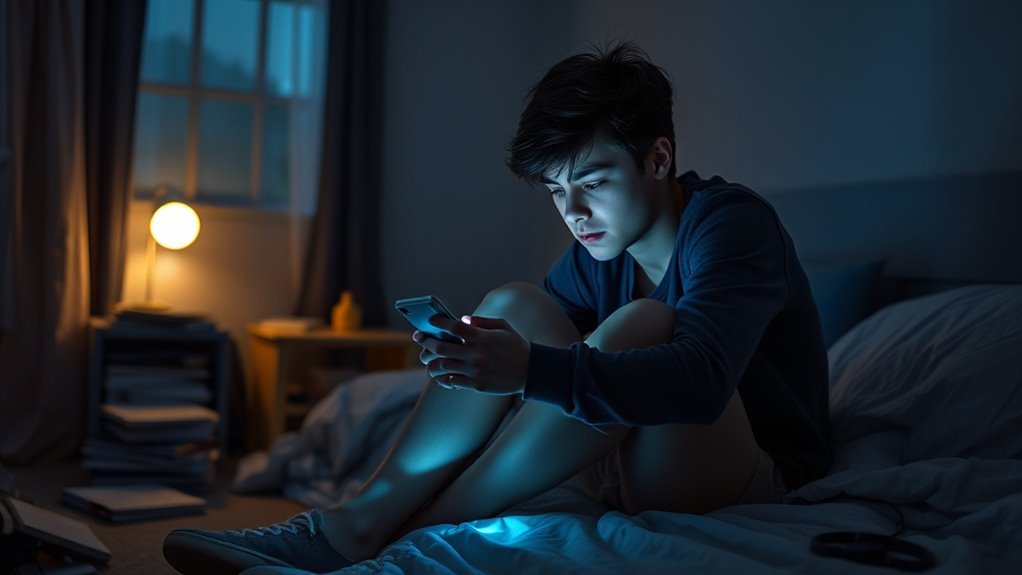

Excessive screen time can negatively impact your mental health by encouraging digital addiction, which leads to feelings of anxiety, irritability, and restlessness. It often fuels social comparison, making you feel inadequate or unhappy as you compare yourself to curated online images. Additionally, too much screen use can disrupt your sleep patterns and weaken face-to-face relationships. Staying aware of these effects can help you protect your well-being—discover how to set healthier boundaries and regain control.
Key Takeaways
- Excessive screen time can lead to digital addiction, increasing anxiety, irritability, and disrupting sleep patterns.
- Overuse of devices fosters social comparison, lowering self-esteem and contributing to feelings of loneliness and dissatisfaction.
- Lack of boundaries around screen use reduces face-to-face interactions, weakening emotional support networks.
- Digital overexposure impairs mental resilience, leading to restlessness, mood swings, and decreased overall mental well-being.
- Setting limits and cultivating real-world relationships help mitigate negative mental health effects from prolonged screen use.
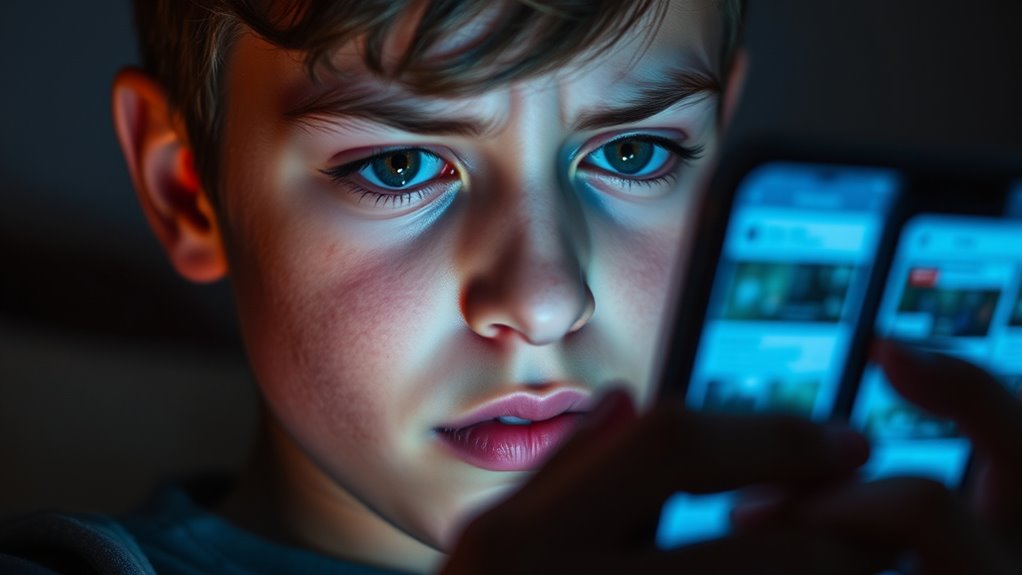
In today’s digital age, spending excessive time in front of screens can impact your mental health in significant ways. One of the most common issues is digital addiction, which can subtly take over your daily routine without you even realizing it. When you constantly check social media, emails, or news feeds, you might find yourself losing track of time and neglecting other important aspects of your life. This compulsive behavior creates a cycle where the more you engage, the more your brain craves the instant gratification digital platforms provide. Over time, this addiction can lead to feelings of anxiety, irritability, and restlessness when you’re away from your devices. It can also interfere with your sleep patterns, making it harder to rest properly and leaving you fatigued during the day.
Another significant impact of excessive screen time is social comparison. Social media platforms, in particular, are designed to showcase the best moments of others’ lives, leading you to compare your reality with curated images and posts. When you spend hours scrolling through these feeds, you may start to feel inadequate or unhappy with your own life, even if those feelings are unfounded. This constant social comparison can erode your self-esteem and foster a sense of loneliness or dissatisfaction. It’s easy to fall into the trap of believing that everyone else is living a perfect life, which heightens feelings of envy and self-doubt, ultimately impacting your mental well-being. Additionally, the lack of healthy boundaries around screen use can make it difficult to maintain a balanced lifestyle.
Social media fosters social comparison, eroding self-esteem and fueling loneliness and dissatisfaction.
Furthermore, the more time you dedicate to screens, the less you engage in face-to-face interactions, which are essential for emotional health. Real-world connections provide support, understanding, and a sense of belonging that digital interactions often lack. When you prioritize screen time over personal relationships, you risk feeling isolated, even if you’re surrounded by thousands of online friends or followers. This disconnection can deepen feelings of loneliness and depression, making it harder to maintain a positive outlook.
To protect your mental health, it’s vital to recognize the signs of digital addiction and social comparison. Setting boundaries around your screen time, such as designated tech-free periods, can help you regain control. Be mindful of how social media makes you feel and consider limiting exposure if it leaves you feeling worse about yourself. Remember, technology should serve you, not control you. By consciously managing your screen habits, you can foster healthier mental states and cultivate more meaningful, real-world relationships.

Oilway Blue-Light Blocking Glasses Computer Reading/Gaming/TV/Phones Glasses Fashion Anti Eyestrain Glasses for Women Men
- Blue-Light Blocking: Protects eyes from harmful blue light
- Reduces Eyestrain: Eases eye discomfort and improves sleep
- Durable HD Lenses: Scratch-resistant, high clarity, true color
As an affiliate, we earn on qualifying purchases.
As an affiliate, we earn on qualifying purchases.
Frequently Asked Questions
How Can Parents Effectively Monitor Their Child’s Screen Time?
You can effectively monitor your child’s screen time by setting up parental controls on devices and apps, which help limit usage and block inappropriate content. Additionally, maintain open communication by discussing the importance of balanced screen time and listening to their concerns. Consistently review their online activities together, creating a supportive environment that encourages responsible digital habits while ensuring their safety and well-being.
What Are Alternative Activities to Reduce Screen Time for Teenagers?
You can encourage your teenager to explore outdoor activities like hiking, biking, or sports to reduce screen time. Suggest creative hobbies such as drawing, playing an instrument, or crafting to keep them engaged offline. Join them in these activities to make it fun and supportive. These alternatives help build skills, boost mood, and foster social interactions, all while reducing excessive screen use and promoting healthier habits.
Are There Specific Mental Health Conditions Linked to Excessive Screen Use?
Did you know that over 20% of teens experience symptoms linked to digital addiction? Excessive screen use can contribute to mental health conditions like anxiety and depression. It can also act as anxiety triggers, worsening existing issues. Digital addiction may lead to social withdrawal and sleep problems, impacting overall well-being. Reducing screen time helps lower these risks, promoting healthier mental states and better emotional resilience.
How Does Screen Time Affect Sleep Quality and Patterns?
Excessive screen time, especially before bed, can negatively affect your sleep quality and patterns. The blue light emitted from screens disrupts your melatonin production, making it harder for you to fall asleep and stay asleep. As a result, you might experience restless nights and decreased sleep quality. To improve your sleep, limit screen use at least an hour before bedtime and consider using blue light filters or glasses.
Can Digital Detox Programs Improve Mental Health Outcomes?
Ever notice how putting down your devices feels like a refreshing gust? Digital detox programs can definitely improve your mental health benefits by reducing anxiety, improving mood, and boosting focus. When you disconnect intentionally, you give your mind a chance to reset and reconnect with real-life experiences. This intentional break helps restore balance, making you feel more grounded, energized, and mentally resilient.

Digital Detox: How to Reclaim 2 Hours of Focus Tomorrow (Without Deleting Phone Apps) (Digital Detox Book Series)
As an affiliate, we earn on qualifying purchases.
As an affiliate, we earn on qualifying purchases.
Conclusion
If you don’t watch your screen time, you might wake up someday in a world where your mental health is a total mess, and social skills are a distant memory. Overusing screens can turn everyday life into a never-ending scroll of stress and loneliness. So, take control now—set boundaries, step away, and protect your mind from turning into a digital disaster. Your future self will thank you for stopping the madness before it’s too late!

Mellow Weighted Sleep Eye Mask for Sleeping, Naps & Relaxation, Washable
- Deep Pressure for Relaxation: 180g glass beads for gentle pressure
- Blackout Coverage: Oversized wraparound design blocks light
- Reversible Cooling & Plush Sides: Dual-sided for warm or cool comfort
As an affiliate, we earn on qualifying purchases.
As an affiliate, we earn on qualifying purchases.

Fuck It: A Guided Self-Love and Gratitude Journal for Women to Unfuck Your Life, Exhale the Bullshit, and Love Who You Are (Cute Self Care & Self Help Books)
As an affiliate, we earn on qualifying purchases.
As an affiliate, we earn on qualifying purchases.





![I Made Tinnitus My Friend, Then It Disappeared [Video]](https://thisistheantidote.com/wp-content/uploads/2026/08/i-made-tinnitus-my-friend-then-it-disappeared-video-featured-260x140.jpg)