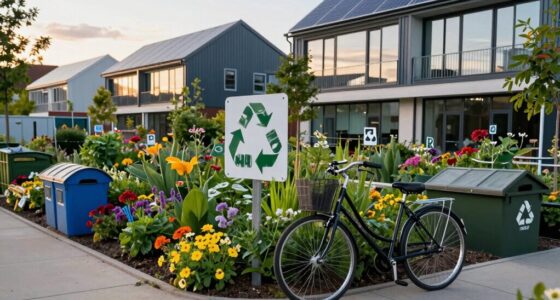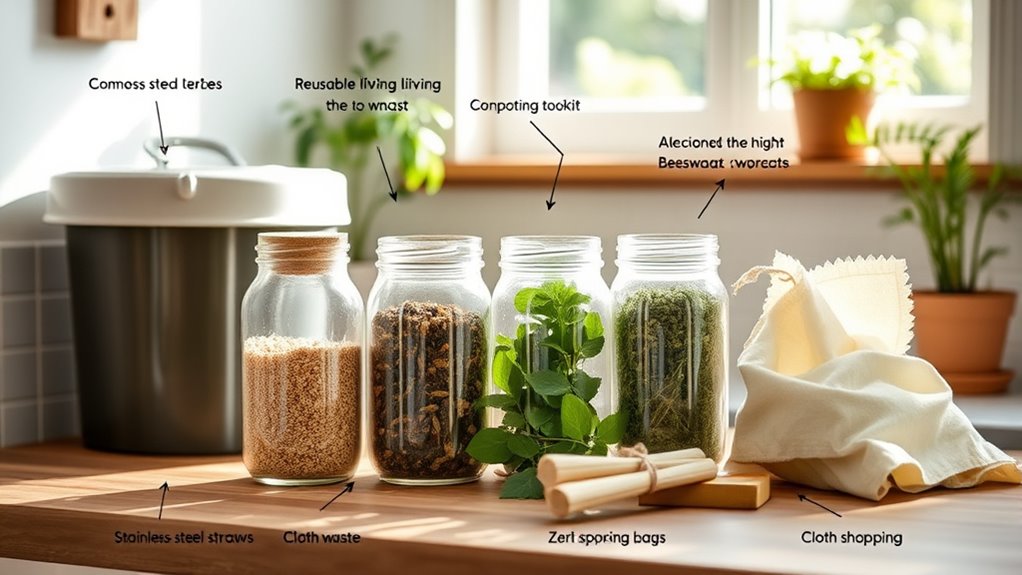

To reduce household waste and embrace zero waste living, start by recycling everything your local program accepts, including electronics and textiles. Find creative ways to reuse items, like jars for storage or fabric scraps as cleaning rags. Compost organic waste to produce nutrient-rich soil and cut down on landfill trash. Small daily habits, like mindful consumption and proper waste separation, make a big difference—continue exploring ways to live more sustainably.
Key Takeaways
- Incorporate recycling programs that accept electronics, batteries, and textiles to prevent waste from reaching landfills.
- Practice composting food scraps and yard waste to reduce organic waste and produce natural fertilizer.
- Repurpose household items, like jars and fabric scraps, instead of discarding them to minimize waste.
- Adopt small daily habits, such as using reusable bags and containers, to decrease single-use item consumption.
- Support community initiatives and learn proper waste management techniques to enhance household sustainability efforts.

Have you ever wondered how your daily habits impact the environment? Small changes in how you handle waste can make a significant difference. One of the most effective ways to reduce household waste is by exploring recycling alternatives. Instead of tossing everything into the trash, you can find innovative ways to repurpose or recycle materials. For example, look into local recycling programs that accept items beyond the usual plastics and paper — some communities accept electronics, batteries, or even textiles. You can also consider creative reuse, like turning jars into storage containers or fabric scraps into cleaning rags. These options prevent materials from ending up in landfills and reduce the need for new resources, making your waste management more sustainable.
Equally important is adopting effective composting methods. Composting is a natural process that transforms organic waste—like food scraps and yard waste—into nutrient-rich soil. If you’re not already composting, it’s time to start. You don’t need a large backyard; even apartment dwellers can use small compost bins or worm composters indoors. When you compost properly, you divert a significant amount of waste from landfills, where organic matter produces methane, a potent greenhouse gas. To get started with composting methods, ensure you balance greens (food scraps, coffee grounds) with browns (dry leaves, paper). Avoid adding meat, dairy, or oily foods, as they can attract pests and complicate the process. Regularly turning your compost helps aerate it, speeding up decomposition and producing healthy soil faster. Additionally, understanding the importance of proper waste management can help you make more informed decisions and improve your overall sustainability efforts.
As an affiliate, we earn on qualifying purchases.
Frequently Asked Questions
How Can I Start a Zero Waste Lifestyle on a Tight Budget?
You can start a zero waste lifestyle on a tight budget by making budget-friendly swaps like using cloth bags instead of plastic ones and buying in bulk to save money. Focus on affordable zero waste tips such as DIY cleaning products and repurposing items you already own. Small, consistent changes lead to big impacts, and you don’t need to spend much to make a difference in reducing waste.
What Are the Most Common Household Items to Reduce or Eliminate?
You can’t teach an old dog new tricks, but you can replace common household items to cut waste. Focus on reducing plastic bags and disposable utensils—swap them for reusable cloth bags and stainless steel or bamboo utensils. These small changes make a big difference and help eliminate unnecessary trash. By tackling these items first, you’re taking practical steps toward a zero waste lifestyle and reducing your environmental footprint.
How Do I Handle Waste Sorting in Shared Living Spaces?
In shared living spaces, you should establish clear waste sorting systems and encourage shared space collaboration. Label bins for recyclables, compost, and trash, making it simple for everyone to sort waste correctly. Communicate openly about waste protocols, and create a routine for emptying and cleaning bins. By fostering teamwork and consistent practices, you’ll guarantee effective waste sorting and promote a greener, more organized shared environment.
Are There Zero Waste Options for Cleaning Products?
Yes, you can find zero waste options for cleaning products by making your own DIY cleaners with ingredients like vinegar, baking soda, and lemon. Look for package-free options at bulk stores or refill stations to avoid plastic waste. These DIY solutions are effective, affordable, and eco-friendly, helping you reduce your environmental impact while keeping your home clean. Switching to these alternatives makes your cleaning routine more sustainable.
How Can I Encourage Family Members to Embrace Zero Waste Habits?
You can encourage your family to embrace zero waste habits by sharing recycling education and showing the benefits of sustainable shopping. Lead by example, involve everyone in composting, and suggest eco-friendly alternatives. Make it fun with challenges or rewards, and discuss how reducing waste benefits the environment. When your family sees the positive impact, they’re more likely to join you in creating a zero waste lifestyle.
As an affiliate, we earn on qualifying purchases.
Conclusion
Embracing zero waste living is like planting seeds for a greener tomorrow—you hold the power to nurture change with every small action. As you weave sustainability into your daily routine, you become a beacon of hope, guiding others to join the journey. Remember, even the tiniest pebble creates ripples in a vast pond. So, keep persevering, stay inspired, and watch your efforts bloom into a vibrant, waste-free world that flourishes for generations to come.
As an affiliate, we earn on qualifying purchases.
As an affiliate, we earn on qualifying purchases.