
To achieve water sustainability, you can adopt innovative solutions like rainwater harvesting and water reuse. By collecting rainwater from rooftops and surfaces, you reduce dependence on municipal supplies and support drought resilience. Reusing water from sinks and showers for non-potable purposes further cuts your water footprint. Combining these methods creates a sustainable cycle that conserves water and enhances resource management. Keep exploring to discover how these strategies can markedly impact your community and environment.
Key Takeaways
- Implementing rainwater harvesting reduces dependency on municipal water and promotes sustainable water supply.
- Water reuse systems treat wastewater from households for non-potable uses, conserving fresh water resources.
- Combining rainwater harvesting with greywater recycling enhances overall water efficiency and resilience.
- Small-scale solutions like rain barrels and greywater systems are accessible methods for individual and community adoption.
- Promoting innovative water management practices supports drought resilience and long-term water security.
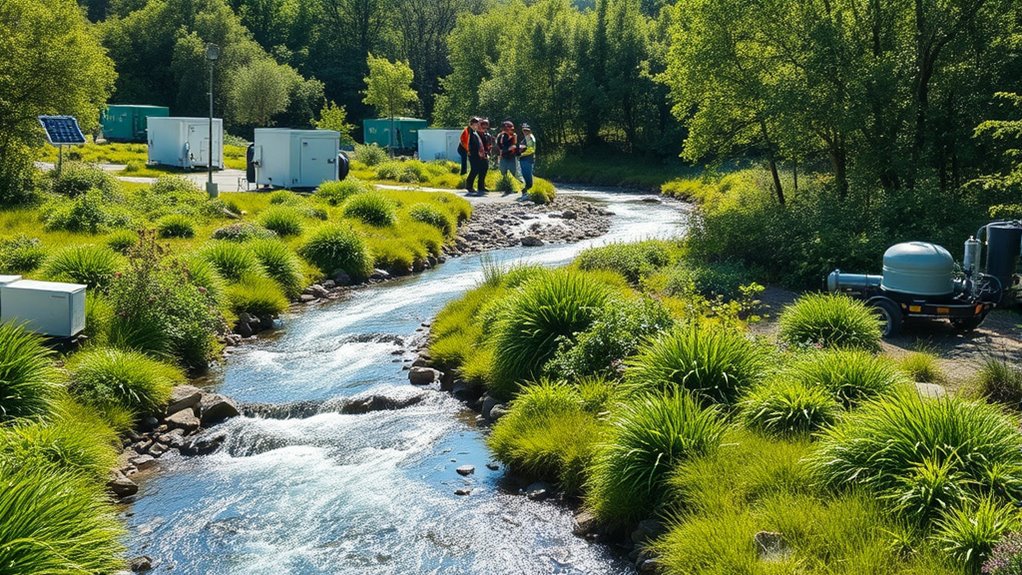
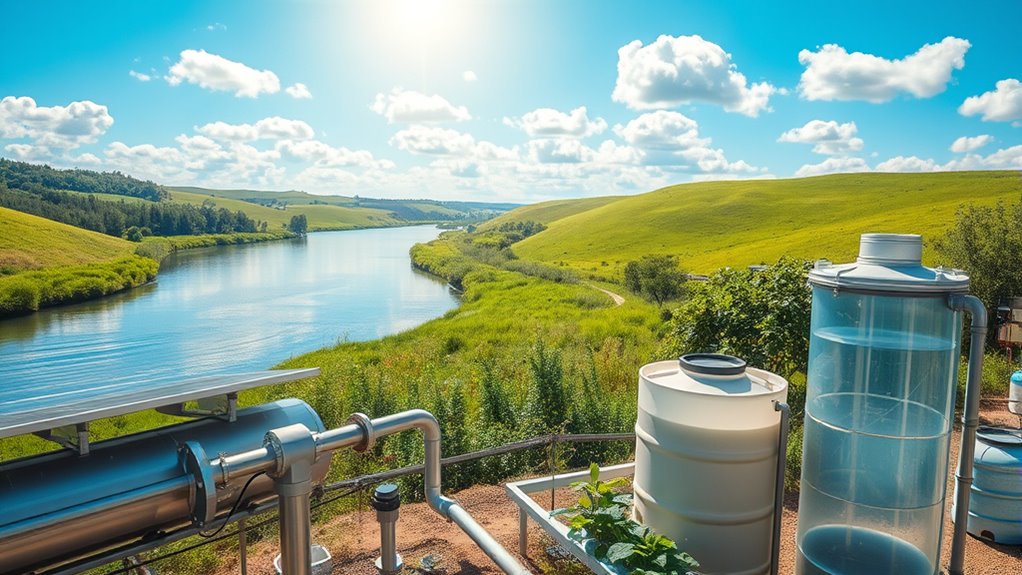
Have you ever considered how essential water is to our daily lives and the planet’s health? It’s easy to take for granted the supply we rely on, but with increasing demand and climate challenges, conserving water has never been more crucial. One practical way to do this is through rainwater harvesting, a method that collects and stores rainwater for later use. Imagine capturing rain from your roof and directing it into tanks, reducing your dependence on municipal water systems. Not only does this help lower your water bills, but it also alleviates pressure on local water sources, especially during droughts. Rainwater harvesting is simple to implement and can be scaled for residential, commercial, or agricultural use. It’s a direct, effective way to promote water sustainability, turning an otherwise wasted resource into a valuable asset. Using water reuse techniques further enhances conservation efforts by maximizing the utility of available water supplies.
Rainwater harvesting reduces costs, alleviates pressure on water sources, and promotes sustainability for homes and businesses.
Alongside rainwater harvesting, water reuse techniques play a significant role in conserving this vital resource. These methods involve treating and reusing water from various sources, such as greywater from sinks, showers, or washing machines, for non-potable purposes like irrigation or toilet flushing. By adopting water reuse techniques, you reduce the volume of fresh water needed and decrease wastewater discharge. Many modern systems now incorporate filtration and treatment technologies that make greywater safe for reuse, which means you can cut down on your water consumption without sacrificing comfort or convenience. Implementing these techniques at home or in businesses helps create a more resilient water system, especially in areas facing water scarcity.
The combination of rainwater harvesting and water reuse techniques offers a powerful approach to water sustainability. Think of them as complementary strategies—harvesting rainwater directly captures natural rainfall, while reuse techniques maximize the utility of existing water supplies. Together, they create a cycle that minimizes waste and enhances resource efficiency. As you consider your own water consumption habits, you can start small by installing rain barrels or greywater systems, gradually expanding your efforts as you learn more. Community initiatives that promote these practices also build resilience at larger scales, encouraging neighborhoods and cities to become more sustainable.
Ultimately, embracing these innovative solutions means taking responsibility for your water footprint and contributing to a healthier planet. By integrating rainwater harvesting and water reuse techniques into your lifestyle, you’re not only conserving a precious resource but also supporting a more sustainable future. Every drop saved helps, especially as climate variability and population growth continue to challenge water availability worldwide. Your proactive steps can inspire others and foster a collective effort toward water conservation, ensuring this vital resource remains abundant for generations to come.

Harvesting Rainwater for Your Home: Design, Install, and Maintain a Self-Sufficient Water Collection and Storage System in 5 Simple Steps for DIY … environmentalists (Simple Sustainable Living)
As an affiliate, we earn on qualifying purchases.
As an affiliate, we earn on qualifying purchases.
Frequently Asked Questions
How Does Water Scarcity Impact Global Agriculture?
Water scarcity impacts your agriculture by reducing crop yields and creating irrigation challenges. When water is limited, you struggle to water your crops adequately, which hampers growth and productivity. This forces you to find alternative solutions, often increasing costs and complexity. As water becomes scarcer, you face the urgent need to adopt sustainable practices and innovative irrigation methods to guarantee your crops survive and thrive despite the shortage.
What Are the Economic Benefits of Water Conservation?
Think of water conservation as opening a treasure chest—saving resources boosts your economy. You gain through economic incentives like lower costs and increased productivity. Implementing smart pricing strategies encourages efficient use, reducing waste and expenses. These savings can be reinvested into communities or innovations. Ultimately, conserving water not only preserves a crucial resource but also fosters economic resilience, turning scarcity into opportunity and strengthening your local and global economy.
How Can Individuals Contribute to Water Sustainability?
You can contribute to water sustainability by practicing rainwater harvesting and installing water-efficient fixtures. Collect rainwater for outdoor use, reducing your reliance on municipal water sources, and save money. Use low-flow showerheads and dual-flush toilets to cut down your water consumption. These simple actions help conserve water, protect local ecosystems, and guarantee a sustainable supply for future generations. Your efforts make a meaningful difference in water conservation.
What Role Do Governments Play in Water Conservation Policies?
Governments play a vital role by enforcing water conservation policies and raising public awareness. They implement regulations to limit water wastage and promote sustainable practices. Your government can also fund educational campaigns to inform you and others about water-saving techniques. By actively supporting these policies and participating in awareness programs, you help guarantee water resources are preserved for future generations. Your involvement complements government efforts, making water conservation more effective.
Are There Upcoming Technologies Promising Significant Water Savings?
Upcoming technologies like desalination breakthroughs promise to substantially boost water savings by making seawater more affordable and accessible. Smart water meters also play a vital role, giving you real-time data to monitor and reduce your water use efficiently. These innovations help you conserve water effortlessly, ensuring a sustainable future. Staying informed about such advancements allows you to adopt new methods that make a real difference in water conservation efforts.
greywater recycling system for residential use
As an affiliate, we earn on qualifying purchases.
As an affiliate, we earn on qualifying purchases.
Conclusion
Now that you understand the importance of conserving water and embracing innovative solutions, it’s clear that your actions can make a real difference. Every small effort counts—whether fixing leaks or supporting new tech. So, why not take that first step today? Water sustainability is a shared responsibility, and your choices can help secure a healthier future for everyone. After all, isn’t it worth protecting this precious resource for generations to come?

RTS Home Accents 50-Gallon ECO Rain Barrel Made with 100% Recycled Plastic, Flat Back Rain Water Collection Barrel, Black
50-Gallon Capacity: Provides ample storage for harvested rainwater, ideal for watering gardens, lawns, and plants.
As an affiliate, we earn on qualifying purchases.
As an affiliate, we earn on qualifying purchases.

Waterdrop 10UA Under Sink Water Filter System, Reduces PFAS, PFOA/PFOS, Lead, Chlorine, Bad Taste & Odor, Under Counter Water Filter Connects Directly to Your Faucet, NSF/ANSI 42 Certified, 1 Year
Less than $25.99 per replacement filter WD-RF10(Search " B085G66JTZ "on Amazon), save over 50% of cost on subsequent…
As an affiliate, we earn on qualifying purchases.
As an affiliate, we earn on qualifying purchases.