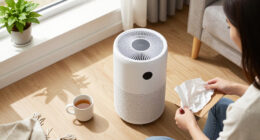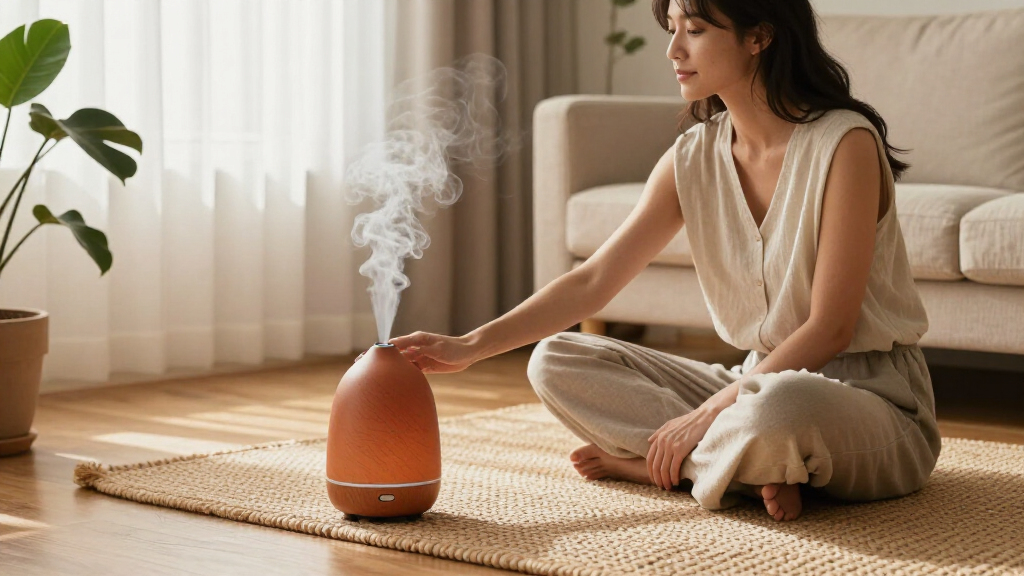

Choosing an aromatherapy diffuser for stress relief is less about finding a device that treats stress and more about deciding how you want scent to fit into a room and routine. Ultrasonic diffusers mix essential oil with water and release a light mist. Nebulizing diffusers use airflow to disperse oil without water, producing a stronger aroma with less dilution.

Get health and wellness essentials delivered free — and shop member deals
- Fast, free delivery on millions of items
- Access to Prime Big Deal Days deals on October 6–7
- Prime Video, Amazon Music and more included

BlueHills 4L Essential Oil Diffuser and Humidifier, Dark Wood
- ✔ Brand / model: BlueHills E402
- ✔ Water tank: 4,000 mL (135 oz)
- ✔ Run time: Up to 70 hours on low mist

InnoGear 500ml Aromatherapy Diffuser with 10 Essential Oils, Yellow
- ✔ Water tank: 500 mL
- ✔ Run time: Up to 18 hours; varies by mist strength
- ✔ Remote range: 16.5 ft

SALKING 2-in-1 Essential Oil Diffuser and Himalayan Salt Lamp, 150 ml
- ✔ Water capacity: 150 mL
- ✔ Functions: Essential oil diffuser and Himalayan salt lamp
- ✔ Salt crystals: Himalayan pink salt crystals included
That difference shapes the practical choice: an ultrasonic model usually costs less, runs quietly, and suits longer sessions in a bedroom or office. A nebulizing model can fill a space with a more noticeable scent, but it tends to use oil faster and asks for more care. Neither diffuser has been shown to relieve stress on its own; scent may feel calming to some people, but preferences and responses vary. Choose based on scent intensity, upkeep, budget, and the room where you plan to use it.
At a Glance
| Criteria | Ultrasonic diffuser | Nebulizing diffuser | Winner |
|---|---|---|---|
| Scent intensity | Light to moderate, diluted with water | Strong, concentrated, undiluted aroma | B |
| Oil use | Generally lower per session | Generally higher per session | A |
| Noise | Usually very quiet | May make audible pump or airflow noise | A |
| Upkeep | Add water and clean the reservoir regularly | Clean oil pathways and follow manufacturer guidance | A |
| Typical cost | Usually lower | Usually higher | A |
| Best room fit | Bedrooms, desks, and smaller rooms | Larger or well-ventilated spaces | Depends |
| Session control | Often adjustable mist and timer settings | May offer intermittent output; features vary | Depends |
BlueHills 4L Essential Oil Diffuser and Humidifier, Dark Wood
For a stress-relief routine that runs in the background, the BlueHills stands apart on capacity: its 4,000 mL tank is substantially larger than the InnoGear’s 500 mL reservoir and SALKING’s 150 mL basin. The manufacturer states up to 70 hours on low mist, which could mean fewer interruptions in a space where you prefer a consistent, gentle fragrance. That figure is specifically for the lowest setting, so we should not expect the same duration at stronger output.An adjustable dial lets us tune mist without cycling through a list of modes, and the humidifier function gives the unit a broader role than a scent-only device. Seven LED colors provide some atmosphere, though buyers who want precise session scheduling or control from a chair may prefer the InnoGear’s remote and timer settings. BlueHills lists automatic shutoff when water is low, a useful safeguard for extended operation. Its main compromises are the lack of a remote and the need to refill manually when the large tank eventually empties. It makes the most sense when runtime matters more than compactness or fine-grained controls.
Pros:
- Large 4,000 mL water tank
- Up to 70 hours stated on low mist
- Adjustable mist output dial
- Automatic shutoff when water is low
Cons:
- No remote control
- The maximum stated runtime is limited to low mist
- Larger footprint than the two smaller-capacity options
Best for: People who want a large-capacity diffuser for extended low-mist use in a room where fewer refills are a priority.
Not ideal for: Buyers seeking remote control, specified timer settings, or a small diffuser that is easy to move between spaces.
Bottom line: Choose BlueHills when you value fewer refills and long low-mist operation more than remote access or a compact footprint.
“Choose BlueHills when you value fewer refills and long low-mist operation more than remote access or a compact footprint.”
InnoGear 500ml Aromatherapy Diffuser with 10 Essential Oils, Yellow
The InnoGear is the lineup’s most configurable option for shaping a short aromatherapy session. Its remote control works up to 16.5 feet away, so we can adjust a setting without interrupting a quiet routine. Continuous or intermittent mist, strong or weak output, and one-, two-, or three-hour timers provide more explicit control than the BlueHills dial, whose listed details do not include a timer. This flexibility can help us match the session to a room or preference, though a 500 mL tank still needs more frequent attention than BlueHills’ 4,000 mL reservoir.The included ten 10 mL essential oil bottles make it easier to begin exploring scents without sourcing each bottle separately. That is a convenience rather than a guarantee that every included aroma will suit us. InnoGear specifies up to 18 hours of operation, but runtime varies with mist strength, and its listed timers top out at three hours. Compared with SALKING, it gives more control over fragrance delivery and less emphasis on decorative light. Choose it for adjustability and the included oils; skip it if long unattended operation between refills is the deciding factor.
Pros:
- Remote control with a stated 16.5 ft range
- Continuous and intermittent mist modes
- Strong or weak output and three timer choices
- Includes ten 10 mL essential oil bottles
Cons:
- Runtime varies by mist strength
- Requires refills for continued use
- Timer choices stop at three hours
Best for: People who want remote adjustments, several mist choices, timed sessions, and an included assortment of oils.
Not ideal for: Buyers who prioritize the longest possible interval between refills or want a salt-lamp-style lighting feature.
Bottom line: Pick InnoGear for control over mist and session length, especially if the included oil set is useful to your routine.
“Pick InnoGear for control over mist and session length, especially if the included oil set is useful to your routine.”
SALKING 2-in-1 Essential Oil Diffuser and Himalayan Salt Lamp, 150 ml
SALKING takes a different route from the other two: its appeal is a two-part ambient setup, not a long-running tank or the widest set of mist adjustments. The 150 mL diffuser can be used alongside the Himalayan pink salt chamber or separately, and its flame-like light effect, three brightness levels, and timer settings make it the most explicitly mood-oriented design in this group. The low stated noise level of less than 20 dB may also suit a quiet corner, although noise and room experience can vary with placement.Its four timer options—on, one, two, or four hours—give us a longer defined session than InnoGear’s listed maximum timer, but the small capacity means this is not the pick for minimizing refills. BlueHills is better suited to extended low-mist operation, while InnoGear offers more control over mist strength and mode. SALKING’s salt chamber uses heat to warm the crystals, a design detail to consider if we prefer a simpler, cool-running ambiance feature. The product still needs water and essential oils for aromatherapy; the lamp alone does not diffuse fragrance. It suits buyers who value a compact visual focal point and are comfortable with a smaller reservoir.
Pros:
- Diffuser and salt lamp can operate together or separately
- Flame-like lighting with three brightness levels
- Four timer options, including a four-hour setting
- Automatic shutoff when water runs out
Cons:
- Small 150 mL water capacity
- Aromatherapy still requires water and essential oils
- Salt lamp chamber uses heat to warm the crystals
Best for: People creating a small relaxation corner who want fragrance and adjustable flame-like lighting in one device.
Not ideal for: Anyone seeking extended runtime between refills, remote control, or a diffuser without a heated salt-lamp chamber.
Bottom line: Choose SALKING for combined scent and flame-like ambiance in a compact setup, accepting more frequent refills than the other picks.
“Choose SALKING for combined scent and flame-like ambiance in a compact setup, accepting more frequent refills than the other picks.”
As an Amazon Associate we earn from qualifying purchases.
Key Differences
The main tradeoff is intensity versus economy. A nebulizing diffuser sends a more concentrated aroma into the room, which can suit someone who finds water-based mist too faint or wants a shorter, more noticeable scent session. That stronger output can also be overpowering in a small room, and it may use oil more quickly. An ultrasonic diffuser spreads a lighter aroma and is usually the more practical choice for routine use, especially if you want a quiet device near a bed or workspace.
Upkeep and running cost reinforce that split. Ultrasonic models require water and regular reservoir cleaning, while nebulizing models need care to keep oil channels working and can consume more oil. Device features vary, so check the actual timer, intensity controls, and cleaning instructions before buying. For either type, use only oils the manufacturer permits, follow the device instructions, and stop use if the scent irritates you. If stress is persistent or disrupting daily life, a diffuser is a comfort preference, not a substitute for professional support.
Detailed Comparison
Scent intensity (Nebulizing diffuser wins — major)
The nebulizing diffuser wins by a clear margin: it disperses undiluted oil, creating a stronger aroma. That helps when a light mist is hard to notice or a larger room needs more scent. The ultrasonic diffuser offers a softer presence that is often easier to live with during longer sessions or in close quarters. The gap is major for anyone sensitive to strong fragrance; more intensity is not automatically more relaxing.
Oil use and running cost (Ultrasonic diffuser wins — moderate)
The ultrasonic diffuser usually wins because its water-and-oil mist is diluted and tends to use less oil per session. The nebulizing model puts more concentrated oil into the air, which can mean replacing bottles more often. The difference is moderate to major for frequent users or anyone buying costly oils. A higher device price is only part of the expense; account for oil consumption over time.
Noise (Ultrasonic diffuser wins — moderate)
Ultrasonic models generally operate quietly, making them the safer pick for a bedside table, reading nook, or quiet office. Nebulizing units use a pump or airflow and may be more audible, though the amount varies by model. This is a moderate advantage for A if you plan to run a diffuser while sleeping or concentrating; check product specifications and user reports for a particular device.
Cleaning and upkeep (Ultrasonic diffuser wins — moderate)
Ultrasonic diffusers need routine reservoir cleaning and fresh water, but their maintenance is familiar and generally straightforward. Nebulizing models avoid a water tank, yet oil can leave residue in narrow passages that may need careful cleaning. The edge for A is moderate for everyday owners who want simple care. Follow the manufacturer’s instructions for either device, since cleaning methods differ.
Initial price and value (Ultrasonic diffuser wins — moderate)
Ultrasonic diffusers are commonly the less expensive purchase and often provide useful timers and output settings at that price. Nebulizing models tend to cost more, then add the ongoing cost of greater oil use. A is better value for most casual users who want a gentle, regular scent. B can justify its premium when concentrated output is the specific feature the buyer needs.
Room and routine fit (moderate difference)
This depends on the space and the scent preference. A’s gentler mist and quiet operation suit smaller rooms and longer routines. B can make more sense in a larger or well-ventilated space where its stronger output will not feel overwhelming. Neither type guarantees a particular room coverage; capacity and output vary between models, so use the maker’s guidance. The practical gap is moderate.
Control over a session (minor difference)
There is no reliable category-wide winner. Many ultrasonic devices include timers and adjustable mist, while some nebulizing diffusers offer intermittent output or intensity controls. Features vary enough that buyers should compare specific models. For stress-oriented routines, a timer and a low setting may matter more than maximum output, especially if you prefer a subtle scent or want to limit exposure.
Ultrasonic diffuser: Pros and Cons
Pros:
- Usually affordable to buy
- Quiet operation suits bedrooms and work areas
- Diluted output tends to use less oil
- Water reservoir and common controls are straightforward
Cons:
- Scent is usually less concentrated
- Requires water and regular reservoir cleaning
- May feel too subtle in a larger space
- Mist and features vary by model
Nebulizing diffuser: Pros and Cons
Pros:
- Produces a strong, undiluted aroma
- Can suit users who want a more noticeable scent
- No water reservoir to refill
- May suit larger, ventilated spaces
Cons:
- Usually costs more upfront
- Often uses oil faster
- Pump or airflow may be audible
- Oil pathways can require careful cleaning
Who Should Choose What
Choose Ultrasonic diffuser if:
- You want a quiet diffuser for a bedroom, desk, or smaller room.
- You plan to use it often and want to limit oil use and ongoing expense.
- You prefer a gentle background aroma and straightforward controls.
Choose Nebulizing diffuser if:
- You already know you prefer a strong, concentrated aroma.
- A lighter water-based mist has not been noticeable enough for your space.
- You are comfortable paying more upfront and using more oil for stronger output.
Skip both if: Skip both if fragrance tends to trigger headaches, irritation, or breathing symptoms, or if you expect a diffuser to treat ongoing stress or a health condition.
Value for Money
For most people exploring aromatherapy, an ultrasonic diffuser is the better value: it usually costs less to buy, uses diluted oil, and suits quiet, repeat use. Its lower price is worthwhile only if its gentler scent is strong enough for your preference and room. A nebulizing diffuser is worth paying more for when you specifically want concentrated aroma and accept higher oil use and more involved cleaning. If you are unsure which intensity you like, starting with a modest ultrasonic model limits the initial commitment.
Final Verdict
Choose an ultrasonic diffuser for stress-relief routines built around a quiet, subtle scent in a bedroom, office, or smaller room. It is the more sensible default for most buyers because it combines a lower purchase price with lower oil use and easy everyday operation. Choose a nebulizing diffuser when strong, undiluted aroma is the deciding factor and you are willing to pay more for the device and its oil. The biggest deciding factor is intensity: if you want background scent, buy ultrasonic; if you want a concentrated scent, buy nebulizing. A diffuser can support a pleasant routine, but it should not be treated as a stress treatment.
Frequently Asked Questions
Which diffuser is better for stress relief?
Neither type has been established as a treatment for stress. If you find a gentle scent calming, an ultrasonic diffuser is a practical starting point. If you prefer a strong aroma, a nebulizing model may suit you better. Personal response to fragrance varies.
Does a nebulizing diffuser use more essential oil?
It often does, because it disperses undiluted oil rather than mixing oil into water. Actual use depends on the model, output setting, and session length.
Can I run either diffuser while I sleep?
Check the device instructions and use a timer if available. Ultrasonic models are generally quieter, while nebulizing models may make pump or airflow noise. Stop use if the scent disrupts sleep or causes irritation.
Which one should I buy for a small bedroom?
An ultrasonic diffuser is usually the better fit because its aroma is gentler and it tends to run quietly. Choose a model with adjustable output or a timer, and follow its room and use guidance.
Fall Picks
fall essentials
As an affiliate, we earn on qualifying purchases.