TL;DR

Get health and wellness essentials delivered free — and shop member deals
- Fast, free delivery on millions of items
- Access to Prime Big Deal Days deals on October 6–7
- Prime Video, Amazon Music and more included
A Sixty and Me guide describes five low-equipment exercises intended to support everyday movements such as standing, reaching and stepping. It cites research on functional training and older adults, while recommending gradual activity increases and professional advice for people with health concerns.
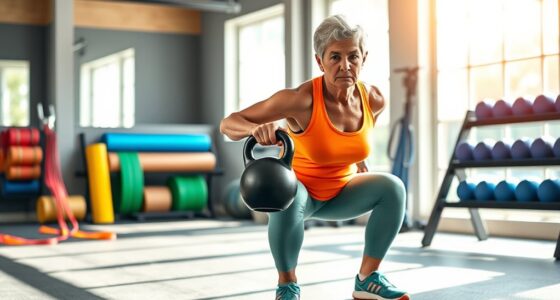
Sixty and Me’s beginner’s guide to functional fitness describes five exercises women over 60 can do at home with little or no equipment, focusing on movements used in daily life, including standing from a chair, pushing, stepping and maintaining balance. The report also advises starting with short sessions and consulting a health professional when pain, dizziness, health conditions or mobility limitations are a concern.
The guide defines functional fitness as building strength and ability for practical tasks, rather than focusing only on conventional workouts. It gives examples such as lifting groceries, reaching into a cabinet and getting up from a chair. The exercises are presented as options to support those kinds of movements, not as a guaranteed way to prevent injury or preserve independence.
The five suggested exercises are sit-to-stands, wall push-ups, supported heel raises, supported side steps and supported balance practice. The guide recommends five to 12 repetitions for the first three. For balance practice, it advises standing beside a counter or chair and holding it if needed. Side steps can also be done with a stable support nearby.
For a starting plan, the article suggests trying 10 to 15 minutes on two or three days in a week, then increasing duration, repetitions or resistance as the movements become easier. It says to stop if an activity feels wrong and seek advice from a health professional if a person has relevant health concerns.
Training for Everyday Movement
The guide’s focus is on the physical tasks that shape daily independence, not on appearance or athletic performance. Lower-body strength can be used when rising from a chair, while stepping and balance practice relate to moving around safely. For readers who find those tasks more difficult, simple movements may offer an accessible way to think about exercise at home.
The article cites a 2025 meta-analysis that it says found functional task training improved balance, mobility and walking ability among adults aged 60 and older. It also refers to a review linking combined balance and functional training with fall prevention and physical well-being in older adults. Those findings are reported in the source article; the supplied material does not provide study authors, effect sizes or details about the participants, so the findings should not be treated as a promise of results for every individual.
Public-health guidance cited in the report gives readers a broader activity benchmark. The CDC recommendation quoted there is for adults aged 65 and older to do muscle-strengthening activities at least twice a week, alongside activity that supports cardiovascular and pulmonary health and balance. The article also cites WHO guidance for strengthening activity on two days a week and more frequent balance and fall-prevention activity for people with mobility difficulties.
home balance exercise equipment for seniors
As an affiliate, we earn on qualifying purchases.
As an affiliate, we earn on qualifying purchases.
What the Guide Recommends
Functional training uses movements that resemble ordinary tasks: rising, reaching, pushing and changing direction. The guide’s examples use a chair, wall or counter for support, making the routine possible without specialized gym equipment. Its repetition range applies specifically to sit-to-stands, wall push-ups and heel raises; the directions for side steps and balance practice do not specify a number of repetitions.
The article presents walking as a useful starting point and suggests fitting movement into routines where appropriate. It mentions carrying groceries with attention to posture, taking stairs when able and practising balance near a stable surface. These are suggestions from the guide, not individualized instructions. Readers’ abilities and safe activity levels may differ, particularly when chronic conditions, pain or balance problems are involved.
The source also emphasizes gradual progression. Someone beginning a routine need not start with long sessions; the proposed first step is brief activity across a few days, increasing the workload only as it feels manageable. The cited recommendations are general population guidance and do not replace advice tailored to a person’s health or mobility.
““The goal of functional fitness is to help you maintain your quality of life and your independence.””
— Sixty and Me
low-impact resistance bands for women over 60
As an affiliate, we earn on qualifying purchases.
As an affiliate, we earn on qualifying purchases.
Limits of the Exercise Evidence
The supplied report does not identify the authors, journal or methods of the 2025 meta-analysis it cites, nor does it state how large the reported improvements were. It also does not provide detailed study information for the review on fall prevention. Those omissions make it difficult to assess the evidence from the article alone.
The guide does not assess each reader’s balance, strength or medical history, and it does not establish that the five exercises are appropriate for everyone. The exact safe range of movement and amount of support may vary. Anyone with pain, dizziness, a health condition affecting movement or concerns about exercising should discuss an appropriate plan with a qualified health professional.
As an affiliate, we earn on qualifying purchases.
Building a Routine Gradually
The guide offers no scheduled follow-up or formal program. Its practical next step is to choose a manageable amount of activity, try it on two or three days, and adjust only if the exercises feel comfortable. A chair, counter or wall can provide support for the movements described.
Readers can track which daily tasks feel difficult and raise those concerns with a health professional when seeking personalized guidance. The article’s suggested progression—more time, repetitions or resistance—should be treated as general guidance, not a fixed timeline. Whether and how to progress depends on individual ability and health.
elderly fall prevention balance aids
As an affiliate, we earn on qualifying purchases.
As an affiliate, we earn on qualifying purchases.
Key Questions
What does functional fitness mean?
It is exercise focused on strength and movement used in everyday activities, such as standing, reaching, pushing and stepping.
Which exercises does the guide include?
The five are sit-to-stands, wall push-ups, supported heel raises, side steps and supported balance practice. A chair, wall or counter can provide support.
How often does the article suggest starting?
It suggests trying 10 to 15 minutes on two or three days in the first week, then increasing activity gradually if it feels manageable.
Should I get medical advice before trying the exercises?
The guide recommends consulting a qualified health professional if you have a health condition, pain, dizziness, mobility limitations or other concerns. Stop if an activity feels wrong.
Does the guide say these exercises prevent falls?
No. It cites research reviews associating combined balance and functional training with fall prevention and physical well-being, but the supplied material does not establish that these five exercises will prevent falls for any particular person.
Source: rss
Halloween Picks
halloween
As an affiliate, we earn on qualifying purchases.