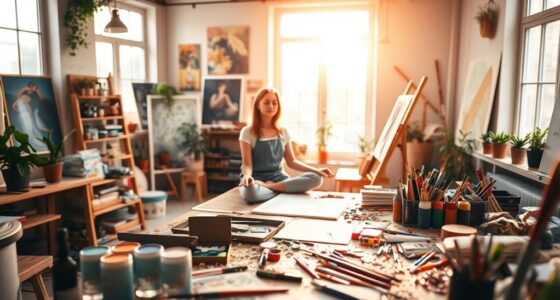
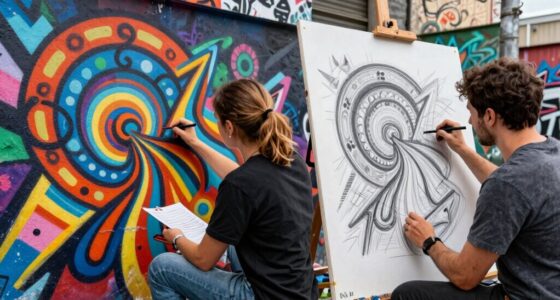
Harnessing AI in your artistic workflow lets you push creative boundaries, explore new ideas, and work more efficiently. Generative tools like AI art, music, and storytelling software act as collaborators, sparking fresh perspectives and offering variations for refinement. They’re designed to enhance your originality while handling repetitive tasks. Just remember, responsible use and transparency strengthen trust with your audience. Keep exploring—there’s much more to discover about blending technology with creativity effectively.

Get health and wellness essentials delivered free with Prime
- Fast, free delivery on millions of items
- Prime Video, Amazon Music and more included
- Member-only deals all year
Key Takeaways
- Generative AI tools enhance creativity by providing new ideas, variations, and collaborative possibilities in artistic workflows.
- Responsible use of AI involves transparency about its role and respecting intellectual property rights.
- AI accelerates production and handles repetitive tasks, freeing artists to focus on expressive and innovative aspects.
- Combining human intuition with AI’s computational power results in richer, more diverse artistic outputs.
- Understanding AI technology promotes ethical integration and helps balance innovation with artistic integrity.

Have you ever wondered how machines can now craft art, compose music, or write stories that rival human creativity? It’s a fascinating leap in technology that’s transforming the way we approach artistic work. Generative AI tools empower creators to push boundaries, explore new ideas, and produce work at an unprecedented pace. But with this power comes important questions about AI ethics—how these tools are developed, used, and the impact they have on human artists. As you integrate AI into your creative process, consider the importance of responsible use, transparency, and respecting intellectual property. Ethical considerations aren’t just about avoiding misuse; they’re about fostering an environment where AI enhances human creativity rather than replacing it.
One of the most exciting aspects of generative AI is its ability to facilitate creative collaboration. You can think of AI as a partner that sparks new ideas, offers alternative perspectives, and helps you break through creative blocks. Instead of viewing AI as a threat, see it as a collaborator that can augment your skills. For example, when working on a visual project, AI algorithms can generate multiple variations of a concept, giving you fresh options to refine. In music, AI can suggest harmonies or rhythms you might not have considered, opening doors to innovative compositions. This kind of creative collaboration enables you to focus more on the expressive aspects of your work, while AI handles the more repetitive or technical tasks. It’s about creating a synergy where human intuition and AI’s computational power combine to produce richer, more diverse artistic outputs. Additionally, understanding the underlying technology, such as how generative AI models are trained and function, can help you leverage these tools more effectively.
AI as a creative partner sparks ideas, offers new perspectives, and enhances artistic expression through collaboration.
At the same time, embracing AI in your workflow requires a mindful approach. You should be aware of potential biases embedded in AI models, which can influence the authenticity or diversity of your creations. Developing an understanding of AI ethics helps you navigate these challenges, ensuring that your work remains genuine and respectful of cultural and individual differences. Furthermore, transparency about AI’s role in your projects can build trust with your audience. Explain how the tools are helping shape your art or storytelling, and be open about the collaborative nature of the process. This honesty not only preserves artistic integrity but also invites your audience to appreciate the innovative ways technology supports human expression.
Ultimately, harnessing AI for creativity involves balancing innovation with responsibility. It’s about using these tools thoughtfully to expand what’s possible while staying true to your artistic vision. As you explore generative AI, remember that ethical considerations and collaborative potential are key to shaping a future where technology and human creativity coexist harmoniously. This approach will ensure your work remains authentic, impactful, and truly innovative.
As an affiliate, we earn on qualifying purchases.
Frequently Asked Questions
How Does AI Influence Traditional Artistic Techniques?
AI influences traditional artistic techniques by introducing algorithmic aesthetics, which blend digital precision with classic styles. You can use AI for creative augmentation, enhancing your work with new textures, patterns, or ideas that complement your skills. It challenges you to rethink techniques, integrating technology seamlessly into your process, and expands your creative possibilities. This synergy allows you to push boundaries while preserving the essence of traditional art forms.
Can Ai-Generated Art Be Considered Original?
Yes, AI-generated art can be considered original, but it raises ethical considerations about artistic ownership. When you create with AI, you often collaborate with algorithms, which complicates who owns the work. While the tool may generate unique outputs, you still influence the process, so your creativity remains central. Recognizing the role of AI helps clarify ethical issues and guarantees your artistic contributions are valued and protected.
What Skills Are Needed to Integrate AI Into Creative Workflows?
You don’t need a tech degree to integrate AI into your creative workflows, but having technical literacy helps you understand and manipulate tools effectively. Ironically, the real skill is your ability to collaborate—blending human intuition with AI-generated ideas. Developing strong collaborative skills guarantees you can experiment, iterate, and innovate with AI, transforming technical know-how into truly original art. Embrace both to stay ahead in the evolving creative landscape.
How Do Artists Maintain Authenticity With AI Tools?
You maintain authenticity with AI tools by staying true to your personal expression and setting clear boundaries. Use AI as a collaborator, not a replacement, ensuring your unique voice remains central. Consider ethical considerations, like transparency about AI’s role in your work, to build trust with your audience. Regularly reflect on how AI influences your artistic intentions, and adapt your process to preserve the genuine essence of your creations.
What Are the Legal Implications of Ai-Created Artwork?
Picture your AI-generated masterpiece, but legal waters are murky. You might face issues around intellectual property rights, as questions arise about who owns the work—the artist or the AI? Moral rights also come into play, shaping how your creation is used or altered. Stepping through these legal implications requires understanding copyright laws and ensuring fair use, so your art remains protected and true to your vision.
As an affiliate, we earn on qualifying purchases.
Conclusion
As you embrace generative AI, you access boundless creative possibilities, turning algorithms into artistic allies. Yet, don’t forget—while these tools can spark innovation, they also challenge your originality. Like a paintbrush in one hand and a mirror in the other, you stand at the crossroads of invention and reflection. By balancing human intuition with machine-generated ideas, you’ll craft works that are both inspired and authentic, shaping the future of art in ways only you can envision.
generative storytelling software
As an affiliate, we earn on qualifying purchases.
As an affiliate, we earn on qualifying purchases.
As an affiliate, we earn on qualifying purchases.
Halloween Picks
halloween
As an affiliate, we earn on qualifying purchases.