TL;DR
A Being Patient report describes a DEXA scan that estimated the writer’s visceral fat and reviews research linking deep abdominal fat to later high blood pressure. Separate research has linked untreated high blood pressure with higher Alzheimer’s risk, but the report does not show that a personal fat measurement predicts an individual’s brain health.
A Being Patient report describes how a DEXA scan estimated the writer’s visceral fat and led her to examine research connecting deep abdominal fat with high blood pressure—a known concern for blood-vessel and brain health. The evidence discussed does not establish that a person’s visceral-fat reading can predict whether they will develop dementia; the more direct practical focus in the report is monitoring blood pressure.

Get health and wellness essentials delivered free with Prime
- Fast, free delivery on millions of items
- Prime Video, Amazon Music and more included
- Member-only deals all year
Being Patient founder and CEO Deborah Kan said she paid about $50 for a DEXA scan at a local scanning business. The scan took about seven minutes and estimated that she had 0.41 pounds of visceral fat. Her report compared her result with 27,000 people in her age group, placing her in the group with the lowest visceral-fat levels. Kan noted that people who choose to pay for body scans may not represent the general population.
Kan distinguished the scan from an MRI: the DEXA report estimated the amount of visceral fat, while an MRI can show where fat is located. Her individual result is a personal measurement, not evidence that running caused the low estimate or that the reading indicates a particular level of brain health.
The report describes a University of Texas Southwestern Medical Center study that followed 903 Dallas residents for seven years. Participants began with normal blood pressure, and researchers used imaging to examine fat distribution. About a quarter developed high blood pressure. Body weight was associated with who developed it, but after accounting for fat location, visceral fat was the fat measure that remained linked to the outcome, according to the report.
Blood Pressure Is the More Direct Concern
The connection matters because high blood pressure can damage blood vessels, including vessels in the brain. The report cites a 2024 study of more than 31,000 older adults across 14 countries, in which untreated high blood pressure was associated with a 42% higher chance of developing Alzheimer’s disease. The report says that extra risk was not seen among people whose blood pressure was controlled. The finding is an association reported from a study, not proof that blood pressure treatment prevents Alzheimer’s in every individual.
For readers, the distinction is practical: a visceral-fat estimate may prompt questions about overall health, but it is not a diagnosis or a standalone brain-health test. Blood pressure is a measurable cardiovascular risk factor, and the report’s expert advises regular checks. Anyone concerned about a scan result or blood pressure should discuss it with a qualified health professional rather than rely on a consumer estimate alone.
Products Worth Considering

Withings BPM Vision Blood Pressure Monitor with Wi-Fi and Bluetooth

Withings Body Smart Wi-Fi Smart Scale, Black

BowFlex Results Series 552 SelectTech Adjustable Dumbbells (Pair)
As an affiliate, we earn on qualifying purchases.
From Fat Distribution to Vascular Risk
Visceral fat is fat stored deep in the abdomen around internal organs, unlike fat just beneath the skin. Kan’s report says her scan provider described higher visceral-fat levels as associated with risks including heart disease, type 2 diabetes and some cancers. Those general associations do not establish what a single person’s scan means for their health.
The report links the Dallas study to a broader chain of possible risk: visceral fat was associated with developing high blood pressure, while other research has connected high blood pressure with damage to brain blood vessels and dementia risk. It also mentions studies of fat around the kidneys and hypertension, while emphasizing that the relationship requires more research. The evidence presented does not show that reducing visceral fat directly prevents dementia.
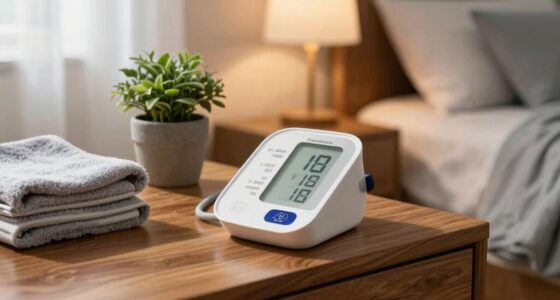
Geriatrician Dr. Nate Chin, medical director of the Wisconsin Alzheimer’s Disease Research Center, told Kan that blood pressure monitoring is the best available window into brain health. He recommended checking it a few times a week and keeping it in the normal range, which he described as below 120/80. Individual targets and monitoring plans can differ, so clinical guidance matters.
“The most useful thing my $50 scan did was point me to a new measurement to monitor my health.”
— Deborah Kan, Being Patient founder and CEO
What a Fat Estimate Cannot Show
The report does not establish that visceral fat causes Alzheimer’s, nor that a DEXA estimate can forecast an individual’s future cognition. The Dallas study linked fat distribution to later high blood pressure; it did not, as described in the report, track dementia outcomes. The 2024 study addressed blood pressure and Alzheimer’s risk, a separate link in the proposed chain.
Details about the studies’ methods and limitations are not set out fully in the report, and the comparison group for Kan’s scan may not reflect the broader population. The report also does not establish whether exercise explained her result or what level of visceral fat is appropriate for any particular person. Research into kidney-area fat and hypertension remains incomplete.
Focus on Measurable Health Checks
The report does not announce a new trial or change in clinical guidance. Its immediate takeaway is Kan’s plan to check blood pressure regularly, while the underlying questions—how fat location contributes to hypertension and whether changing visceral fat alters brain-health outcomes—require further research.
Readers considering a body-composition scan should treat its figures as estimates and discuss concerns with a health professional. For blood pressure, Chin’s advice in the report is to check it a few times each week; people with high readings or questions about suitable targets should seek clinical advice. Further studies would be needed to clarify whether visceral-fat measurements add useful information beyond established risk assessments.
Key Questions
Can a DEXA scan tell me whether I will develop dementia?
No. The report describes a scan estimating visceral-fat quantity, not a test that diagnoses or predicts dementia. The research it cites examines separate associations involving fat distribution, blood pressure and Alzheimer’s risk.
What did the Dallas study find?
As summarized in the report, researchers followed 903 people for seven years; about one-quarter developed high blood pressure. After accounting for fat location, visceral fat was the fat measure still linked to that outcome. This does not prove that visceral fat caused hypertension.
What does the report say about blood pressure and Alzheimer’s?
It cites a 2024 study of more than 31,000 older adults in 14 countries that associated untreated high blood pressure with a 42% higher chance of developing Alzheimer’s. The report says the extra risk was not seen in people whose blood pressure was controlled; this study finding is not a guarantee about an individual’s outcome.
Should I get a DEXA scan to check my brain health?
The report does not recommend DEXA scans as a brain-health screening test. Its writer used the scan to estimate body composition and then focused on blood pressure. Discuss whether any scan is appropriate for you with a qualified health professional.
Source: rss