TL;DR

Get health and wellness essentials delivered free — and shop member deals
- Fast, free delivery on millions of items
- Access to Prime Big Deal Days deals on October 6–7
- Prime Video, Amazon Music and more included
Search and media interest is rising around the claim that few laboratory tests actually require a full 8-hour fast before a blood draw. The underlying study and its specific findings could not be independently verified, and patients should keep following the fasting instructions given by their provider and lab.
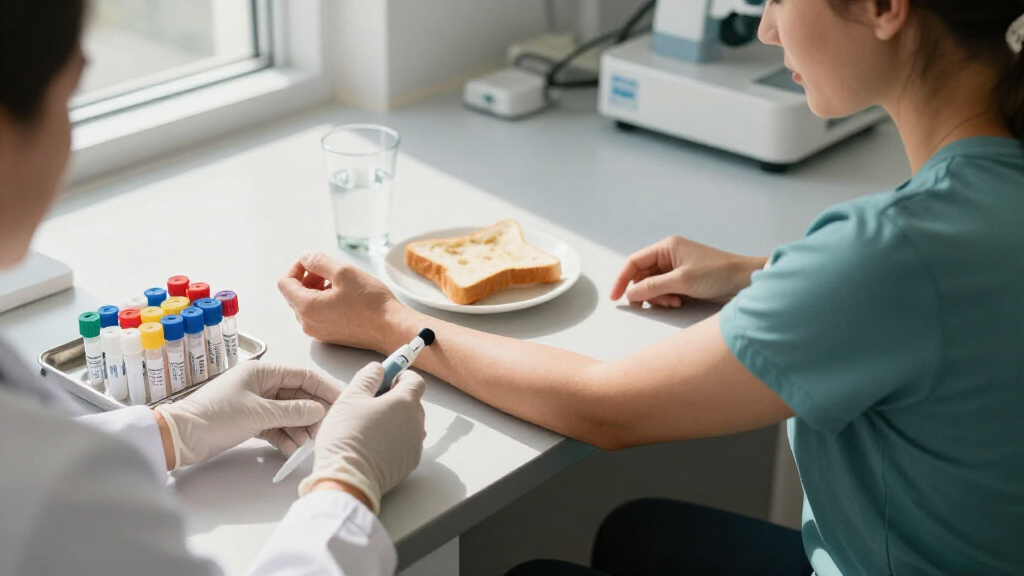
Interest is spiking in the claim that few laboratory tests actually require a full 8 hours of fasting before a blood draw, according to a report circulating under the headline “Few Lab Tests Actually Need 8 Hours of Fasting, Study Suggests.” The report attributes the claim to a study, but key details of that study — its authors, journal, publication date, and exact findings — remain unverified, and the assertion has not been confirmed against published clinical guidelines.
What is circulating is a health-topic report suggesting that the traditional instruction to fast for roughly eight hours before bloodwork may be unnecessary for many, perhaps most, routine tests. The report is being shared widely through online health feeds, driving a measurable increase in search interest around questions such as “how long do I really need to fast before a blood test” and “which tests require fasting.”
It is long-established clinical practice, independent of this report, that fasting requirements vary by test. Fasting lipid panels and fasting glucose measurements have historically been ordered with an 8-to-12-hour fast, while many other common tests — such as complete blood counts, thyroid function tests, and most metabolic panels other than glucose — are routinely performed without any fasting at all. Clinical guidelines in several countries have also moved in recent years toward accepting non-fasting lipid panels for many patients, a shift documented in guidance from bodies such as the European Federation of Clinical Chemistry and Laboratory Medicine and reflected in some US practice recommendations. The circulating report appears to build on that broader trend, though the specific study it cites has not been located or verified.
The report’s framing — “study suggests” — signals a claim rather than a settled change in practice. No major laboratory organization, medical society, or health authority has issued a new fasting-related recommendation in connection with this coverage, based on the information available. Readers should treat the specific claim about eight hours being unnecessary for “few” tests as unconfirmed until the underlying research is identified and reviewed.
Why Fasting Instructions Matter to Patients
Fasting instructions affect millions of routine blood draws each year. Patients who fast unnecessarily may experience hunger, dizziness, disrupted medication schedules, and inconvenient early-morning appointments, while patients who fail to fast when it genuinely is required may have to repeat their blood draw on another day, delaying diagnosis or treatment. This is particularly relevant for people with diabetes, who can face real risks from prolonged fasting, and for people whose tests are scheduled around work or caregiving responsibilities.
Shorter or test-specific fasting guidance, if validated, could reduce repeat testing, lower costs, and make preventive screening easier to complete. But the operational reality is that labs calibrate results and reference ranges to specific collection conditions. If a laboratory’s reference range for glucose or triglycerides assumes fasting, a non-fasting sample may produce results that are difficult to interpret — which is why changes to fasting practice come from guideline bodies and laboratories, not from individual patients deciding on their own.
How Fasting Rules Have Been Evolving
The traditional 8-to-12-hour fast traces back decades, largely to standardize glucose and lipid measurements, which can shift measurably after a meal. Over the past fifteen years, laboratory-medicine organizations in Europe, Canada, and elsewhere have published analyses and recommendations arguing that non-fasting samples are acceptable for most lipid testing in routine settings, reserving fasting samples for specific situations such as very high triglycerides or follow-up of abnormal results.
This evolving consensus has gradually fed into everyday practice, with some providers already ordering non-fasting panels. Reports like the one currently circulating typically reflect and amplify that existing shift rather than announcing a brand-new finding. The current wave of attention appears consistent with readers encountering these arguments and searching to verify whether their own fasting instructions are still necessary — though what specifically triggered this spike is not confirmed.
“Few Lab Tests Actually Need 8 Hours of Fasting, Study Suggests”
— The circulating report’s headline
What Is Still Unverified
The underlying study has not been verified. Its authors, institution, publication venue, sample size, methods, and exact conclusions are not confirmed in the available material. It is unclear whether the report describes new peer-reviewed research, a review of existing literature, or a summary of prior guideline work.
It is also unclear whether the phrase “few lab tests” refers to all tests ordered in routine practice, or specifically to tests where fasting was historically requested. The scope of the claim matters: guidance already treats many tests as non-fasting, so the report may be restating known practice rather than proposing a change. Additionally, no authoritative body has publicly endorsed the report’s framing in connection with this coverage. The trigger for the current spike in interest — a new publication, a press release, or social media circulation — is not confirmed.
How Patients Should Handle Fasting Now
Until the study is identified and reviewed, patients should continue following the fasting instructions provided by their ordering physician and the laboratory. If instructions seem unclear or burdensome, the practical step is to ask the provider or lab two questions: whether the specific tests ordered require fasting, and whether a shorter fast or a non-fasting alternative is acceptable for those tests.
For readers tracking the story, the next developments to watch are identification of the study in a peer-reviewed journal, any response from clinical-laboratory or cardiology guideline organizations, and whether laboratories begin updating patient-facing fasting instructions. Anyone who must fast for a confirmed medical reason — particularly people with diabetes — should consult a qualified healthcare professional before changing how they prepare for a blood test.
Key Questions
Do I really need to fast 8 hours before a blood test?
It depends on the test. Fasting has traditionally been required for fasting glucose and fasting lipid panels, typically 8–12 hours. Many other common tests, such as complete blood counts and thyroid panels, are routinely done without fasting. Follow the instructions from your provider or lab.
Is it confirmed that 8-hour fasting is unnecessary for most tests?
No. The claim comes from a circulating report citing a study whose details have not been verified. Broader guideline trends do support non-fasting lipid testing in many settings, but no new authoritative recommendation tied to this report has been confirmed.
What happens if I eat before a fasting test?
Results for tests like glucose and triglycerides can be affected by a recent meal, which may make them hard to interpret and can require a repeat blood draw. If you accidentally eat, tell the lab before the sample is taken.
Can people with diabetes skip fasting before tests?
Prolonged fasting can pose risks for people with diabetes, including low blood sugar. This should be discussed with a qualified healthcare professional, who can advise on medication timing and whether non-fasting testing is appropriate.
What should I do if my fasting instructions seem outdated?
Ask your ordering physician or the laboratory whether your specific tests require fasting and whether a shorter fast is acceptable. Practices vary by lab, and reference ranges are tied to collection conditions, so labs are the right source for final instructions.
Source: rss
Fall Picks
fall essentials
As an affiliate, we earn on qualifying purchases.