TL;DR

Get health and wellness essentials delivered free with Prime
- Fast, free delivery on millions of items
- Prime Video, Amazon Music and more included
- Member-only deals all year
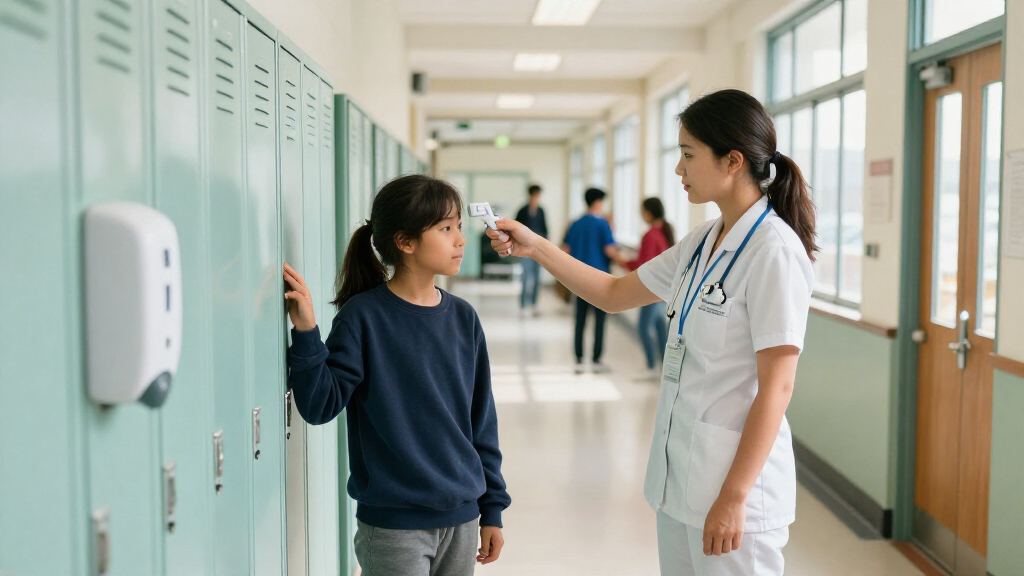
A tuberculosis outbreak at San Francisco’s Archbishop Riordan High School grew from one initially unrecognized active case to eight active cases and 244 positive tests for latent TB by March 2026, according to a MedPage Today report. The account points to delayed evaluation and prolonged indoor exposure, including in the school’s boarding setting, as factors in the spread; public health officials considered the outbreak contained by April.
A tuberculosis outbreak at Archbishop Riordan High School in San Francisco grew from one active case to eight active cases and 244 positive latent-TB tests by March 2026, according to a report published November 2 by MedPage Today. The account by physician Mary Meyer and journalist Charlotte Hahm says the first student’s cough was not initially linked to TB, while prolonged indoor contact at the school, which offers boarding, provided opportunities for transmission.
The report says the first identified student, described as having recently immigrated from Africa, sought medical care in September 2025 after about two weeks of coughing. The symptoms were not attributed to TB at that visit. In November, the student was referred to San Francisco Department of Public Health for evaluation of active TB, prompting the department to screen close contacts.
Screening found a high level of TB infection among contacts. In December, testing was announced for all students and staff. By January, officials had identified two additional active cases and 50 latent infections. More than 1,300 tests had been administered by late February, and by March the reported total had reached eight active cases and 244 latent infections, or 18% of those tested.
The account describes months of repeated testing and medical treatment, disruption that included cancellation of in-person classes, and frustration among families over testing costs. By April, it says, 96% of people with latent infection and all people with active TB had started treatment, and the outbreak was considered contained. The article is based partly on interviews with parents and a student; the source material does not include a separate public health department statement.
How the School Exposure Expanded
The outbreak shows how a single active TB case can trigger a large response when infections are detected among people sharing indoor spaces. The distinction between active disease and latent infection matters: people with latent TB do not have symptoms and are not contagious, according to the report’s explanation, but some can later develop active disease.
For students, staff and families, the consequences went beyond medical testing. Hundreds faced follow-up and treatment, classes were disrupted, and parents reportedly shouldered much of the cost of testing. The case also illustrates the importance of recognizing possible TB early and coordinating contact screening when an infectious case is identified.
Products Worth Considering

Coway Mighty AP-1512HH(W) Air Purifier, White

Levoit Core 400S-P Smart Air Purifier for Large Rooms

Levoit Vital 100S-P Air Purifier with Washable Pre-Filter
As an affiliate, we earn on qualifying purchases.
From Cough to Contact Screening
TB is caused by Mycobacterium tuberculosis and spreads through the air from people with active disease. The report notes that prolonged indoor exposure can raise transmission risk. It says the student lived in the school’s boarding program during the period between the onset of coughing and referral for evaluation, though it does not provide a detailed exposure map or establish where each infection occurred.
Most people infected with TB do not immediately develop active disease; they may have latent infection, which is not contagious. The authors cite national data indicating that many U.S. active TB cases result from reactivation of latent infection. They also describe broader pressures on TB control, including disruptions to healthcare and public health services. Those wider trends provide background, but the report does not establish that any one of them caused this school outbreak.
“We heard about the outbreak by accident.”
— Mary Meyer and Charlotte Hahm, in their MedPage Today report
What the Report Does Not Establish
The account does not identify the student by name or provide details about the student’s diagnosis, treatment, or later health. It also does not establish exactly where transmission occurred, how many infections were directly linked to the initial case, or whether every positive test represented infection acquired at school. The reported 18% applies to those tested, not necessarily the entire school community.
Some details, including the boarding arrangement and the family experiences, are presented through interviews rather than a cited department report in the supplied material. The source does not provide the health department’s full investigation findings, the costs paid by families, or a precise date when officials formally declared the outbreak contained.
Lessons for School Response
The report is framed as an effort to understand what happened and what could be learned from it, rather than an announcement of a new outbreak or policy. The available source material does not describe a scheduled public health review or any specific changes planned by the school or San Francisco officials.
Key follow-up questions include whether the school and health department changed procedures for evaluating persistent coughs, notifying families, and arranging testing and treatment. The authors’ account also underscores the need to clarify who bears testing costs during a prolonged response. Any further conclusions should be attributed to the health department’s investigation or to additional reporting, rather than assumed from the case totals alone.
Key Questions
How many TB cases were reported at the school?
The MedPage Today account reports eight active TB cases and 244 positive tests for latent TB infection by March 2026. It says 18% of the people tested had latent infection.
When did the outbreak begin?
The first identified student reported a cough and was evaluated by a medical provider in September 2025. The report says the case was referred to San Francisco public health officials in November.
Can someone with latent TB spread it?
The report says people with latent TB are generally asymptomatic and non-contagious. Active TB can be contagious; people with latent infection may later develop active disease.
Was the outbreak contained?
The report says it was considered contained by April 2026. It also says all active cases and 96% of latent cases had started treatment by then.
What caused TB to spread at the school?
The report describes delayed recognition of the initial case and extended indoor exposure, including the school’s boarding setting, as relevant circumstances. It does not establish the exact location or chain of every transmission.
Source: medpagetoday.com