
TL;DR

Get health and wellness essentials delivered free with Prime
- Fast, free delivery on millions of items
- Prime Video, Amazon Music and more included
- Member-only deals all year
The American Academy of Pediatrics says raw milk has no proven health advantage over pasteurized milk that outweighs its higher risk of foodborne illness. Its warning is especially directed at children and adolescents, pregnant people, and others at higher risk of severe infection.
The American Academy of Pediatrics (AAP) is warning families against drinking raw, unpasteurized milk, saying it has no proven health advantage over pasteurized milk that offsets its increased risk of foodborne illness. The policy statement, published in the journal Pediatrics, stresses particular risks for children, pregnant people and people with weakened immune systems.
The AAP statement describes raw milk as a potential source of bacteria, parasites and viruses. Contamination can happen through infection or inflammation of an animal’s udder, contact with fecal matter, or environmental exposure. Pasteurization heats milk under controlled conditions to kill disease-causing microorganisms; the statement says sanitation and filtration alone do not provide the same protection.
U.S. outbreak data cited in the report show that raw milk consumption was linked to 75 outbreaks between 2013 and 2018, involving 675 illnesses, 98 hospitalizations and two deaths. People younger than 20 accounted for 48% of the illnesses, while 14% were in children younger than five. Those figures describe reported outbreaks during that period; they do not establish the risk for every individual serving of raw milk.
The statement also addresses avian influenza A(H5N1) in dairy cattle. The virus has been detected in raw milk from infected cows, and pasteurization inactivates it, according to the report. At the time covered by the policy statement, no human cases had been identified as linked to drinking raw milk. That distinction matters: detection in milk is a food-safety concern, but it is not evidence that raw milk consumption had caused a human case.
Risks for Children and Pregnancy
The warning has particular relevance for households choosing dairy for young children or pregnant people, because some infections can have more serious consequences in those groups. The AAP says young children can develop severe complications from diarrheal illness, including hemolytic uremic syndrome associated with E. coli O157. During pregnancy, listeriosis occurs about 12 to 14 times more often than in the general population and can lead to miscarriage, stillbirth, premature delivery or severe illness in a newborn, the statement says.
The outbreak figures also show that children and teenagers were not a small share of the illnesses recorded: nearly half were in people under 20. The AAP’s recommendation therefore covers children and adolescents, as well as pregnant people, breastfeeding parents and people with conditions that weaken immune defenses. The underlying message is about avoidable exposure: choosing pasteurized dairy reduces the risk from pathogens that may be present before processing.
Raw-milk advocates sometimes claim that unpasteurized milk is more nutritious or can help with allergies and other atopic conditions. The AAP statement says available evidence does not support a health benefit large enough to justify the additional infection risk. This is relevant to consumers weighing claims about food processing against the public-health risk described by pediatricians.
As an affiliate, we earn on qualifying purchases.
What Pasteurization Changes
The AAP’s review says pasteurization does not remove the major nutritional components commonly associated with milk. It reports that lactose, calcium, magnesium and zinc remain, as do whey and casein, the principal milk proteins associated with allergy. A review of vitamin studies cited in the statement found that pasteurization decreased vitamin B2, while the other vitamins examined were not reported as similarly reduced.
Some heat-sensitive proteins and antioxidant activity can change during processing, the statement acknowledges. But it says those changes do not establish a health advantage for raw milk. It also reports no differences in free fatty acids or triglycerides in one comparison of raw and pasteurized milk, and unchanged concentrations of linoleic and alpha-linolenic acids in another study. The AAP’s conclusion is that these findings do not outweigh the infection risk.
Raw-milk exposure is not limited to cow’s milk. The policy recommendation applies to milk and milk products from animals including cows, goats and sheep. The report notes that federal rules prohibit interstate sales of raw milk for human consumption, while state laws differ; as of 2019, raw-milk sales were permitted in 27 states. Some raw-milk cheeses aged at least 60 days are exempt from the federal restriction described in the report.
“Raw milk offers no proven health advantages over pasteurized milk that outweigh its increased risk of foodborne illness.”
— American Academy of Pediatrics policy statement
As an affiliate, we earn on qualifying purchases.
Evidence and Outbreak Limits
The outbreak totals cover 2013 through 2018 and cannot show how frequently illness occurs today or predict the outcome for an individual consumer. The source material does not provide newer comparable outbreak totals. It also says the frequency of illness from some pathogens detected in raw dairy remains uncertain, and outbreaks could become more frequent if consumption rises.
The H5N1 information is time-specific: the statement reported no human cases linked to raw-milk consumption when it was issued, despite detection of infectious virus in raw milk from infected cows. The material provided does not establish whether that status has changed since then. State rules also vary, and the cited count of states allowing sales is from 2019, not a current legal survey.
The AAP’s conclusions concern population-level risks and evidence reviewed for its policy statement. They do not quantify the risk from a particular product or farm, nor do the supplied materials identify a new outbreak prompting the warning. The development is the publication and reporting of pediatricians’ policy guidance, rather than a report of a newly confirmed raw-milk illness event.
As an affiliate, we earn on qualifying purchases.
How Families Can Respond
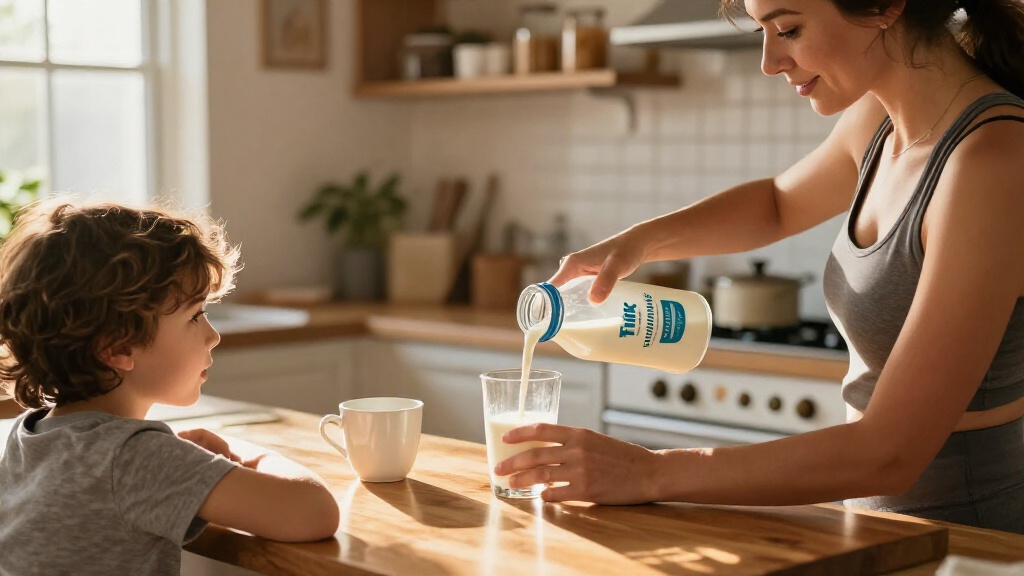
The AAP recommends that families choose pasteurized milk and milk products, especially for children, adolescents, pregnant people and others at greater risk of severe infection. Consumers can check product labels for pasteurization information and consult local public-health guidance about state sales rules. The policy also says infants and children with a milk allergy should avoid all animal milk and milk products; families making decisions about allergy or nutrition should speak with a qualified health professional.
The next developments to watch are updates to avian-influenza monitoring, foodborne illness reports and state regulations. The source material does not identify a scheduled follow-up study or a new enforcement action. For now, the AAP statement sets out its recommendation based on the evidence it reviewed: use pasteurized dairy rather than relying on raw milk claims that it is more nutritious or offers health benefits.
As an affiliate, we earn on qualifying purchases.
Key Questions
What did pediatricians warn about?
The American Academy of Pediatrics warned that raw milk can carry disease-causing microorganisms and has no proven health advantage over pasteurized milk that outweighs the added foodborne illness risk.
Does pasteurization remove milk’s main nutrients?
The AAP statement says pasteurization preserves key nutrients including lactose, calcium, magnesium and zinc, along with the major milk proteins. It notes some changes to heat-sensitive components, but says these do not establish a health benefit from drinking raw milk.
Why are children and pregnant people singled out?
Some foodborne infections can cause more severe outcomes in these groups. The statement cites serious diarrheal complications in young children and risks from listeriosis during pregnancy, including miscarriage, premature delivery or severe newborn illness.
Has raw milk been linked to H5N1 infection in people?
The policy statement reported that infectious H5N1 had been detected in raw milk from infected cows and that pasteurization inactivates the virus. No human cases linked to raw-milk consumption had been identified at the time of the statement; the supplied material does not confirm whether that status has since changed.
Does the recommendation apply only to cow’s milk?
No. The AAP recommendation applies to milk and milk products from cows, goats and sheep, according to the policy statement.
Source: rss
Fall Picks
fall essentials
As an affiliate, we earn on qualifying purchases.