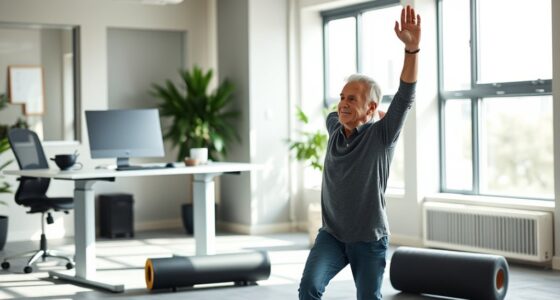
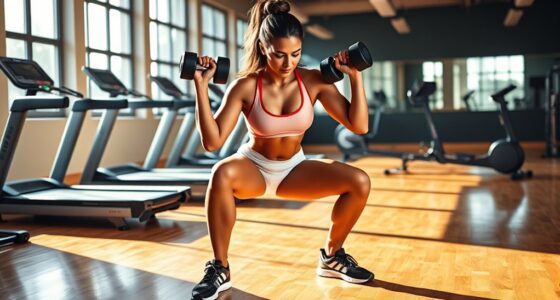
Functional fitness prepares you for everyday tasks by focusing on exercises that mimic real-life movements like lifting, bending, and climbing. It builds strength, stability, especially in your core, and improves balance, helping you perform daily activities more efficiently and safely. Better balance and core support also reduce injury risk and fatigue. Keep exploring how combining these elements can make your movements more natural and effortless—there’s more to learn about optimizing your routine.
Key Takeaways
- Functional fitness emphasizes training movements that mimic daily activities to improve efficiency and reduce injury risk.
- Core stability is fundamental, enhancing posture, force transfer, and reducing strain during everyday tasks.
- Balance training improves proprioception and control, helping prevent falls and enhancing movement confidence.
- Combining core and balance exercises creates a synergistic effect, boosting overall functional capacity.
- Simple, equipment-free exercises support sustainable routines that enhance daily movement performance.
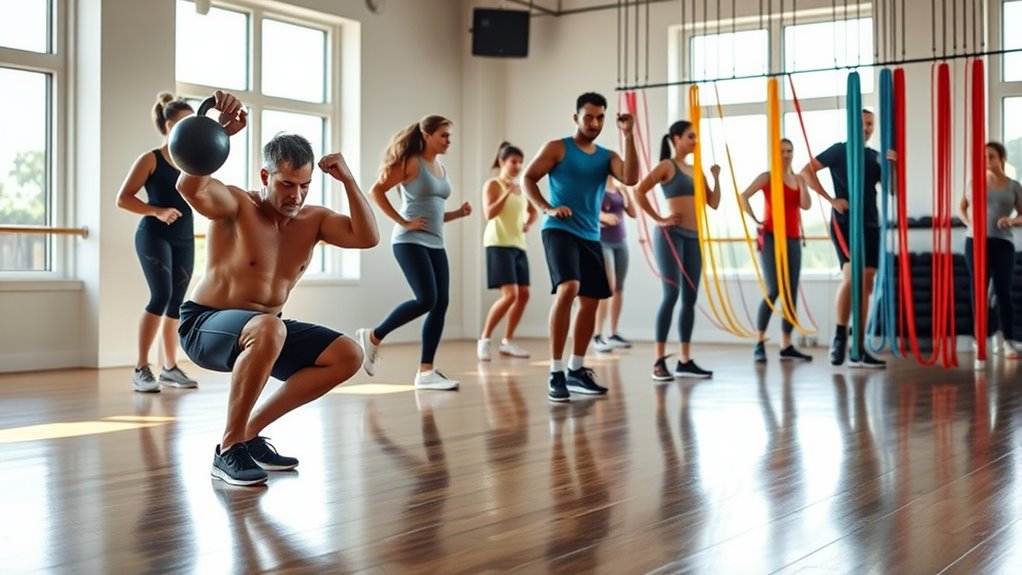
Functional fitness is all about training your body to perform everyday movements more efficiently and safely. It focuses on exercises that mimic real-life activities, helping you develop strength, flexibility, and coordination for daily tasks. Whether you’re lifting groceries, bending to pick up your kids, or climbing stairs, functional fitness prepares your body to handle these movements with ease and less risk of injury. One of the key aspects of this approach is improving core stability, which is the foundation for almost every movement you perform. When your core is strong and stable, your body can transfer force more effectively, maintain better posture, and reduce strain on your back and joints. Incorporating core stabilization exercises into your routine helps you build this essential strength, making everyday activities feel less taxing and more natural.
Balance training also plays an essential role in functional fitness. In daily life, you’re constantly shifting your weight, adjusting your posture, and maintaining stability on uneven surfaces or in awkward positions. By including balance exercises, you’re training your body to stay steady and controlled, even when faced with unexpected movements or challenges. For example, simple moves like single-leg stands, wobble board exercises, or dynamic stability drills can markedly enhance your proprioception—your body’s awareness of its position in space. Better balance not only reduces your risk of falls and injuries but also improves overall coordination, making you more confident in your movements.
You might think that core stability and balance training are separate components, but in functional fitness, they work hand in hand. Strengthening your core helps you stay balanced, and practicing balance exercises engages your core muscles, creating a positive feedback loop. This synergy results in a more resilient, adaptable body that’s prepared for the unpredictable demands of daily life. You don’t need fancy equipment to get started—simple bodyweight exercises like planks, side planks, or standing on one foot can be very effective. As you progress, you can add resistance or perform these exercises on unstable surfaces to challenge your stability further.
Ultimately, integrating core stability and balance training into your routine enhances your overall functional capacity. It enables you to move more confidently and efficiently, whether you’re lifting objects, climbing stairs, or reaching overhead. With consistent effort, these training elements will improve your posture, reduce fatigue, and help prevent injuries, making your daily life smoother and safer. Engaging in self watering plant pots knowledge can inspire you to develop sustainable, self-sufficient routines that require minimal maintenance, much like how these pots maintain optimal moisture levels with little intervention. Remember, the goal of functional fitness isn’t just to build muscle or burn calories; it’s to prepare your body for the real-world activities you perform every day.

Trideer Exercise Ball for Yoga, Pilates & Fitness – Stability Ball Equipment for Home Gym & Office Chair, Core & Balance Training Accessories, Physical Therapy Equipment, Quick Pump Included, 5 Sizes
Designed with anti-slip stripes and a fine frosted texture for enhanced grip and stability. The increased surface friction…
As an affiliate, we earn on qualifying purchases.
As an affiliate, we earn on qualifying purchases.
Frequently Asked Questions
How Often Should I Incorporate Functional Fitness Into My Routine?
You should incorporate functional fitness into your routine about three to four times a week. This training frequency helps you build workout consistency, ensuring steady progress without overtraining. By dedicating regular sessions, you’ll improve your everyday movements, strength, and flexibility. Remember, consistency is key, so stick to your schedule and gradually increase intensity to maximize benefits. This approach keeps your body adaptable and ready for daily challenges.
Can Beginners Safely Start Functional Fitness Training?
Starting functional fitness is like planting a seed—you need careful nurturing. Yes, beginners can safely begin, but it’s essential to focus on risk management and use beginner modifications. Start slow, prioritize proper form, and listen to your body. As you gain strength, gradually increase intensity. This approach guarantees you build a solid foundation and minimize injury risk, letting your fitness grow steadily and safely.
What Equipment Is Essential for Functional Fitness Workouts?
You should focus on multi-functional equipment and home gym essentials like resistance bands, dumbbells, and a stability ball. These tools help you perform a variety of functional fitness exercises that mimic daily movements, making your workouts versatile and effective. With just a few key pieces, you can target different muscle groups, improve mobility, and build strength safely at home. Prioritize quality and versatility for the best results.
How Does Functional Fitness Differ From Traditional Strength Training?
Think of traditional strength training as sculpting a statue, focusing on muscle isolation and aesthetics. Functional fitness, on the other hand, trains you like a versatile tool, emphasizing movements that mimic daily activities. You work on multi-joint, full-body exercises that improve your strength, stability, and mobility for real-life situations. It’s less about perfecting individual muscles and more about enhancing overall performance and functionality in everyday life.
Are There Specific Exercises for Improving Daily Mobility?
Yes, you can improve daily mobility with specific exercises. Incorporate balance exercises like single-leg stands and stability drills to enhance coordination and stability. Flexibility routines, such as dynamic stretches and yoga poses, help increase your range of motion. Regularly practicing these exercises makes everyday movements easier, reduces injury risk, and supports overall functional fitness. Consistency is key to seeing improvements in your mobility for daily activities.
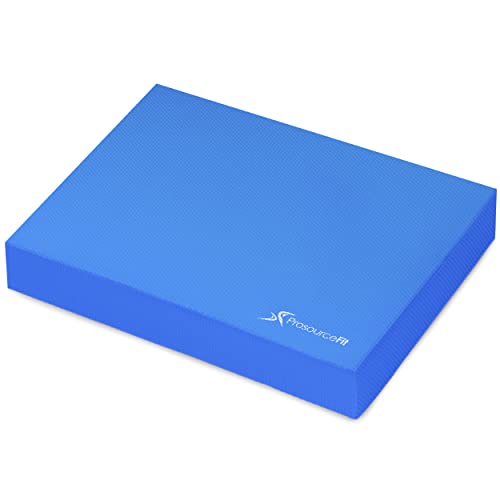
ProsourceFit Exercise Balance Pad – Non-Slip Cushioned Foam Mat & Knee Pad for Fitness and Stability Training, Yoga, Physical Therapy 15.5”x12.75”, Blue
IMPROVE BALANCE & STRENGTH – Foam creates unstable surface for working on balance & core strength, which also…
As an affiliate, we earn on qualifying purchases.
As an affiliate, we earn on qualifying purchases.
Conclusion
By embracing functional fitness, you empower your everyday activities with energy, ease, and efficiency. Focus on forming a foundation of strength, stability, and stamina, transforming tasks into tools for better living. Remember, consistency creates confidence, and commitment cultivates control. So, stay steadfast, stay strong, and let your fitness fuel your freedom. With dedication and determination, you’ll discover that daily duties become less intimidating and more doable, turning motion into motivation and effort into excellence.
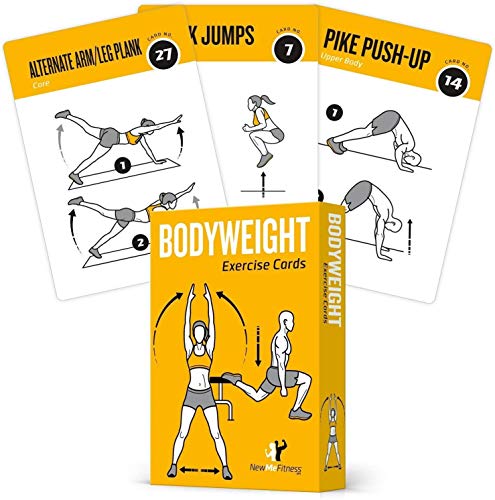
NewMe Fitness Bodyweight Workout Cards, Instructional Fitness Deck for Women & Men, Beginner Fitness Guide to Training Exercises at Home or Gym (Bodyweight, Vol 1)
Full Set – This complete fitness deck includes 50 different exercise cards that you can mix and match…
As an affiliate, we earn on qualifying purchases.
As an affiliate, we earn on qualifying purchases.

ProsourceFit Core Balance Disc Trainer, 14" Diameter with Pump for Fitness, Balance Training, or Seating; Wobble Board for Core Stability; Flexible Floor Cushions for Kids, Purple
IMPROVE CORE STRENGTH & BALANCE – Strengthens and engages multiple core muscles at once to maintain balance during…
As an affiliate, we earn on qualifying purchases.
As an affiliate, we earn on qualifying purchases.