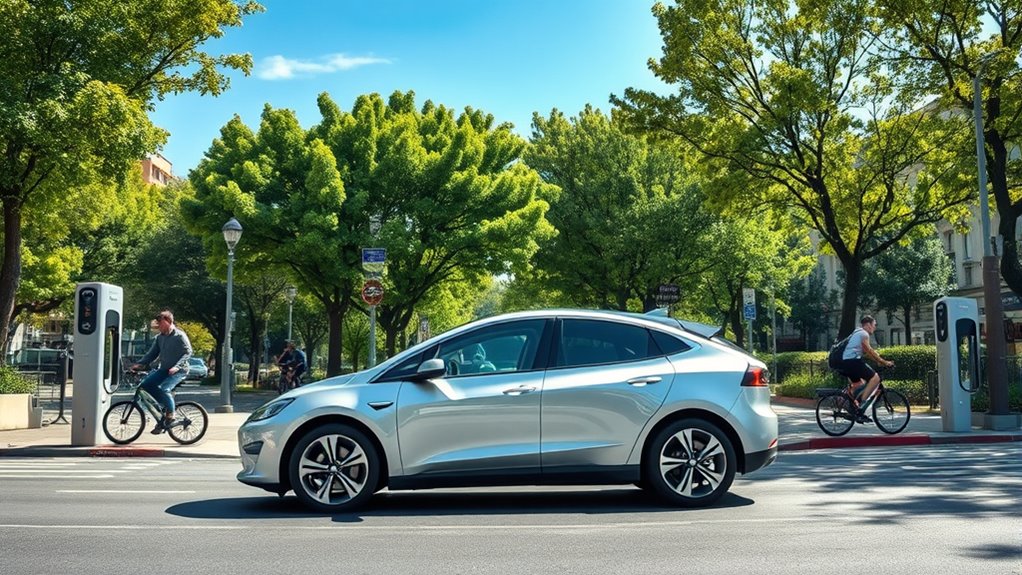

Green transportation includes electric vehicles and other innovative options that help reduce emissions and protect the environment. By choosing electric cars, public transit, or bike sharing, you can lower your carbon footprint and improve air quality. These sustainable choices decrease reliance on fossil fuels and combat climate change. Integrating multiple eco-friendly transportation methods can make your commute cleaner and healthier. Keep exploring to discover more ways you can contribute to a greener, more sustainable future.
Key Takeaways
- Electric vehicles (EVs) produce zero tailpipe emissions and help reduce reliance on fossil fuels.
- Beyond EVs, sustainable transportation includes public transit, bike sharing, and integrated multi-modal systems.
- Transitioning to electric and green options decreases air pollution and mitigates climate change impacts.
- Investing in renewable energy sources enhances the environmental benefits of electric transportation.
- Combining various eco-friendly modes promotes a sustainable and healthier urban environment.
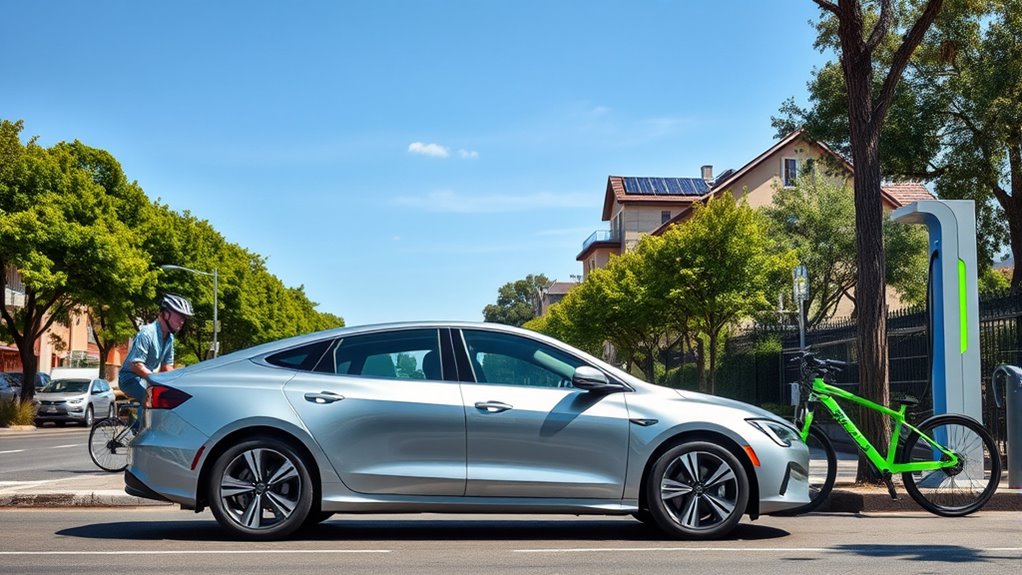
Have you ever wondered how transportation impacts the environment? It’s a major factor contributing to pollution and climate change, but the good news is, there are ways to reduce your carbon footprint. One effective strategy is to embrace greener transportation options, such as public transit and bike sharing programs. Public transit, like buses and trains, offers a practical way to move efficiently while cutting emissions. Instead of driving alone, you can hop on a bus or train, which can carry many passengers at once, dramatically lowering the per-person environmental impact. Many cities are investing in cleaner, more energy-efficient transit systems, making it easier for you to choose this eco-friendly option. Plus, public transit often costs less than owning and maintaining a car, saving you money while helping the environment.
Public transit reduces emissions, saves money, and helps protect the environment—an efficient way to travel sustainably.
Bike sharing is another excellent alternative that promotes sustainability and personal health. With bike-sharing programs, you can rent a bicycle for short trips, reducing reliance on cars and decreasing air pollution. All you need to do is find a nearby bike station, rent a bike through an app, and cycle to your destination. It’s an active way to commute that not only minimizes emissions but also boosts your physical health. Bike sharing is especially convenient in urban areas, where traffic congestion and limited parking make driving a hassle. Using bikes for short trips helps ease congestion and lowers the number of vehicles on the road, which reduces greenhouse gases and improves air quality. Plus, bikes produce zero emissions, making them one of the cleanest forms of transportation available.
By integrating public transit and bike sharing into your daily routine, you can make a significant difference in reducing your environmental impact. Think about how often you rely on a car for commuting, errands, or leisure trips. Switching even a few of those journeys to buses, trains, or bikes can contribute to cleaner air and a healthier planet. Many cities now feature integrated transportation networks, making it easier than ever to combine these options seamlessly. You might take a train partway, then switch to a bike share for the last mile, avoiding the need to drive altogether. Such habits not only help reduce emissions but also promote a more sustainable lifestyle.
Ultimately, adopting these greener transportation choices benefits everyone. You help lower pollution levels, reduce dependence on fossil fuels, and contribute to combating climate change. So, next time you plan your trip, consider public transit or bike sharing as your first options. Making small changes in your daily routine can lead to a cleaner environment and a more sustainable future.
Frequently Asked Questions
What Are the Latest Advancements in Battery Technology?
You’ll find that recent advances in battery chemistry boost energy density, enabling electric vehicles to go farther on a single charge. Researchers are developing solid-state batteries that offer greater safety and longevity, while new materials like silicon anodes improve capacity. These innovations mean your future EVs will charge faster, last longer, and provide more power, making green transportation more practical and appealing for everyday use.
How Do Electric Vehicles Impact Grid Stability?
Electric vehicles impact grid stability by increasing grid demand, especially during peak charging times. However, they can also support renewable integration through vehicle-to-grid (V2G) technology, where your EV can supply stored energy back to the grid during high demand. This helps balance supply and demand, making the grid more resilient. By managing charging habits and leveraging V2G, you contribute to a more stable, renewable-friendly energy system.
What Policies Support Electric Vehicle Adoption Worldwide?
Imagine your journey is a river flowing toward a greener future. Governments act as the banks guiding your path, supporting electric vehicle adoption through incentives and building charging infrastructure. These policies encourage people to switch to EVs, making the progression smoother. By offering financial incentives and expanding charging stations, authorities help you navigate toward sustainable transportation, ensuring the flow of progress continues effortlessly.
Are There Sustainable Materials Used in EV Manufacturing?
Yes, sustainable materials are used in EV manufacturing. You’ll find recyclable components like aluminum and plastics designed for easy reuse, reducing waste. Some manufacturers also incorporate biodegradable plastics, which break down more quickly in the environment, lowering pollution. By choosing EVs with these eco-friendly materials, you support sustainability efforts and help minimize the vehicle’s overall environmental impact.
How Does Green Transportation Affect Urban Air Quality?
Green transportation markedly improves urban air quality by reducing emissions from traditional vehicles. As you adopt electric vehicles, you help decrease urban congestion and noise pollution, making city environments healthier and quieter. These cleaner options cut down on harmful pollutants like NOx and particulate matter, leading to better air quality. Your choice supports a more sustainable city, where less pollution translates to improved public health and a more livable urban space.
Conclusion
As you embrace green transportation, imagine your journey leaving behind trails of clean air and quiet streets. Each electric mile you drive is a step toward a brighter, healthier future—like planting seeds in a world enthusiastic to bloom. Your choices ripple outward, transforming cityscapes into vibrant, sustainable landscapes. By choosing electric and beyond, you’re not just moving forward; you’re guiding the planet toward a dawn where every breath feels lighter and every road leads to hope.