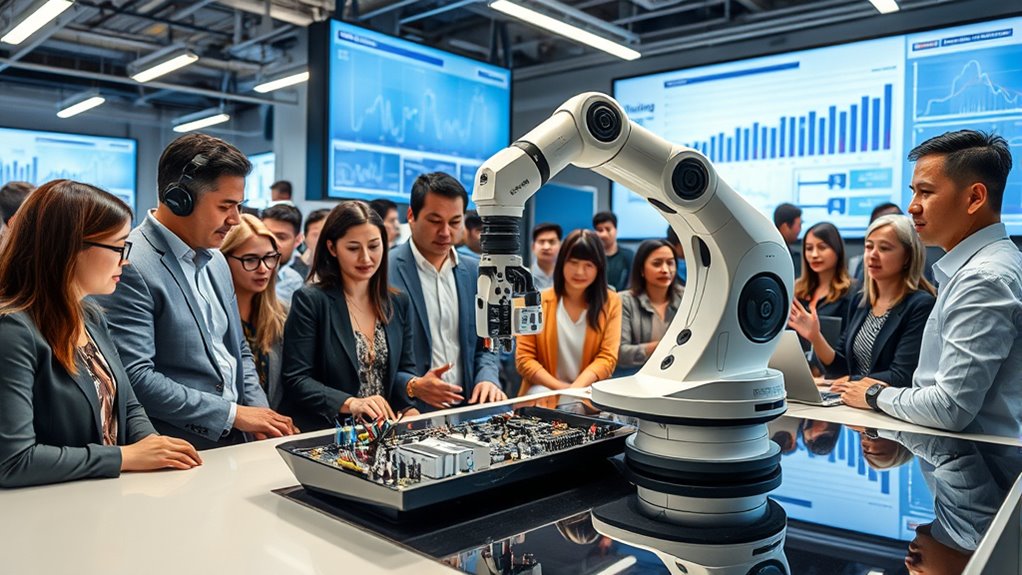

To prepare for job disruption caused by automation, focus on developing new skills in areas like AI, data analysis, and digital literacy, while strengthening soft skills such as communication and adaptability. Reskilling yourself for emerging roles can help you stay relevant and capitalize on automation’s opportunities. Stay informed about industry trends and actively pursue training programs to enhance your resilience. Exploring how you can adapt will give you an edge in this evolving job landscape.
Key Takeaways
- Develop workforce reskilling strategies to adapt to automation-driven job market changes.
- Focus on acquiring skills in AI, data analysis, and soft skills like communication and critical thinking.
- Stay informed about industry trends and emerging technologies through continuous learning and networking.
- Leverage automation as an opportunity for career growth by embracing change and enhancing relevant skills.
- Support workforce transitions via employer-led training programs and lifelong learning initiatives.

Automation is transforming the job market in profound ways, often replacing routine tasks and changing how work is done. As machines and software become more capable, many jobs that once relied on manual or repetitive tasks face AI-driven job displacement. You might notice that roles in manufacturing, data entry, or customer service are evolving rapidly, with automation handling parts of these roles more efficiently than humans. This shift can feel unsettling, especially when you see tasks you’ve performed for years being replaced by algorithms or robotic systems. However, it’s crucial to view this change not just as a threat but as an opportunity. The key to staying resilient in this landscape is developing effective workforce reskilling strategies. These strategies involve acquiring new skills that align with emerging job markets or more advanced roles that require human ingenuity, emotional intelligence, and complex problem-solving.
You should focus on identifying skills that complement automation rather than compete with it. For example, technical skills related to AI, data analysis, or digital literacy can help you stay relevant. Many organizations now offer training programs designed to help workers transition into roles that are less susceptible to automation. Participating in these programs can give you a competitive edge and help you adapt to the changing demands of your industry. It’s also worth considering soft skills, such as communication, critical thinking, and adaptability, which are harder to automate and increasingly valued. Building a mindset geared toward lifelong learning will serve you well as the job market continues to evolve.
In addition, proactively engaging with workforce reskilling strategies means you’ll need to stay informed about industry trends and new technologies. This might involve taking online courses, attending workshops, or seeking mentorship opportunities. Employers are recognizing the importance of supporting their workforce through these transitions, so don’t hesitate to ask about professional development options available to you. Remember, the goal isn’t just to survive automation but to leverage it to enhance your career prospects. By staying adaptable, continuously updating your skill set, and embracing change, you can turn potential job displacement into a chance for growth. Ultimately, the more proactive you are about reskilling, the better positioned you’ll be to navigate the future of work, where technology and human talent coexist and complement each other. Additionally, understanding the capabilities and limitations of electric power generation with bike generators can offer innovative ways to supplement energy needs and foster sustainable practices in various industries.
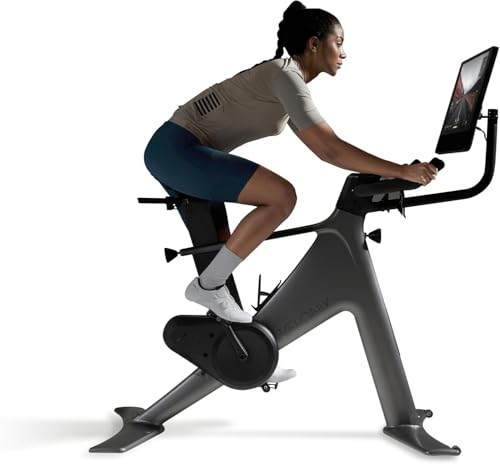
Speediance VeloNix Exercise Bike, Smart AI Fitness Bike with Personalized Fitness Courses & Online Cycling Coaching, 21.5" Screen, Solid Design, Low-Noise Cycling Bike, Stationary Bikes for Indoor Gym
Smart Home Gym Upgrade – Track your performance in real time with the VeloNix Performance Hub. Access detailed…
As an affiliate, we earn on qualifying purchases.
As an affiliate, we earn on qualifying purchases.
Frequently Asked Questions
How Can Workers Reskill for Emerging Job Markets?
To reskill for emerging job markets, you should embrace lifelong learning and focus on developing skill adaptability. Seek out online courses, workshops, and certifications that align with future industry needs. Stay curious, network with professionals, and stay informed about technological trends. By continuously updating your skills and remaining flexible, you’ll better position yourself to seize new opportunities and thrive in an evolving job landscape.
What Industries Will Be Most Affected by Automation?
You’ll find industries like manufacturing, retail, and transportation most affected by automation. Robotic integration in factories can lead to significant labor displacement, reducing the need for human workers in repetitive tasks. As automation advances, you’ll need to stay adaptable and consider reskilling in tech-related fields to remain competitive. Preparing for these changes guarantees you can navigate job disruptions and find new opportunities in evolving industries.
How Can Policymakers Support Displaced Workers Effectively?
Policymakers can support displaced workers by implementing Universal Basic Income to provide financial stability during shifts. They should also invest in workforce transition programs that offer retraining and upskilling opportunities. By fostering accessible education and targeted support, you guarantee workers adapt to new roles, reducing unemployment’s impact. Combining financial safety nets with skill development creates a resilient workforce ready for future job markets.
What Ethical Considerations Arise From Workplace Automation?
You need to recognize that automation raises ethical issues like AI bias and privacy concerns, which can make you feel like you’re walking on thin ice. These problems demand transparency and fairness in AI deployment. You should guarantee that algorithms don’t perpetuate discrimination and that workers’ data remains protected. Addressing these concerns helps build trust and prevents unintended harm, making automation a tool for good rather than a source of controversy.
How Does Automation Impact Income Inequality?
Automation often widens income inequality because it favors those with tech skills and capital, leaving low-income workers behind. To address this, you can support policies like Universal Basic Income and Wealth Redistribution, which help distribute the benefits of automation more evenly. These measures guarantee that everyone, regardless of their job, has a safety net and access to opportunities, reducing economic disparities caused by technological advancements.
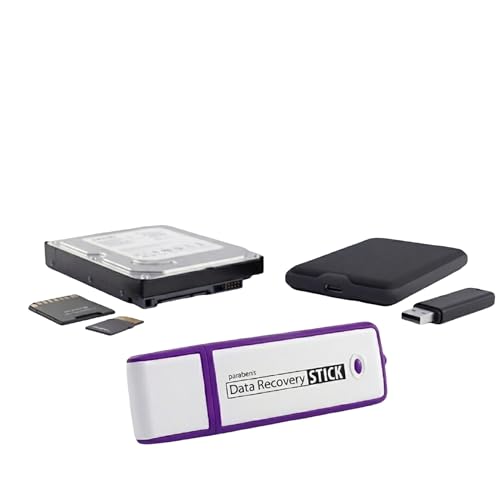
Data Recovery Stick – Recover Deleted Files from Windows Computers and Storage Devices
Data Recovery Stick (DRS) can help you with data recovery on Windows Computers easily and quickly. Just plug…
As an affiliate, we earn on qualifying purchases.
As an affiliate, we earn on qualifying purchases.
Conclusion
As you stand on the brink of this technological wave, remember that automation is a double-edged sword—it can cut both ways. Embrace continuous learning and adaptability like a sailor adjusting sails to changing winds. By staying proactive, you’ll steer through the job disruptions ahead, turning challenges into opportunities. The future may be uncertain, but with resilience and preparation, you can navigate these turbulent waters and find new horizons waiting just beyond the horizon.

Learning Dynamics 4 Weeks to Read Program and Extra Workbook – Includes 53 Books, Teaching Manual, Activity Workbooks, CD, Flashcards, Manipulatives – Teaches Letters, Phonics, Writing, & Reading
Build a Confident Reader – Empower your child to read confidently with a structured program that introduces phonics,…
As an affiliate, we earn on qualifying purchases.
As an affiliate, we earn on qualifying purchases.

Soft Skills Training: A Workbook to Develop Skills for Employment (Second Edition)
As an affiliate, we earn on qualifying purchases.
As an affiliate, we earn on qualifying purchases.