
This checklist is for anyone building a practical set of everyday wellness essentials, from hydration and temperature checks to sleep, mobility, and personal comfort. Each pick gives you a starting point for considering how a product fits your routines.
The sections are organized by gear type. Each one pairs the named pick with buying considerations and a quick verdict to help you compare the role it may play in your day.
Use the checklist by matching each item to your needs and habits before buying. Check dimensions, care instructions, and compatibility details on the product listing, especially where fit or setup can affect everyday use.
Reusable Water Bottles
A reusable bottle is most useful when its capacity and form suit the way you actually hydrate. The YETI Rambler 64 oz Bottle is listed as vacuum insulated, leakproof, and stainless steel, making those the key features to assess against your routine. Think about whether you want one larger bottle to refill less often or a smaller one that is easier to carry throughout the day.
A common mistake is choosing capacity without considering weight and dimensions when full. Check the bottle’s measurements and whether it fits your bag, cup holder, or usual storage spot. Confirm the lid design and cleaning instructions in the listing, and consider whether the opening and any included components work for your preferred way of drinking and washing. “Leakproof” is a product description; review how the manufacturer says to secure and care for the cap.
Before adding it to your checklist, make sure the size feels manageable for your commute, desk, or home use. A bottle that suits your carrying and cleaning habits is more likely to become part of your regular routine.
What to look for:
- Confirm the listed 64 oz capacity suits your routine.
- Check height, width, and filled weight for carrying and storage.
- Review the lid design and how it is secured.
- Check cleaning and care instructions for the stainless steel bottle.
- Verify dimensions against your bag or cup holder.
YETI Rambler 64 oz Bottle, Vacuum Insulated, Leakproof, Stainless Steel with Chu

This 64 oz YETI Rambler bottle features double-wall vacuum insulation to keep beverages cold or hot for extended periods. Constructed from durable 18/8 stainless steel with a fade-resistant DuraCoat finish, it includes a convenient Chug Cap for quick, leakproof sipping.
Pros:
- Excellent temperature retention for both hot and cold beverages
- Durable 18/8 stainless steel construction withstands tough conditions
- Convenient Chug Cap allows for quick and easy drinking
- DuraCoat color is resistant to fading, peeling, and cracking
Cons:
- Chug Cap is not intended for use with hot beverages
Best for: People who prefer carrying a larger bottle for daily hydration.
Not ideal for: Anyone prioritizing a compact, lightweight bottle for travel.
Bottom line: Choose it when its capacity and dimensions fit your everyday carrying and cleaning routine.
Digital Thermometers
A digital thermometer belongs on a wellness checklist when you want a tool for checking temperature at home. This pick is described as a no-touch forehead thermometer for adults and kids, so consider whether that measurement method and intended household use match what you need. Read the listing carefully for its operating instructions and any stated age or use guidance.
A common buying mistake is assuming every thermometer works the same way or that readings need no context. Check how far the device should be held from the forehead, how to position it, and whether the instructions call for a particular environment or preparation. Confirm the display is easy for you to read and understand, and review the power source and cleaning guidance. For a household with children, consider whether the controls and measurement process seem practical for the people who will use it.
Compare the product’s stated measurement method with your preferred way of taking temperatures, and keep the manufacturer’s directions available. The right fit is a thermometer whose instructions and handling make sense for your household; seek medical guidance when you have concerns about symptoms or a reading.
What to look for:
- Confirm the listing specifies no-touch forehead measurement.
- Review distance, positioning, and operating instructions.
- Check the display and controls for ease of use.
- Verify power requirements and cleaning guidance.
- Read any stated age or household-use guidance.
Digital No-Touch Forehead Thermometer for Adults and Kids
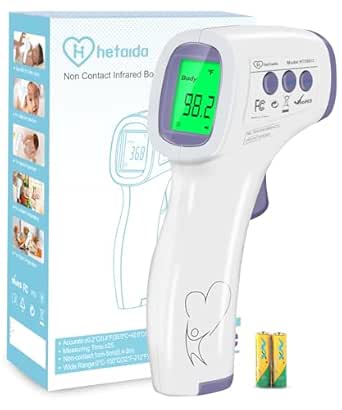
This infrared, non‑contact thermometer provides instant temperature readings in just one second with an accuracy of ±0.2 °C. It features a large backlit LCD that changes color based on fever levels, dual unit display (°F/℃), and can measure body, room, object, and liquid temperatures.
Pros:
- Fast 1‑second reading with high accuracy
- Non‑contact measurement reduces cross‑infection risk
- Multi‑mode: can measure body, room, object, and liquid temperatures
- Color‑coded LCD alarm quickly indicates fever
Cons:
- Designed for indoor use only
- Limited measurement distance (2‑3 inches)
- Requires battery replacement over time
Best for: Households looking for a no-touch forehead thermometer for adults and kids.
Not ideal for: Anyone who needs a different measurement method or clinical guidance.
Bottom line: Check the directions and household fit before relying on a no-touch thermometer.
Foam Rollers
A foam roller can be a useful mobility tool if its shape and firmness suit the movements you plan to do. This pick is described as a high-density foam roller for deep tissue massage. Before choosing it, consider where you’ll use it, which body areas you intend to roll, and whether you have enough clear floor space to move comfortably.
One common mistake is treating a firmer roller as automatically better. High density may feel intense, so check the product details and choose based on your comfort and experience. Review the roller’s length and diameter: a longer model may be easier to position across the back, while a shorter one can be simpler to store or carry. Confirm the surface description, material, and care instructions, and check whether its dimensions work for your planned exercises.
Start gently and follow guidance appropriate to your needs; avoid rolling directly over painful or injured areas without professional advice. If you are new to foam rolling, prioritize comfort and control over intensity. The best checklist choice is one you can position safely and use consistently in your available space.
What to look for:
- Check length and diameter against your intended movements.
- Review the stated density and surface description.
- Consider how the firmness feels for your experience level.
- Confirm the material and cleaning instructions.
- Make sure you have enough floor space to use it safely.
High-Density Foam Roller for Deep Tissue Massage

This lightweight foam roller has a triple-zone grid designed to mimic finger, palm, and thumb pressure for targeted muscle massage. Made from PP and EVA, it is suitable for stretching and post-workout recovery, and its portable 18-inch length makes it easy to take to the gym, office, or yoga class.
Pros:
- Triple-zone design targets muscles with varied pressure
- Lightweight and portable
- Waterproof, sweat-proof, and easy to clean
- Suitable for stretching and post-workout recovery
Cons:
- Availability can vary
Best for: People seeking a high-density roller for their mobility routine.
Not ideal for: Anyone who prefers a softer feel or needs injury-specific guidance.
Bottom line: Match the roller’s dimensions and firmness to your comfort and planned exercises.
Sunrise Alarm Clocks
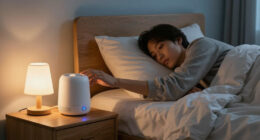
A sunrise alarm clock is a routine-focused item for people considering a different way to structure bedtime and waking. The listed pick is the Hatch Restore 3, described as a sleep assistant with science-backed sleep audio. Check the product listing for the features included and the setup required, then decide whether those features fit your evening and morning habits.
A common mistake is buying a sleep device based on a feature description without checking how it works in your room. Review the light and audio controls, available settings, and whether the device requires an app, account, or ongoing connection. Confirm the dimensions, power requirements, and placement options for your nightstand. Consider whether its operation suits the people who share your room, including how you can adjust or disable sound and light.
Compatibility details matter: check phone and operating-system requirements if the product uses an app, and read what the listing says about setup and ongoing access. Consider how the device fits your existing wind-down routine rather than expecting a clock alone to resolve sleep concerns. A good match offers usable controls and practical placement for your bedroom.
What to look for:
- Review which sleep audio and clock features are included.
- Check app, account, phone, and connection requirements.
- Confirm power needs and nightstand dimensions.
- Look for controls to adjust light and audio to your routine.
- Read setup and ongoing access details in the listing.
Hatch Restore 3 – Sleep Assistant with Science-Backed Sleep Audio and Circadian

The Hatch Restore 3 is an all-in-one sunrise alarm clock, sound machine, and smart light designed to build healthy bedtime routines. It offers 80+ science-backed sleep sounds, customizable light and audio pairings, and a sunrise alarm that supports your natural circadian rhythm.
Pros:
- Combines sunrise alarm, sound machine, and smart light in one device
- Screen-free design supports a dark, restful bedroom
- 80+ science-backed sleep sounds and customizable light/audio pairings
Cons:
- Premium content requires ongoing Hatch+ subscription after 30-day trial
- Free Hatch+ trial limited to new subscribers only
Best for: People who want to explore sleep audio and a structured wake-up routine.
Not ideal for: Anyone seeking a simple alarm with no connected setup.
Bottom line: Check setup, controls, and bedroom fit before adding it to your sleep routine.
Blue Light Blocking Glasses
Glasses are personal-fit gear, so comfort and sizing matter as much as the product’s stated purpose. The Horus X Blue Light Blocking Glasses are described for men and women. Check the listed frame dimensions and fit guidance rather than relying on that broad audience description to predict how they will sit on your face.
A common mistake is assuming a blue-light description guarantees a particular result or that any frame will work for every wearer. Review the product information for lens details, frame measurements, and whether prescription use is supported if relevant to you. Check bridge width, temple length, and lens width against glasses you already find comfortable. Consider when you plan to wear them and whether the frame shape and weight feel suitable for those activities.
Check the return and fit information on the product listing in case the dimensions do not work for you. If you need corrective lenses or have eye-health concerns, consult an eye-care professional about appropriate options. Choose based on fit, lens details, and intended use, not only the product name; comfort makes glasses easier to incorporate into a routine.
What to look for:
- Compare frame, bridge, and temple measurements with glasses that fit.
- Review lens details and any stated specifications.
- Confirm whether prescription use is supported if needed.
- Check frame material, weight, and care instructions.
- Review fit guidance and return information before ordering.
Horus X Blue Light Blocking Glasses for Men and Women

The Horus X blue light blocking glasses feature amber lenses designed to reduce eye strain, headaches, and fatigue caused by digital screens. They provide comfort, clarity, and UV protection, making them suitable for work, gaming, or sensitive eyes, with a lightweight and modern style for everyday use.
Pros:
- Effectively blocks 100% of blue light and UV for eye protection
- Reduces eye strain, headaches, and fatigue during screen use
- Lightweight and stylish design suitable for daily wear
- Enhances contrast and sharpness while preserving natural colors
Cons:
- May not be suitable for those needing corrective lenses
- Design may not appeal to all style preferences
- Limited information on durability and frame material
Best for: People interested in blue light blocking glasses with a fit that suits them.
Not ideal for: Anyone who needs prescription lenses unless compatibility is confirmed.
Bottom line: Use the frame measurements and lens details to judge whether these glasses fit your needs.
Portable Air Purifiers
A personal air purifier necklace is a wearable item, so it is important to understand exactly what the listing says it does and how it is meant to be used. The AirTamer A310 is identified as a personal air purifier necklace. Check its product details and instructions to understand its intended use, operating requirements, and any stated limitations.
A common mistake is assuming a personal wearable device serves the same role as a room air purifier. Review the manufacturer’s description, including the area or use case it addresses, and do not infer protection claims from the product category alone. Check wearing comfort and dimensions, how it attaches, and whether its weight and design suit your daily activities. Confirm the power or charging method, expected operating time as stated by the manufacturer, and care instructions.
Consider when and where you expect to wear it, then verify that the operating directions are practical for those settings. If you are evaluating air quality or respiratory concerns, consult relevant professional guidance rather than relying on a product name. A sensible choice depends on clear use instructions and comfortable wear, along with realistic expectations grounded in the listing.
What to look for:
- Read the manufacturer’s stated intended use and limitations.
- Check dimensions, weight, and attachment details for comfortable wear.
- Verify power or charging requirements and operating instructions.
- Review care guidance for a wearable device.
- Compare the stated use case with your actual needs.
AirTamer A310 Personal Air Purifier Necklace

The AirTamer A310 is a wearable personal air purifier that emits negative ions to improve air quality around your face. It is lightweight, maintenance-free, and suitable for daily use in crowded or enclosed environments, providing a cleaner breathing space.
Pros:
- Provides immediate improvement in air quality around the face
- No filters or maintenance needed
- Long battery life of over 150 hours
- Lightweight and comfortable for all-day wear
Cons:
- Effectiveness may vary depending on environmental conditions
- Relies on negative ion technology, which some users may question
- Does not filter airborne particles directly
Best for: People seeking a wearable personal air purifier necklace.
Not ideal for: Anyone looking for a room air purifier or unverified protection claims.
Bottom line: Verify intended use, operating details, and comfort before choosing a wearable purifier.
If you are buying gradually, start with the item that addresses your most regular need, then consider the thermometer and any gear that supports your existing routines. Prioritize fit, instructions, and compatibility before adding optional items, and check each listing for the practical details that matter in your home.
Wellness gear works best when it feels easy to use and fits your life. Use this checklist as a starting point for thoughtful choices, adjust it to your routines, and build your set one useful item at a time.