Practicing mindfulness helps you focus on the present moment, boosting your overall wellbeing. By paying attention to your breath, sensations, and sounds without judgment, you can reduce stress and build emotional resilience. Incorporating simple habits like mindful breathing and body scans into your daily routine can make a big difference. Staying consistent deepens your practice and transforms how you respond to life’s challenges. Keep exploring, and you’ll discover even more ways to harness the power of present-moment awareness.
Key Takeaways
- Paying attention to the present moment enhances overall wellbeing and fosters calmness and clarity in daily life.
- Mindfulness reduces stress by creating mental space between stimulus and response, promoting emotional resilience.
- Incorporating brief, focused practices like breathing and body scans into daily routines strengthens mindfulness benefits.
- Regular mindfulness helps improve focus, regulate emotions, and cultivate kindness towards oneself and others.
- Consistent present-moment awareness transforms mental habits, leading to a healthier, more balanced, and resilient life.
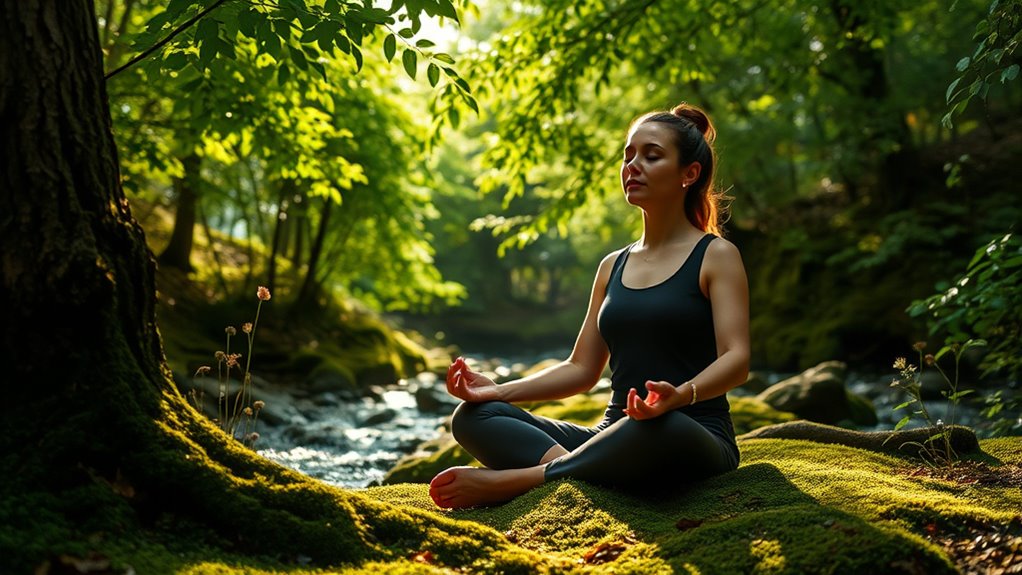
Have you ever wondered how simply paying attention in the present moment can boost your overall wellbeing? It’s a powerful idea, and practicing mindfulness meditation is one of the most effective ways to do it. When you focus your attention on what’s happening right now—your breath, sensations in your body, sounds around you—you’re training your mind to stay grounded instead of wandering into worries about the future or regrets from the past. This intentional awareness helps you develop a sense of calm and clarity that can carry over into everyday life. Mindfulness meditation isn’t about emptying your mind or achieving a state of perfection; it’s about observing your experience without judgment. Over time, this practice can considerably reduce stress levels, making you more resilient to the daily pressures you face. When you regularly engage in mindfulness meditation, you learn to pause, breathe, and create space between stimulus and response. This space is where stress reduction happens. Instead of reacting impulsively to stressful events, you become more aware of your thoughts and feelings, giving you the opportunity to choose a more mindful response. This shift can lessen the intensity of stress and prevent it from spiraling out of control. As you deepen your mindfulness practice, you’ll notice that even during hectic moments, you can return to the present with greater ease. You might find yourself less overwhelmed, more centered, and better equipped to handle challenges calmly. It’s not about eliminating stress entirely but managing it more effectively. The benefits of mindfulness meditation extend beyond stress reduction. They include improved focus, enhanced emotional regulation, and a greater sense of overall wellbeing. When you’re present in the moment, you’re less likely to get caught up in negative thought patterns or self-criticism. Instead, you cultivate a gentle awareness that fosters kindness toward yourself and others. Incorporating mindfulness into your daily routine doesn’t require hours of meditation; even a few minutes of focused breathing or body scan can make a difference. Consistency matters more than duration. Over time, these small daily moments of mindfulness can reshape how you respond to stress and increase your capacity to enjoy life fully. Developing mindfulness techniques can further deepen your practice and enhance its benefits. The simple act of paying attention in the present moment, through mindfulness meditation, can transform your mental and emotional landscape, leading to a healthier, more balanced life.

Retrospec Sedona Zafu Meditation Cushion with Buckwheat Hull Fill – Adjustable Yoga & Pilates Equipment Support – 17in Crescent Cotton Cover
NATURAL COMFORT & SUPPORT: Filled with sustainable buckwheat hulls, this meditation cushion elevates your practice by aligning your…
As an affiliate, we earn on qualifying purchases.
As an affiliate, we earn on qualifying purchases.
Frequently Asked Questions
How Long Should I Practice Mindfulness Each Day?
You should aim for a daily practice duration of about 10 to 20 minutes for ideal mindfulness length. This amount of time helps you build consistency and experience the benefits without feeling overwhelmed. If you’re just starting, even five minutes can make a difference. As you get more comfortable, gradually extend your practice to deepen your present-moment awareness and enhance your overall wellbeing.
Can Mindfulness Help With Severe Mental Health Issues?
Mindfulness can be a powerful tool, even for severe mental health issues, transforming your emotional landscape like a storm calming into a gentle breeze. It offers significant mental health benefits and enhances emotional regulation, helping you manage intense feelings and thoughts. While it’s not a cure-all, practicing mindfulness daily can provide crucial support, making your mental health journey less overwhelming and more manageable, one present moment at a time.
What Are Common Challenges Beginners Face in Mindfulness?
As a beginner, you might struggle with distraction management, finding your mind wandering often. It takes patience development to stay focused and not get discouraged. You may also feel restless or impatient, wanting immediate results. Remember, mindfulness is a practice, so be gentle with yourself. Regularly practicing helps you build resilience against distractions and develop patience, making it easier to stay present and experience its benefits over time.
Is Mindfulness Effective Without Meditation?
Mindfulness is like a sturdy bridge—effective even without meditation. When you focus on your breath or sensations during daily tasks, you’re practicing mindfulness in education or at work. You don’t need formal meditation to reap its benefits; simple, intentional awareness shifts your perspective and reduces stress. So, yes, mindfulness can thrive outside meditation, helping you stay present and centered in every moment.
How Do I Incorporate Mindfulness Into a Busy Schedule?
You can easily incorporate mindfulness into your busy schedule by practicing mindful eating during meals and walking mindfulness during short breaks. Focus fully on the taste, texture, and smell of your food, or pay attention to each step and sensation while walking. These small, intentional moments help you stay present and reduce stress, fitting seamlessly into your day without needing extra time or meditation sessions.

Mindsight 'Breathing Buddha' Guided Visual Meditation Tool for Mindfulness | Slow Your Breathing & Calm Your Mind for Stress & Anxiety Relief | Perfect for Adults & Kids | Relaxing Self Care Gift
🧠 WHAT IT'S FOR: Daily guided breathing to help calm & focus your mind during the day or…
As an affiliate, we earn on qualifying purchases.
As an affiliate, we earn on qualifying purchases.
Conclusion
Practicing mindfulness can considerably boost your wellbeing, helping you stay grounded amid life’s chaos. Imagine that just 10 minutes a day can reduce stress by up to 30%, transforming how you handle daily challenges. By harnessing present-moment awareness, you regain control over your emotions and improve your overall happiness. So, start today—embrace mindfulness and watch as tiny, consistent steps lead to a calmer, more centered you. Your wellbeing is worth every moment of this mindful journey.

Body Scan: Managing Pain, Illness, & Stress with Guided Mindfulness Meditation
As an affiliate, we earn on qualifying purchases.
As an affiliate, we earn on qualifying purchases.

Breathing Exercise Cards for Kids, Deck for Classroom, Calm Down Corner Kit, Sensory Room, Social Emotional Yoga Games for Kids, Mindfulness Tools for Play Therapy, or Relaxation
*Award-Winning* 34 Colorful and Beautifully Poses Illustrated Cards: You can use this yoga for kids cards during brain…
As an affiliate, we earn on qualifying purchases.
As an affiliate, we earn on qualifying purchases.