
TL;DR

Get health and wellness essentials delivered free — and shop member deals
- Fast, free delivery on millions of items
- Access to Prime Big Deal Days deals on October 6–7
- Prime Video, Amazon Music and more included
Recent studies indicate that specific blood markers could be key to understanding healthy aging. Researchers are exploring how blood composition relates to longevity and age-related health decline, but conclusive evidence is still pending.
Recent research suggests that certain blood components may serve as indicators of healthy aging. Scientists are investigating how blood biomarkers relate to longevity and age-related decline, potentially paving the way for new diagnostic tools and interventions. While these findings are promising, further studies are required to confirm causality and practical applications.
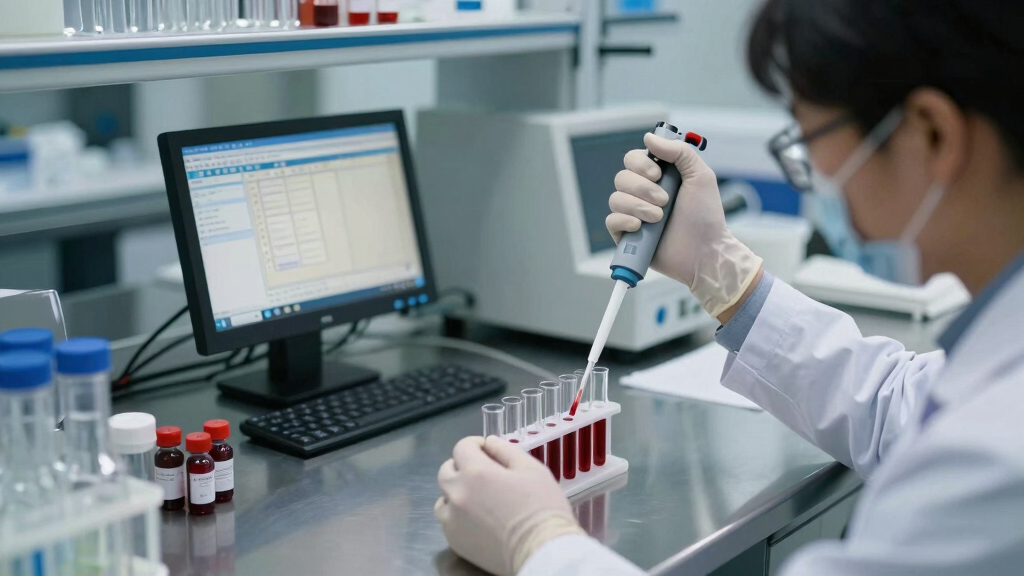
Multiple studies published in late 2023 have identified correlations between specific blood markers—such as levels of certain proteins, lipids, and inflammatory molecules—and measures of healthy aging. Researchers from leading institutions analyzed blood samples from diverse age groups, finding that individuals with certain profiles tend to experience fewer age-related health issues and longer lifespans.
One key finding involves the presence of particular proteins linked to cellular repair and anti-inflammatory processes, which appear more prevalent in healthier, older adults. Experts caution, however, that these are observational correlations, and it is not yet clear whether these blood components directly influence aging or are simply indicators of other underlying factors.
Scientists emphasize that understanding the mechanisms behind these blood markers could lead to blood tests capable of predicting individual aging trajectories and guiding personalized interventions to promote longevity. Nonetheless, clinical applications remain in the early stages, and more research is needed to establish reliable, actionable biomarkers.
Potential for Blood Tests to Predict and Promote Healthy Aging
This research could transform how aging is monitored and managed by enabling early detection of biological signs of decline. If validated, blood-based diagnostics might help identify at-risk individuals, tailor preventative strategies, and develop targeted therapies to extend healthspan. However, experts note that these findings are preliminary, and widespread clinical use is still years away.
As an affiliate, we earn on qualifying purchases.
Recent Advances in Aging Biomarker Research
Over the past decade, scientists have increasingly focused on biological markers that reflect the aging process, such as telomere length, epigenetic changes, and metabolic profiles. Recent studies have expanded this focus to include blood-based markers, with some research suggesting that blood composition can mirror biological age more accurately than chronological age.
Previous efforts to develop aging biomarkers faced challenges due to variability among individuals and the complexity of aging mechanisms. The latest research builds on these efforts by identifying specific proteins and molecules in blood that correlate with better health outcomes in older populations.
While promising, these findings are still in early validation stages, and it remains to be seen whether they can be integrated into routine clinical practice or lead to effective interventions.
“Our findings suggest that certain blood biomarkers could serve as early indicators of healthy aging, but we need more data to determine causality.”
— Dr. Lisa Chen, senior researcher at the Institute for Aging Studies
anti-inflammatory blood supplements
As an affiliate, we earn on qualifying purchases.
As an affiliate, we earn on qualifying purchases.
Unconfirmed Causal Relationship Between Blood Markers and Aging
While correlations have been observed, it is not yet clear whether the identified blood components directly influence aging processes or simply reflect other underlying health factors. Researchers stress that causality has not been established, and more longitudinal studies are needed to determine if modifying these markers can improve health outcomes.
cellular repair protein supplements
As an affiliate, we earn on qualifying purchases.
As an affiliate, we earn on qualifying purchases.
Next Steps in Validating Blood-Based Aging Biomarkers
Scientists plan to conduct larger, longitudinal studies to track blood biomarkers over time and assess their predictive power for healthspan and lifespan. Clinical trials may explore whether interventions targeting these blood components can promote healthier aging. Researchers also aim to standardize measurement techniques for potential diagnostic use.
As an affiliate, we earn on qualifying purchases.
Key Questions
Can blood tests currently predict how well I will age?
Not yet. While recent studies show promising correlations, there are no validated blood tests available for predicting individual aging trajectories at this time.
Are these blood markers modifiable to promote healthier aging?
It is too early to say. Researchers are investigating whether altering certain blood components can influence aging, but conclusive evidence and safe interventions are still in development.
When might blood-based aging diagnostics become available?
It is uncertain. Further validation and clinical trials are needed, which could take several years before such diagnostics are ready for routine use.
Does this mean aging can be stopped or reversed?
No. Current research aims to better understand aging and potentially extend healthspan, but it does not suggest that aging can be halted or reversed at this stage.
Source: rss
Fall Picks
fall essentials
As an affiliate, we earn on qualifying purchases.