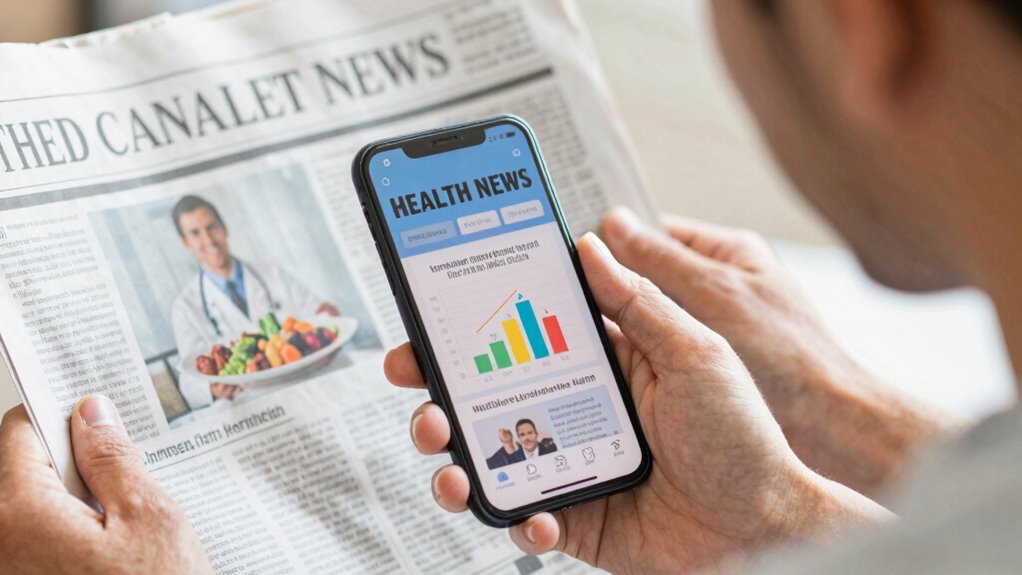

To avoid being misled by health headlines, you should approach them with skepticism and look past sensational claims. Check if the study is peer-reviewed, supported by multiple research efforts, and involves a large number of participants. Be cautious of headlines that highlight preliminary results or rely on small, biased studies. Always consider the source’s credibility and potential industry influence. If you keep exploring, you’ll uncover key tips for maneuvering complex health information effectively.

Get health and wellness essentials delivered free with Prime
- Fast, free delivery on millions of items
- Prime Video, Amazon Music and more included
- Member-only deals all year
Key Takeaways
- Look beyond sensational headlines and seek the original source or study details for context.
- Check if the research is peer-reviewed and supported by multiple, well-designed studies.
- Be skeptical of claims based on preliminary findings or small observational studies.
- Consider potential biases, funding sources, and the credibility of the information provider.
- Maintain a critical mindset and recognize that scientific understanding evolves over time.
Have you ever come across a sensational health headline that left you confused or unsure of what to believe? It’s a common experience, especially when headlines are designed to grab attention rather than convey the full picture. When you see claims like “Eat This to Lose Weight Fast” or “Miracle Food Reverses Aging,” it’s easy to get caught up in the hype. The truth is, many of these headlines are based on oversimplified or misleading interpretations of complex medical studies. To navigate this, you need to develop a critical eye for the information presented. It’s important to recognize that nutrition myths often circulate because initial findings from medical studies are taken out of context or exaggerated. For example, a single study might suggest a certain food has health benefits, but that doesn’t mean it’s a magic cure-all. Scientific research is always evolving, and one study alone rarely provides definitive proof. When you read a headline, ask yourself whether it’s referencing a broad consensus or just a preliminary finding. Look for clues about the quality of the research, such as the number of participants, whether it was peer-reviewed, or if multiple studies support the claim. Be cautious of headlines that cherry-pick data or make dramatic statements without backing them up with solid evidence. Additionally, understanding how to interpret medical studies is essential. Not every study is created equal. Some are small, observational, or funded by groups with a vested interest, which can bias results. Well-designed studies, like randomized controlled trials, offer more reliable insights. If a headline claims that a certain supplement or food drastically improves health, consider whether the original research was rigorous or if it’s just a preliminary finding. Also, keep in mind that medical studies often produce conflicting results, and new research can overturn previous assumptions. Recognizing the study design quality of research can help you better evaluate the reliability of health claims. Moreover, understanding the scientific process behind these studies can help you distinguish between credible evidence and misleading claims. Being aware that research methods vary greatly can help you approach health news with a more skeptical and informed mindset. Additionally, it’s helpful to be aware that nutrition research can sometimes be influenced by industry interests, which underscores the importance of scrutinizing the source of the information. Developing a critical thinking approach to health headlines will serve you well in navigating the often confusing landscape of medical information.
peer-reviewed medical study books
As an affiliate, we earn on qualifying purchases.
As an affiliate, we earn on qualifying purchases.
Frequently Asked Questions
How Do I Verify the Credibility of Health Sources?
To verify the credibility of health sources, you should look for expert opinions from qualified professionals and check if they cite reputable scientific studies. Trust sources that are transparent about their references and avoid sensational headlines. Cross-check information across multiple reputable sites, such as government health agencies or established medical institutions. If the source provides clear, evidence-based data and is peer-reviewed, it’s more likely to be reliable.
What Common Bias Appears in Health Headlines?
You’ll often see confirmation bias in health headlines, where headlines favor information that supports existing beliefs, making you accept claims without question. Media literacy helps you recognize this bias, encouraging you to question sensational claims. Cognitive biases like overgeneralization can also distort the message, leading you to draw false conclusions. By being aware of these biases, you can better evaluate health headlines critically and avoid falling for misleading or exaggerated information.
How Can I Differentiate Between Opinions and Facts?
Did you know that studies show people often believe headlines more than the actual articles? To differentiate opinions from facts, recognize personal biases and be wary of emotional appeals. Facts are supported by evidence and sources, while opinions reflect personal views. Check if the headline cites credible research, and read beyond the headline to understand the full context. This way, you avoid falling for misleading claims.
Are Sensationalized Headlines More Likely to Be Misleading?
Yes, sensationalized headlines are more likely to be misleading because they often use clickbait tactics and emotional appeals to grab your attention. These headlines tend to exaggerate or oversimplify health information, making you think there’s an urgent problem when there might not be one. Always be cautious with these headlines, verify the facts from reputable sources, and avoid reacting emotionally before understanding the full context.
What Role Do Statistics Play in Health Headlines?
Imagine statistics as a lighthouse guiding your ship through foggy seas. They play an essential role in health headlines by highlighting findings that are statistically significant, meaning they’re unlikely due to chance. But beware—data interpretation can be tricky, and headlines may oversimplify or exaggerate results. Always look beyond the numbers, question the context, and seek clear explanations to truly understand what the data reveals about health claims.
medical research interpretation guides
As an affiliate, we earn on qualifying purchases.
As an affiliate, we earn on qualifying purchases.
Conclusion
Remember, not all that gleams is gold. When you read health headlines, stay skeptical and look beyond the headlines for the full story. Check the source, read the details, and consider expert opinions before jumping to conclusions. Think of it like a recipe—you wouldn’t judge a dish by its cover, so don’t judge health news without digging deeper. By staying cautious, you’ll protect yourself from misinformation and make smarter health choices.
nutrition research analysis tools
As an affiliate, we earn on qualifying purchases.
As an affiliate, we earn on qualifying purchases.
As an affiliate, we earn on qualifying purchases.
Halloween Picks
halloween
As an affiliate, we earn on qualifying purchases.