Countertop water filters offer a convenient way to improve tap water quality without complex installation. The best models balance effective filtration, ease of use, and affordability. The Waterdrop CTF-01 stands out for its sleek design and reliable performance, while the AquaTru offers advanced reverse osmosis for purer water. However, compromises often involve cost, maintenance, and water flow rates. Keep reading for a detailed breakdown of the top options and how to choose the right one for your needs.

Get health and wellness essentials delivered free with Prime
- Fast, free delivery on millions of items
- Prime Video, Amazon Music and more included
- Member-only deals all year
Key Takeaways
- Effective filtration performance varies significantly, with reverse osmosis models providing the highest purity but at higher cost and complexity.
- Ease of use and maintenance are key factors, especially for households with limited technical comfort or busy schedules.
- Price ranges widely, with basic models suitable for budget-conscious buyers and premium options for those prioritizing water quality.
- Size and design influence installation space and aesthetics, making compact models ideal for smaller kitchens.
- Additional features like auto-fill, mineral addition, or smart monitoring can enhance usability but often come with higher prices.
| Waterdrop CTF-01 Water Filter for Sink Faucet, Stainless Steel, 1 Filter |  | Best Overall for Simplicity and Reliability | Material: 304 food-grade stainless steel | Filter Life: 12 months or 8,000 gallons | Flow Rate: 1.6 gallons per minute | VIEW ON AMAZON | See Our Full Breakdown |
| Waterdrop ED01W Electric Water Filter Pitcher, NSF/ANSI 42&53&401&372, White |  | Best for On-the-Go and Instant Hydration | Filter Capacity: 200 gallons | Filter Life: Up to 3 months | Battery Life: 30 days | VIEW ON AMAZON | See Our Full Breakdown |
| DREO Reverse Osmosis Water Filter System Countertop, RO Water Filter 112 3L | 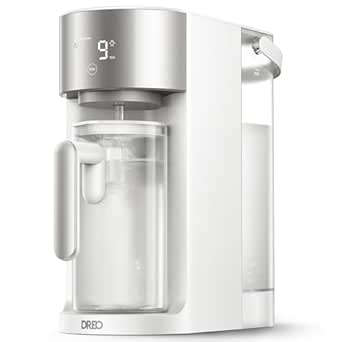 | Best for Deep Contaminant Removal with Smart Monitoring | Capacity: 3 liters | Dimensions: 14.5″L x 6.7″W x 13.4″H | Weight: 9.5 pounds | VIEW ON AMAZON | See Our Full Breakdown |
| Waterdrop C2SL Countertop Reverse Osmosis Water Filter with Mineral Addition |  | Best for Mineral-Enhanced, Balanced Water | Filtration Stages: 7-stage | Contaminant Reduction: 99.8% PFOA, 99.7% PFOS, 99.96% microplastics, 99.83% lead, 99.51% chlorine, 98.45% fluoride | Minerals Added: Calcium, magnesium, potassium, sodium | VIEW ON AMAZON | See Our Full Breakdown |
| Bluevua RO100ROPOT Countertop Reverse Osmosis Water Filter System |  | Best for Portability and Sustainability | Filtration Stages: 5 | Filter Life: 12-24 months | Carafe Material: High borosilicate glass | VIEW ON AMAZON | See Our Full Breakdown |
| AquaTru Glass Carafe Countertop Reverse Osmosis Water Filter System |  | Best Overall for Purity and Ease of Use | Filtration Stages: 4 | Filter Life: 6 months or 300 gallons (Pre/Carbon), 1 year or 600 gallons (RO), 1 year or 300 gallons (VOC Carbon) | Dimensions: 14″L x 7.5″W x 13″H | VIEW ON AMAZON | See Our Full Breakdown |
| Ninja HydraSense™ Intelligent Water Filtration System, WF1001WH1 |  | Best for Smart, Convenient Water Tracking | Filtration Capacity: 120 gallons | Reservoir Size: 96 oz | Filter Life: 2 replacements per year | VIEW ON AMAZON | See Our Full Breakdown |
| Purewell 3-Stage 0.01μm Ultra-Filtration Gravity Water Filter System, NSF/ANSI 42 & 372 Certified, 304 Stainless Steel Countertop with 2 Filters and Stand, 2.25G |  | Best for Off-Grid and Energy-Free Filtration | Filtration Pore Size: 0.01 microns | Flow Rate: 4 gallons/hour | Capacity: 2.25 gallons | VIEW ON AMAZON | See Our Full Breakdown |
| DREO Reverse Osmosis Water Filter Countertop, 7-in-1 RO Filtration System with Auto Fill and Self-Cleaning |  | Best for Maximum Contaminant Removal and Convenience | Filtration Type: Reverse Osmosis | Contaminants Removed: Chlorine, fluoride, PFOA, PFOS, others | Standards: NSF/ANSI 58 | VIEW ON AMAZON | See Our Full Breakdown |
| countertop water filter | Filter Life |
|---|---|
| Waterdrop CTF-01 Water Filter | 12 months or 8,000 gallons |
| Waterdrop ED01W Electric Water | Up to 3 months |
| DREO Reverse Osmosis Water Fil | — |
| Waterdrop C2SL Countertop Reve | Up to 12 months or 528 gallons |
| Bluevua RO100ROPOT Countertop | 12-24 months |
| AquaTru Glass Carafe Counterto | 6 months or 300 gallons (Pre/Carbon), 1 year or 600 gallons (RO), 1 year or 300 gallons (VOC Carbon) |
| Ninja HydraSense™ Intelligent | 2 replacements per year |
| Purewell 3-Stage 0.01μm Ultra- | — |
| DREO Reverse Osmosis Water Fil | — |
More Details on Our Top Picks
Waterdrop CTF-01 Water Filter for Sink Faucet, Stainless Steel, 1 Filter
The Waterdrop CTF-01 stands out for its straightforward installation and durable stainless steel design, making it a strong choice for those who want maintenance-free, long-term filtration without complex setup. Compared with the Waterdrop C2SL, it doesn’t add minerals or include smart features, but it excels in providing reliable multi-stage filtration that enriches water taste and health. Its 5-stage system effectively reduces common impurities, though it does not lower TDS levels, which might matter for those seeking mineral content reduction. The filter lasts a full year or 8,000 gallons, reducing ongoing costs. However, it only fits standard sink faucets and won’t work with pull-out or sensor types. Overall, this pick makes the most sense for homeowners or renters wanting a permanent, easy-to-install filter for daily use without extra features.
Pros:- Easy to install without drilling or plumbing modifications
- Durable stainless steel construction resists corrosion
- Enriches water with beneficial minerals for taste and health
- Long-lasting filter with 12-month lifespan
Cons:- Compatible only with standard faucet types, not pull-out or sensor faucets
- Does not reduce TDS levels, limiting mineral content control
Best for: Homeowners or renters seeking a durable, easy-to-maintain faucet-mounted filter for everyday drinking water
Not ideal for: Households wanting TDS reduction or those with non-standard faucets, as it’s limited to standard sink types
- Material:304 food-grade stainless steel
- Filter Life:12 months or 8,000 gallons
- Flow Rate:1.6 gallons per minute
- Operating Temperature:41–100°F (5–38°C)
- Operating Pressure:15–100 psi / 100–689 kPa
- Filtration Stages:5-stage
Our verdict“Ideal for users who want a reliable, low-maintenance faucet filter without extra features or TDS reduction needs.”
Waterdrop ED01W Electric Water Filter Pitcher, NSF/ANSI 42&53&401&372, White
The Waterdrop ED01W makes filtered water instantly accessible via one-touch operation, making it ideal for busy lifestyles or travel. Unlike the Bluevua RO100ROPOT, which offers long-term filtration without mobility, this pitcher provides immediate clean water with a high-efficiency 0.5 µm carbon filter. Its rechargeable battery adds convenience for portable use, although it doesn’t lower TDS levels, similar to the Waterdrop C2SL. Filter replacements are needed roughly every 3 months, which may be a drawback for frequent users. Nonetheless, its NSF/ANSI certification guarantees water safety and quality. This option best suits individuals who want quick, portable filtration without the need for plumbing or installation, especially for travel or office use.
Pros:- Provides instant filtered water with one-touch operation
- High-efficiency carbon filter reduces multiple contaminants
- Rechargeable battery supports portability
- NSF/ANSI certified for water safety
Cons:- Does not lower TDS levels, limiting mineral content adjustments
- Filter needs replacement every 3 months, adding ongoing cost
Best for: Active individuals or commuters needing instant, filtered water on the go
Not ideal for: Households seeking large quantities of filtered water or TDS reduction, as the pitcher’s capacity is limited
- Filter Capacity:200 gallons
- Filter Life:Up to 3 months
- Battery Life:30 days
- Certification:NSF/ANSI 42, 53, 401, 372
- Charging:USB Type-C
Our verdict“Best suited for those who prioritize convenience and instant hydration over large volume filtering or TDS control.”
DREO Reverse Osmosis Water Filter System Countertop, RO Water Filter 112 3L
The DREO 7-in-1 countertop reverse osmosis system offers comprehensive filtration, removing 99.9% of contaminants like chlorine, fluoride, and PFOA, surpassing many multi-stage filters like the Waterdrop C2SL in contaminant coverage. Its built-in TDS meter and auto-cleaning features provide ongoing convenience, though its limited 3-liter capacity makes it less suitable for larger households. The system’s compact design allows for easy placement in small kitchens, but installation can be somewhat involved for those unfamiliar with plumbing or auto-fill sensors. Regular filter changes are required, and its smaller capacity might necessitate supplementary drinking sources for larger families. This makes it a strong choice for users prioritizing water safety and detailed monitoring, with some tradeoffs in capacity and setup complexity.
Pros:- Removes 99.9% of common water contaminants
- Includes real-time TDS monitoring and auto-cleaning
- Compact and space-efficient design
- Supports easy installation with minimal space requirements
Cons:- Limited 3-liter capacity may require frequent refills
- Installation may be challenging for some users unfamiliar with auto-fill or plumbing
Best for: Small households or individuals who prioritize contaminant removal and monitoring over high volume
Not ideal for: Large families or those needing high daily water output, due to limited capacity
- Capacity:3 liters
- Dimensions:14.5″L x 6.7″W x 13.4″H
- Weight:9.5 pounds
- Filtration Method:Reverse Osmosis
- Supported Water TDS Level:Maximum 500 PPM
- Additional Features:Built-in TDS meter, auto-fill, self-cleaning
Our verdict“Ideal for users seeking advanced contaminant removal and smart features in a small, space-saving system.”
Waterdrop C2SL Countertop Reverse Osmosis Water Filter with Mineral Addition
The Waterdrop C2SL combines 7-stage reverse osmosis filtration with a mineral addition feature that enhances water flavor and health benefits, making it a step above basic RO systems like the DREO RO112. Its smart display and voice alerts simplify maintenance, appealing to tech-savvy users. While the capacity of 108 oz feed water tank is suitable for small households, it’s less suited for large families or high-volume needs. The filter’s long lifespan of up to 12 months or 528 gallons reduces ongoing costs, but the countertop footprint and need for frequent filter changes may be drawbacks for some. This system is perfect for those wanting cleaner, mineral-balanced water with added convenience and smart alerts.
Pros:- Effective removal of a wide range of contaminants
- Mineral addition improves water taste and health profile
- Smart display and voice alerts for easy maintenance
- Long filter lifespan of up to 12 months
Cons:- Limited capacity for high-volume use
- Countertop space required and filter replacement annually
Best for: Health-conscious households valuing mineral addition and detailed maintenance alerts
Not ideal for: Large households or those needing high daily volume, as capacity and space might be limiting
- Filtration Stages:7-stage
- Contaminant Reduction:99.8% PFOA, 99.7% PFOS, 99.96% microplastics, 99.83% lead, 99.51% chlorine, 98.45% fluoride
- Minerals Added:Calcium, magnesium, potassium, sodium
- Tank Capacity:108 oz feed water
- Filter Life:Up to 12 months or 528 gallons
- Water Waste Ratio:3:1 pure-to-drain
Our verdict“Best for users seeking a mineral-enhanced, smart, reverse osmosis system for improved taste and health benefits.”
Bluevua RO100ROPOT Countertop Reverse Osmosis Water Filter System
The Bluevua RO100ROPOT offers a portable, no-installation-needed solution with a high-quality borosilicate glass carafe, reducing secondary pollution and making it ideal for those who prioritize sustainability and convenience. Its 5-stage filtration, including remineralization, provides clean, tasty water with a water-saving ratio of 2:1, making it more water-efficient than traditional RO units. Unlike the larger, more complex systems like the DREO RO112, this unit is designed for easy use anywhere, whether outdoors or in small spaces. However, it requires electricity to operate, which limits its flexibility in off-grid settings and adds ongoing energy costs. The filter lifespan of 12 to 24 months reduces frequent replacements, but the need for electrical power and limited capacity mean it’s best for individual use or small households.
Pros:- No plumbing or installation required, highly portable
- High borosilicate glass carafe reduces secondary pollution
- Energy-efficient with a 2:1 pure-to-drain ratio
- Long-lasting filters with 1-2 year lifespan
Cons:- Requires electricity for operation, limiting off-grid use
- Filter replacement every 1-2 years, which may be costly
Best for: Individuals seeking a portable, eco-friendly, and easy-to-use RO system with minimal setup
Not ideal for: Large families or users needing high daily water volume, due to limited capacity and reliance on electricity
- Filtration Stages:5
- Filter Life:12-24 months
- Carafe Material:High borosilicate glass
- Water Saving Ratio:2:1
- Warranty:1 year limited
Our verdict“Best suited for individuals prioritizing portability, sustainability, and ease of use over high capacity or off-grid independence.”
AquaTru Glass Carafe Countertop Reverse Osmosis Water Filter System
This model stands out for its comprehensive 4-stage reverse osmosis process, removing microplastics, fluoride, lead, and other contaminants, making it ideal for those prioritizing water purity without complex installation. Compared with the Ninja HydraSense, AquaTru offers a more thorough purification, but its flow rate of 0.5 gpm can be slower for larger households. Its no-plumbing setup simplifies daily use, though the small capacity of 4 pounds means frequent refills are needed. The long-lasting filters reduce ongoing costs, yet the initial investment and filter replacement prices could be higher than simpler pitcher options. This pick makes the most sense for health-conscious users seeking high-quality water with minimal hassle.
Pros:- Removes a wide array of harmful contaminants including microplastics, lead, and PFOA
- No plumbing or tools needed for installation, simplifying setup
- Long filter lifespan of up to one year reduces maintenance frequency
Cons:- Limited capacity of 4 pounds may require frequent refilling
- Flow rate of 0.5 gpm might be slow for multiple users
Best for: Families who need reliable, high-quality filtration with easy countertop setup
Not ideal for: Large households requiring high daily volume, due to slow flow and small capacity
- Filtration Stages:4
- Filter Life:6 months or 300 gallons (Pre/Carbon), 1 year or 600 gallons (RO), 1 year or 300 gallons (VOC Carbon)
- Dimensions:14″L x 7.5″W x 13″H
- Weight:14.7 pounds
- Capacity:4 pounds
- Flow Rate:0.5 gpm
Our verdict“This system is best suited for users who want high purification standards and easy setup without large volume demands.”
Ninja HydraSense™ Intelligent Water Filtration System, WF1001WH1
The Ninja HydraSense™ offers an innovative approach with its touchscreen and real-time filter tracking, making it ideal for users who want high effectiveness combined with tech. It removes up to 99% of microplastics, chemicals, and pharmaceuticals, comparable to the AquaTru but with added digital features. Its large 96 oz reservoir means fewer refills, and no installation is required, making it perfect for quick setup and daily use. However, its filter replacements every six months add ongoing costs, and the limited filtration capacity may not suit heavy daily use. Compared to the Purewell’s gravity system, the Ninja is more modern and easier to refill but less suitable for outdoor or off-grid scenarios. This system is perfect for tech-savvy consumers seeking effective filtration and usage tracking in a sleek package.
Pros:- Highly effective at removing a broad spectrum of contaminants
- Interactive touchscreen simplifies filter and usage monitoring
- Large 96 oz reservoir reduces refill frequency
Cons:- Requires filter replacements every 6 months, adding ongoing costs
- More expensive than basic pitchers or gravity systems
Best for: Individuals who value smart features and quick, no-fuss setup for everyday drinking water
Not ideal for: Users needing large volume filtration or outdoor use, due to limited reservoir size and reliance on electric filters
- Filtration Capacity:120 gallons
- Reservoir Size:96 oz
- Filter Life:2 replacements per year
- Standards Certified:NSF/ANSI 42, 53, 401
Our verdict“This pick is ideal for users wanting an effective, smart, and convenient countertop filtration system with modern features.”
Purewell 3-Stage 0.01μm Ultra-Filtration Gravity Water Filter System, NSF/ANSI 42 & 372 Certified, 304 Stainless Steel Countertop with 2 Filters and Stand, 2.25G
The Purewell system excels in its high-precision 0.01μm filtration, capable of removing 99.99% of sediment, rust, and metals without electricity, making it ideal for outdoor use or energy-conscious homes. Compared with the AquaTru, it lacks electronic monitoring but offers durability with stainless steel construction and an impressive 6,000-gallon filter capacity. Its gravity design allows for flexible placement, yet the manual operation means slower output—around 4 gallons per hour—which may not suit high-demand households. The potential for leakage if overfilled is a tradeoff for its simplicity and energy independence, but it’s less effective at lowering TDS levels than reverse osmosis systems. This option fits best for outdoor enthusiasts and those seeking a sustainable, off-grid water solution.
Pros:- High filtration accuracy with 0.01μm pore size
- No electricity required, energy-efficient and sustainable
- Durable stainless steel construction and large capacity
Cons:- Flow rate of about 4 gallons/hour may be slow for large families
- Requires manual refilling and handling, less convenient for daily quick access
Best for: Campers, outdoor enthusiasts, or energy-conscious users needing reliable filtration without power
Not ideal for: Urban households with high daily water needs, due to slow flow and manual operation
- Filtration Pore Size:0.01 microns
- Flow Rate:4 gallons/hour
- Capacity:2.25 gallons
- Material:304 stainless steel
- Certifications:NSF/ANSI 42 & 372
Our verdict“This system works best for off-grid users or those prioritizing energy-free, durable filtration solutions.”
DREO Reverse Osmosis Water Filter Countertop, 7-in-1 RO Filtration System with Auto Fill and Self-Cleaning
The DREO 7-in-1 RO system offers comprehensive filtration, removing 99.9% of chlorine, fluoride, PFOA, and other pollutants, making it a strong choice for those concerned about water safety. Its auto-fill and self-cleaning features add to user convenience, especially compared to simpler systems like the Waterdrop CTF-01, which lack automated maintenance. However, its countertop footprint may be large for small kitchens, and the absence of detailed customer ratings makes evaluating real-world performance harder. It’s best suited for users who prioritize maximum contaminant removal and are willing to accept a more complex setup. The price point is not specified, which could be a consideration for budget-conscious buyers.
Pros:- Removes 99.9% of contaminants including fluoride and PFOA
- Auto-fill pitchers and self-cleaning reduce daily maintenance
- 7-in-1 filtration offers thorough purification
Cons:- Countertop space may be limited for small kitchens
- Price information and customer ratings are not available for full assessment
Best for: Health-conscious households seeking maximum contaminant removal with minimal manual maintenance
Not ideal for: Those with limited countertop space or on a tight budget, due to potential size and unspecified cost
- Filtration Type:Reverse Osmosis
- Contaminants Removed:Chlorine, fluoride, PFOA, PFOS, others
- Standards:NSF/ANSI 58
- Number of Filtration Stages:7-in-1
- Auto Fill:Yes
- Self Cleaning:Yes
Our verdict“This system is suited for users prioritizing maximum contaminant removal and automated convenience in a countertop unit.”

How We Picked
In selecting these countertop water filters, I prioritized performance, usability, build quality, maintenance requirements, and value for money. I evaluated each product based on their filtration capabilities, certifications, ease of installation, and ongoing filter replacement costs. Models with proven reliability, user-friendly features, and good reviews earned higher rankings. I aimed to include a range of options to suit different needs and budgets, from simple gravity filters to advanced reverse osmosis systems. This approach helps ensure that every reader finds a well-rounded choice tailored to their specific water quality concerns and household preferences.Factors to Consider When Choosing Countertop Water Filters
Choosing the right countertop water filter involves balancing several factors beyond just filtration ability. Understanding your water quality, budget, and household needs can guide you toward the best fit. Here are key considerations to keep in mind to make an informed decision that provides clean, safe water without unnecessary expense or hassle.Filtration Effectiveness and Certification
Look for filters with reputable certifications such as NSF/ANSI standards, which verify the removal of common contaminants like lead, chlorine, and bacteria. Reverse osmosis systems generally offer the highest purity, but they can also remove beneficial minerals unless supplemented. Simpler activated carbon filters may suffice for chlorine taste and odor but won’t eliminate all pollutants. Prioritize the filtration level based on your local water quality reports and health concerns to avoid overpaying for unnecessary features or risking inadequate filtration.
Ease of Installation and Maintenance
Countertop filters should be straightforward to set up and maintain. Gravity-fed models often require minimal installation, making them ideal for renters or those seeking simplicity. Systems with auto-filter replacement indicators or self-cleaning features reduce ongoing maintenance, saving time and effort. Keep in mind that some models demand regular filter changes — a process that can be messy or technically involved. Balancing ease of use with filtration performance is key to ensuring consistent water quality without frustration.
Water Flow Rate and Capacity
Consider how much water your household uses daily. Some systems, especially reverse osmosis units, may have slower flow rates, which could be inconvenient during busy mornings. Larger capacity models reduce the need for frequent refills or filter changes, making them better suited for families or office use. Conversely, compact models are ideal for small households or single users. Assess your daily water consumption and choose a system that offers a reliable flow rate to prevent waiting or rationing.
Size, Design, and Space Requirements
Countertop filters come in various sizes, from sleek, space-saving units to larger systems that might dominate counter space. Aesthetics can also matter if the filter will be a visible part of your kitchen decor. Make sure to measure your available space before purchasing. Some models are portable and lightweight, perfect for renters or those who want to move the unit easily. The right size ensures the filter fits seamlessly into your kitchen without cluttering or obstructing other appliances.
Cost and Long-term Value
Initial price is just one part of the total cost of ownership. Consider filter replacement costs, water wastage, and energy consumption. Higher-priced systems often feature longer-lasting filters or additional features that justify the investment. Cheaper models may save money upfront but could require more frequent replacements or less effective filtration. Evaluate your budget carefully and weigh the ongoing expenses to find a system that offers the best balance of performance and value over time.
Frequently Asked Questions
How often do I need to replace the filters?
Filter replacement frequency depends on the system and usage. Most systems recommend changing filters every 6 to 12 months, but some high-capacity filters can last longer. Regular replacements are essential to maintain optimal filtration performance and prevent bacteria buildup. Check the manufacturer’s guidelines and be prepared to budget for ongoing maintenance costs. Using the correct filters and replacing them on schedule ensures your water remains clean and safe.
Can I install a countertop water filter myself?
Most countertop filters are designed for easy installation, often requiring only basic tools or no tools at all. Gravity filters or faucet-mounted units typically involve attaching a hose or fitting to your existing faucet. Reverse osmosis or more complex systems might need a bit more setup, but many come with detailed instructions or online tutorials. If you’re comfortable with simple DIY tasks, you can usually install these systems yourself, saving money on professional installation. However, for complex setups, professional help might be worth considering to ensure proper operation.
Will a countertop filter remove all contaminants?
While many high-quality countertop filters can remove common contaminants like chlorine, lead, and sediments, no single system guarantees complete removal of all pollutants. Reverse osmosis units are the most thorough, removing a broad range of impurities, including some bacteria and viruses. However, some filters may not eliminate certain chemicals or dissolved minerals. Always check the product’s certification and capabilities to match your specific water quality concerns, and consider additional treatments if necessary.
Are countertop water filters suitable for well water?
Countertop filters can improve well water quality, especially if they include sediment, chemical, or bacteria filters. However, well water often contains higher levels of sediments, iron, or bacteria that may require specialized filtration systems, such as multi-stage or UV filters. It’s wise to have your water tested first, then select a filter that specifically targets the contaminants present. For high contaminant levels, a more comprehensive or professional-grade system might be necessary to achieve safe drinking water.
What is the difference between reverse osmosis and carbon filters?
Reverse osmosis systems use a semi-permeable membrane to remove a wide range of contaminants, including dissolved solids, heavy metals, and bacteria, offering very high purity. Carbon filters primarily target chlorine, taste, odor, and some chemicals, but they do not remove dissolved minerals or salts effectively. The choice depends on your water quality and health priorities. If you need comprehensive purification, RO units are usually better, but for basic taste improvement, carbon filters are simpler and more affordable.