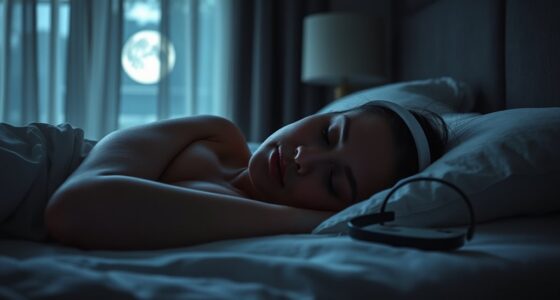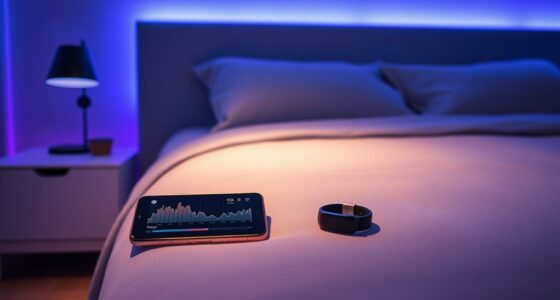

Your circadian rhythm is an internal 24-hour clock that controls your sleep-wake cycle, influenced by cues like sunlight and activity. To align your sleep with this rhythm, get natural light in the morning and limit light exposure before bed. Consistent routines for sleep and meals help your body stay synchronized. Managing light and schedule adjustments can ease disruptions like jet lag or shift work. Keep exploring to discover how you can better support your body’s natural timing.
Key Takeaways
- Circadian rhythms are internal biological clocks that regulate sleep-wake cycles over approximately 24 hours.
- Exposure to natural light in the morning helps advance your internal clock for earlier sleep times.
- Managing light exposure—bright light during the day and darkness at night—supports proper circadian alignment.
- Consistent sleep and meal schedules reinforce your body’s natural rhythms and improve sleep quality.
- Gradually adjusting your routines before travel or shift changes aids in syncing your sleep with your internal clock.

Have you ever wondered why you feel alert during the day and sleepy at night? It all comes down to your circadian rhythms, the natural internal clock that regulates your sleep-wake cycle over roughly 24 hours. This biological process influences when you feel energized and when you crave rest, aligning your body functions with the external environment. But it’s not always perfectly synchronized, especially when you travel across time zones or work irregular hours. Jet lag, for example, throws your internal clock off balance when you cross multiple time zones quickly, leaving you feeling groggy and disoriented. Your body is trying to catch up with the new schedule, but it takes time for your circadian rhythms to reset. Similarly, shift work can disrupt your sleep patterns, as your body struggles to adapt to hours that conflict with its natural tendencies. Night shifts, in particular, can cause significant misalignment, leading to fatigue, decreased alertness, and even health issues over time.
Understanding how your circadian rhythms work helps you grasp why these disruptions happen and how you might manage them. Your internal clock is influenced by factors like light exposure, meal times, and activity levels. Light, especially natural sunlight, is the primary cue that signals your brain to stay awake or prepare for sleep. When you’re exposed to bright light during the day, it reinforces your alertness; at night, darkness signals your body to produce melatonin, the hormone that promotes sleep. However, when you travel or work irregular hours, your exposure to light becomes inconsistent, throwing your internal clock out of sync. This is why adjusting your schedule to align with your environment can be so challenging. Additionally, light exposure plays a vital role in maintaining your circadian health, as it directly influences the timing of your sleep-wake cycle.
To better manage jet lag and shift work, you should aim to regulate your exposure to light and darkness. For instance, if you’re traveling east, try to get morning sunlight to advance your internal clock. Conversely, if you’re heading west, evening light can help delay it. For shift workers, using bright artificial light during your nocturnal hours can boost alertness, while minimizing light exposure before sleep helps your body prepare for rest. Maintaining consistent sleep and meal times, even on days off, also supports your circadian health. The goal is to create routines that reinforce your body’s natural rhythms, reducing the impact of external disruptions.

Circadian Optics Lumos 2.0 Light Therapy Desk Lamp | As Seen On Shark Tank | 10,000 LUX UV-Free Full-Spectrum LEDs | Adjustable Portable Folding Sunlight Lamp for Seasonal Blues, Focus, Energy & Sleep
Seen In The Tank | 10,000 LUX Brightness: Experience the sun lamp that impressed the Sharks! The lamp…
As an affiliate, we earn on qualifying purchases.
As an affiliate, we earn on qualifying purchases.
Frequently Asked Questions
Can Circadian Rhythms Be Permanently Shifted?
Yes, circadian rhythms can be permanently shifted through consistent changes in your schedule, but they’re influenced by your chronotype variability and genetic influences. If you regularly adjust your sleep and wake times, your body can adapt over time. However, some aspects, like your natural chronotype, may limit how much your rhythm shifts. To make lasting changes, stay consistent and give your body time to adjust gradually.
How Do Age and Gender Affect Circadian Rhythms?
You might notice that age-related shifts cause your sleep patterns to change over time, with teens tending to stay up later and older adults often waking earlier. Gender differences also influence circadian rhythms, as hormonal variations between men and women can affect sleep timing and quality. These factors mean your body clock adapts naturally as you age and may differ from others based on gender, impacting your sleep and daily schedule.
What Are Common Signs of Circadian Rhythm Disruption?
You might notice signs of circadian rhythm disruption when you feel jet lag, experience insomnia, or suffer from fatigue. Shift work can cause irregular sleep patterns, leading to difficulty concentrating and mood swings. If your body struggles to adapt to changing schedules, you may also have digestive issues or feel chronically tired. Recognizing these symptoms helps you take steps to reset your internal clock and improve your overall well-being.
Can Irregular Work Schedules Damage My Circadian Health?
Like a ship lost at sea, irregular work schedules can damage your circadian health. Shift work and sleep deprivation disrupt your body’s natural rhythm, making it harder to fall asleep and wake up refreshed. Over time, this misalignment increases risks of fatigue, mood swings, and health issues. To protect your circadian rhythm, try to maintain consistent sleep patterns, even with an irregular schedule, and prioritize rest whenever you can.
How Do Artificial Lights Influence My Body Clock?
Artificial lights, especially from screens and light pollution, can disrupt your body clock by suppressing melatonin production. When you expose yourself to screen light late at night, it confuses your circadian rhythm, making it harder to fall asleep and wake up refreshed. To protect your sleep, limit screen exposure before bed and reduce light pollution in your environment, helping your body maintain its natural sleep-wake cycle.

Carlyle Melatonin 40mg Complex | 150 Fast Dissolve Tablets | Extra Strength Support | with Ashwagandha and Chamomile | Vegetarian, Non-GMO, Gluten Free Supplement
MELATONIN COMPLEX: Features Melatonin, Beet Root, Chamomile Flower and Ashwagandha in one formula
As an affiliate, we earn on qualifying purchases.
As an affiliate, we earn on qualifying purchases.
Conclusion
By syncing with your circadian rhythms, you’ll feel more energized and in tune with your body’s natural flow. Remember, even in this digital age, ignoring your internal clock is like trying to sail without a compass. Embrace your body’s ancient wisdom now, and you’ll avoid the chaos of poor sleep and fatigue later. After all, your body’s clock has been ticking since the dawn of time—trust it, and it’ll guide you better than any new gadget.

livho High Tech Blue Light Glasses – Advanced Blue Light Blocking Computer Glasses – Screen Fatigue & UV Protection
Elevate your screen time comfort with these stylish women's/men's eyewear frame blue light blocking glasses, designed to reduce…
As an affiliate, we earn on qualifying purchases.
As an affiliate, we earn on qualifying purchases.

MZOO Luxury Sleep Eye Mask for Side Sleeper Men Women, Zero Eye Pressure 3D Sleeping Mask, Light Blocking Patented Design Night Blindfold, Soft Eye Shade Cover for Travel, Black
Zero Eye Pressure: The Deepest 13mm arc-shaped widened eye cups provide makeup-safe space and allow natural blinking
As an affiliate, we earn on qualifying purchases.
As an affiliate, we earn on qualifying purchases.