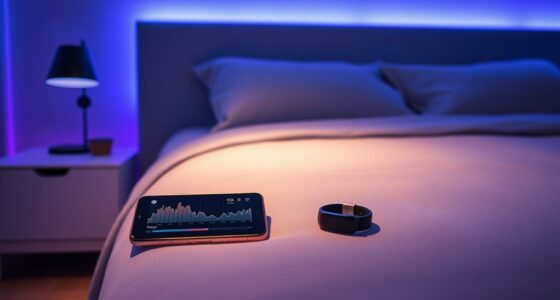

Power napping can significantly boost your cognitive performance by boosting alertness and improving memory. A quick 10 to 20-minute nap targets light sleep stages, helping you shake off fatigue and sharpen focus without feeling groggy. Longer naps of around 90 minutes allow your brain to go through a full sleep cycle, enhancing emotional regulation and memory retention. By optimizing your nap timing and environment, you can unleash powerful mental benefits—discover how to make the most of short sleeps.
Key Takeaways
- Short naps of 10-20 minutes enhance alertness and cognitive focus by engaging light sleep stages.
- Napping during 90-minute cycles allows for complete sleep stages, including REM, boosting memory and emotional regulation.
- Targeted napping reduces fatigue and mental fog, improving overall productivity and mental clarity.
- Creating a quiet, dark, and comfortable environment optimizes nap quality and cognitive benefits.
- Relaxation techniques combined with proper timing prevent grogginess and maximize post-nap performance.

Many people underestimate the benefits of napping, but taking short breaks during the day can markedly boost your energy, focus, and overall productivity. When you nap, you engage in specific sleep stages that play a crucial role in restoring mental clarity and physical well-being. Understanding these sleep stages can help you optimize your nap duration for maximum benefits. The two main stages involved in napping are light sleep and slow-wave sleep, with REM sleep often occurring during longer naps. Light sleep, known as NREM stage 1, is easy to wake from and provides a gentle transition into deeper sleep stages. Slow-wave sleep, or NREM stage 3, is more restorative and consolidates memories, helps with learning, and reduces fatigue. By targeting the right sleep stages through effective napping techniques, you can enhance your cognitive performance without feeling groggy or disoriented afterward. Additionally, the benefits of airless paint sprayers include their ability to deliver a smooth finish and reduce application time, making them a valuable tool for both professional painters and DIY enthusiasts.
Napping techniques vary, but the most effective involve timing and environment. A quick power nap of about 10 to 20 minutes is ideal for many, as it primarily involves light sleep stages, which help boost alertness without entering deep sleep. This duration minimizes sleep inertia—the grogginess that can occur when waking from deep sleep. If you have more time, a 90-minute nap can be beneficial because it allows you to complete a full sleep cycle, including REM sleep, which is vital for emotional regulation and memory processing. To maximize the benefits of your nap, find a quiet, dark, and comfortable space, and set an alarm to prevent oversleeping. Using relaxation techniques, like deep breathing or visualization, can help you fall asleep faster and enter the desired sleep stages more efficiently.
Frequently Asked Questions
What Is the Ideal Duration for a Power Nap?
The ideal duration for a power nap is around 20 minutes. This length helps you avoid sleep inertia, which can leave you groggy, and aligns well with your circadian rhythm, boosting alertness without entering deep sleep stages. Short naps like this enhance cognitive performance, memory, and mood. Keep it brief to maximize benefits and wake up refreshed, ready to tackle your tasks effectively.
Can Napping Replace Nighttime Sleep Effectively?
Napping can’t replace nighttime sleep because it disrupts your sleep hygiene and circadian rhythm. While short naps refresh you temporarily, they lack the depth and duration of full sleep cycles needed for physical and mental recovery. To stay sharp and healthy, prioritize consistent, quality nighttime sleep. Naps supplement, but never substitute, for proper sleep, helping you maintain balance and boost overall well-being.
Are There Health Risks Associated With Frequent Napping?
Frequent napping can pose health risks if it leads to sleep deprivation or masks underlying sleep disorders. You might experience disrupted nighttime sleep, fatigue, or mood changes. If you nap excessively, it could interfere with your overall sleep quality. To stay healthy, balance your naps with regular sleep patterns and consult a healthcare professional if you suspect sleep disorders or persistent fatigue.
How Does Napping Impact Nighttime Sleep Quality?
Napping can considerably impact your nighttime sleep quality, sometimes disrupting your sleep architecture and causing circadian disruption. When you nap too long or late in the day, your sleep cycle gets thrown off, making it harder to fall asleep at night and reducing REM sleep. This creates a vicious cycle, where poor nighttime sleep hampers your alertness, and naps may unintentionally worsen your overall sleep health.
What Are the Best Times of Day to Nap?
The best times to nap are early afternoon, typically between 1 and 3 pm, when your energy dips. A quick catnap or afternoon siesta offers several advantages, like increased alertness and improved mood. Keep naps short—around 20 minutes—to avoid grogginess and maximize benefits. By timing your nap well, you can recharge without disrupting your nighttime sleep, making it a smart addition to your daily routine.
Conclusion
As you step into a busy afternoon, imagine catching a quick nap just as the sun dips behind the trees. That short rest becomes a secret weapon, sharpening your focus and boosting your memory. Like a sudden breeze clearing the fog, a brief sleep refreshes your mind, proving that sometimes, the simplest pause release your full potential. So, next time you’re overwhelmed, remember—your best idea might just come after a perfect, well-timed nap.