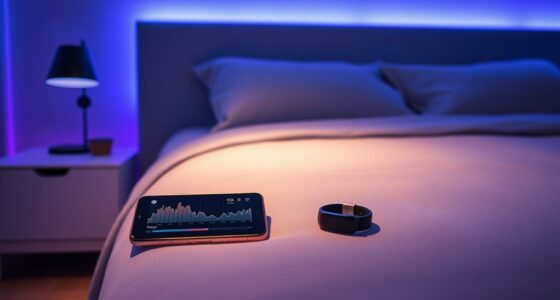

You might think that sleeping enough hours means you’re well-rested, but sleep quality makes a big difference. Even with sufficient time in bed, if your sleep is fragmented, noisy, or light, it won’t be restorative. Poor quality sleep leaves you tired and unfocused, despite the quantity. Addressing environment, stress, and sleep habits can improve how restful your sleep feels. Keep exploring to discover how understanding these differences can help you get better rest.

Get health and wellness essentials delivered free with Prime
- Fast, free delivery on millions of items
- Prime Video, Amazon Music and more included
- Member-only deals all year
Key Takeaways
- Sleep quantity measures total hours, while sleep quality assesses how restorative and uninterrupted those hours are.
- Poor sleep quality can occur despite adequate sleep duration, impacting restfulness and alertness.
- Disruptions like noise or uncomfortable environments fragment sleep, affecting its restorative stages.
- Vivid or disturbing dreams may signal underlying sleep cycle issues, separate from total sleep hours.
- Improving sleep quality often requires environmental changes and stress management, beyond just increasing sleep time.

Have you ever wondered whether getting more sleep is always better? It’s a common assumption that the longer you sleep, the healthier and more rested you’ll feel. But that’s not entirely true. Sleep quality and sleep quantity are two different problems—each requiring its own attention. Sleep quantity refers to how many hours you spend asleep, while sleep quality describes how restorative and continuous that sleep is. You might get the recommended hours but still wake up feeling exhausted, which points to poor sleep quality. Conversely, someone might sleep fewer hours but wake up refreshed because their sleep is deep and undisturbed.
Understanding the distinction becomes especially important when addressing sleep issues. For example, your sleep environment plays a key role in sleep quality. A noisy, bright, or uncomfortable room can fragment your sleep, causing frequent awakenings and reducing the amount of restorative REM and deep sleep stages. Even if you’re in bed for the best number of hours, an unsuitable sleep environment can sabotage your efforts to feel rested. To improve sleep quality, you might need to make changes such as blackout curtains, a comfortable mattress, or reducing ambient noise. These adjustments help create a sleep environment conducive to uninterrupted, high-quality sleep.
Dream analysis is another factor that ties into sleep quality. Your dreams occur during the REM stage, which is essential for emotional regulation and memory consolidation. If your dreams are vivid or disturbing, they could be a sign of disrupted sleep cycles or underlying stress. Analyzing your dreams might reveal patterns or triggers that, once addressed, improve overall sleep quality. For example, journaling your dreams can help identify recurring themes or anxieties. Tackling these issues can lead to more peaceful sleep, even if the total hours remain unchanged. Additionally, understanding your sleep cycles and how they impact sleep architecture can help you optimize your rest, as recognizing natural sleep patterns can guide better sleep timing and routines.
It’s also important to recognize that simply increasing sleep duration won’t automatically improve how rested you feel if your sleep quality remains poor. You might spend more time in bed but still experience restless nights, waking up multiple times or feeling like you never truly rested. Conversely, focusing on enhancing sleep quality—through stress management, maximizing your sleep environment, or employing relaxation techniques—can make your existing sleep hours more effective. When both quality and quantity are aligned, you’ll likely notice a significant boost in how energized and alert you feel during the day.
Additionally, understanding the role of sleep technology in monitoring and improving sleep patterns can help you identify issues that affect both quality and quantity. In the end, addressing sleep problems requires a nuanced approach. Don’t just aim for more hours; pay attention to how well you’re sleeping. Improving your sleep environment, exploring dream analysis, and fostering good sleep habits can make all the difference. Recognizing that sleep quality and quantity are different problems helps you target the real issues and achieve better, more restorative sleep.
As an affiliate, we earn on qualifying purchases.
Frequently Asked Questions
Can Poor Sleep Quality Cause Physical Health Issues?
Yes, poor sleep quality can cause physical health issues. When your sleep hygiene is inconsistent or disrupted, it affects your circadian rhythms, leading to problems like weakened immunity, weight gain, and increased risk of chronic diseases. Poor sleep prevents your body from fully repairing itself, making you more vulnerable to health problems. Prioritizing good sleep hygiene and maintaining regular sleep patterns can help protect your physical health.
How Does Sleep Quality Affect Mental Health Differently Than Quantity?
Think of sleep quality as your mental health’s compass—poor quality can lead to foggy thinking and heightened anxiety. When your sleep hygiene falters, you miss out on restorative REM sleep, impacting your mood and memory. Dream analysis reveals subconscious worries, helping you process emotions. Unlike quantity, quality directly influences your mental resilience, making it essential for emotional stability and overall well-being. Prioritize quality for a sharper, calmer mind.
Are There Specific Foods That Improve Sleep Quality?
You can improve your sleep quality by eating sleep-boosting foods like cherries, almonds, and warm milk. Nutrient-rich snacks such as Greek yogurt with honey or bananas also help promote better rest. These foods contain compounds like melatonin, magnesium, or tryptophan, which support sleep. Incorporate these into your diet, especially in the evening, to enhance your sleep quality naturally and wake up feeling more refreshed.
What Are the Signs of Poor Sleep Quality?
You might notice signs of poor sleep quality, like feeling tired even after a full night’s rest, struggling to stay awake during the day, or experiencing frequent awakenings. Poor sleep often results from bad sleep hygiene or restless habits, making it hard to achieve deep, restorative sleep. If you’re not waking up refreshed, it’s time to evaluate your restful habits and improve your sleep routine to boost overall sleep quality.
Can Sleep Quality Be Improved Without Increasing Sleep Duration?
Yes, you can improve sleep quality without increasing sleep duration. Focus on enhancing your sleep hygiene by maintaining a consistent sleep schedule, creating a cool, dark, and quiet environment, and avoiding screens before bed. Incorporate relaxation techniques like deep breathing, meditation, or gentle stretching to calm your mind and body. These practices help you fall asleep faster and enjoy more restorative sleep, even if your total sleep time remains unchanged.
As an affiliate, we earn on qualifying purchases.
Conclusion
Think of sleep like watering a garden. Quantity is the amount of water you pour, but quality is how well each drop nourishes your plants. You might spend enough time in bed, but if your sleep is disrupted, your garden still withers. Research shows that poor sleep quality can be just as damaging as short sleep duration. So, don’t just focus on clocking hours—strive for restorative sleep, ensuring your garden truly blooms each morning.
As an affiliate, we earn on qualifying purchases.
dream journal for sleep analysis
As an affiliate, we earn on qualifying purchases.
As an affiliate, we earn on qualifying purchases.
Halloween Picks
halloween
As an affiliate, we earn on qualifying purchases.