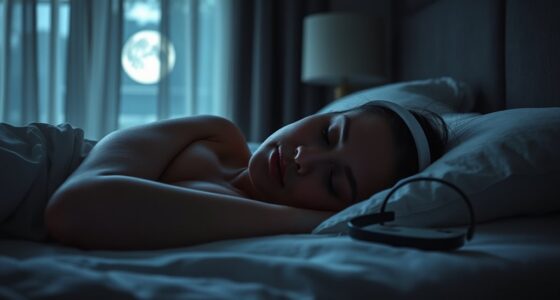
When you use wearables to track sleep, they collect data like movement, heart rate, and skin temperature to identify sleep stages and cycle patterns. While helpful for spotting trends and understanding your sleep habits, keep in mind they aren’t perfectly accurate and can misinterpret signals. Focus on long-term patterns rather than isolated numbers. If you want to learn how to get the most meaningful insights from your sleep data, keep exploring!
Key Takeaways
- Focus on long-term sleep trends rather than individual data points for more accurate interpretation.
- Understand that sleep stage classifications may be imprecise and influenced by movement or stillness.
- Use sleep cycle insights to identify patterns, disruptions, and potential areas for improving sleep quality.
- Combine wearable data with other health indicators to gain a comprehensive view of your well-being.
- Remember that consumer devices provide useful trends but are not substitutes for clinical sleep assessments.

Wearables have revolutionized how you monitor your sleep, making it easier to understand your nightly rest without relying on traditional methods. These devices track various metrics, offering insights into your sleep patterns through features like sleep cycle analysis. When you wear a fitness tracker or smartwatch to bed, it uses sensors to detect movements, heart rate, and sometimes even skin temperature. This data helps create a detailed picture of your sleep stages—light, deep, and REM sleep—so you can see how much time you spend in each phase. Sleep cycle analysis becomes a crucial tool here, giving you a clearer understanding of your overall sleep quality and whether you’re getting enough restorative rest.
However, device accuracy remains a key concern. While many wearables have improved markedly over the years, their ability to perfectly monitor your sleep isn’t foolproof. They rely heavily on accelerometers and heart rate sensors, which can sometimes misinterpret movement or physiological signals. For example, if you tend to move a lot during deep sleep or remain still during lighter stages, the device might misclassify your sleep stages. It’s important to remember that, although these devices provide valuable trends and insights, they might not always match clinical-grade sleep studies. Still, the consistency of data over time can help you identify patterns and make informed adjustments to your sleep habits. Additionally, understanding the limitations of consumer-grade sleep tracking technology can help manage expectations and focus on long-term trends rather than isolated data points.
Understanding your sleep data requires more than just looking at the numbers. Pay attention to how your sleep cycle analysis correlates with your daily well-being. If your device indicates frequent awakenings or prolonged periods of light sleep, you might notice daytime fatigue or difficulty concentrating. These insights can motivate you to improve your sleep hygiene by establishing a regular bedtime, reducing screen time before bed, or managing stress. Many wearable apps also offer personalized recommendations based on your sleep patterns, making it easier to implement changes that could enhance your rest.
As an affiliate, we earn on qualifying purchases.
Frequently Asked Questions
How Accurate Are Wearable Sleep Trackers Compared to Medical Devices?
Your wearable sleep tracker isn’t as accurate as medical devices, but it offers useful insights. Device calibration can affect data reliability, making some readings less precise. While wearables provide a good overview of your sleep patterns, they might miss subtle issues a medical device would detect. Trust them for trends, but consult a healthcare professional for detailed analysis or persistent sleep problems.
Can Wearables Detect Sleep Disorders Effectively?
Like a detective with a flashlight, wearables can spot signs of sleep disorders, but they have limitations. While they may indicate irregular sleep patterns or breathing issues, they can’t replace medical diagnosis. Sleep disorder detection with wearables is helpful for early signs, yet they aren’t always accurate enough to identify complex conditions like sleep apnea. For serious concerns, always consult a healthcare professional for proper testing and diagnosis.
How Does Ambient Temperature Affect Sleep Data?
Ambient temperature directly affects your sleep data by influencing your sleep quality. When it’s too hot or cold, your wearable might record frequent awakenings or lighter sleep stages, skewing results. Maintaining a comfortable ambient temperature helps guarantee accurate sleep tracking, giving you reliable insights into your sleep patterns. To get the most precise data, keep your sleeping environment consistently cool and comfortable, optimizing both sleep quality and your wearable’s readings.
Do Wearables Track Naps or Only Overnight Sleep?
Your wearable tracks both overnight sleep and naps or daytime sleep, including nap duration. It detects periods of rest during the day, so you can see how much time you spend napping. Keep in mind, accuracy may vary depending on the device, but most modern wearables are designed to monitor all sleep sessions. This way, you get a complete picture of your sleep patterns, day and night.
What Privacy Concerns Exist With Sleep Tracking Data?
You should be aware that sleep tracking data raises privacy concerns related to data security and user consent. Your personal sleep information could be vulnerable if companies don’t implement strong data security measures. Always review the app’s privacy policy and make sure you give informed user consent before sharing your data. Be cautious about how your sleep patterns are stored, used, or shared to protect your privacy.
best sleep cycle monitor smartwatch
As an affiliate, we earn on qualifying purchases.
As an affiliate, we earn on qualifying purchases.
Conclusion
So, next time your wearable proudly proclaims you slept like a baby, remember it’s probably just a fancy toy. While these gadgets can offer insights, they can’t replace genuine rest or tell you why you’re exhausted. Maybe it’s time to stop obsessing over every data point and just enjoy your nights without a digital referee. After all, isn’t the best sleep the one you don’t need a device to validate? Sleep tight—offline.
As an affiliate, we earn on qualifying purchases.
As an affiliate, we earn on qualifying purchases.