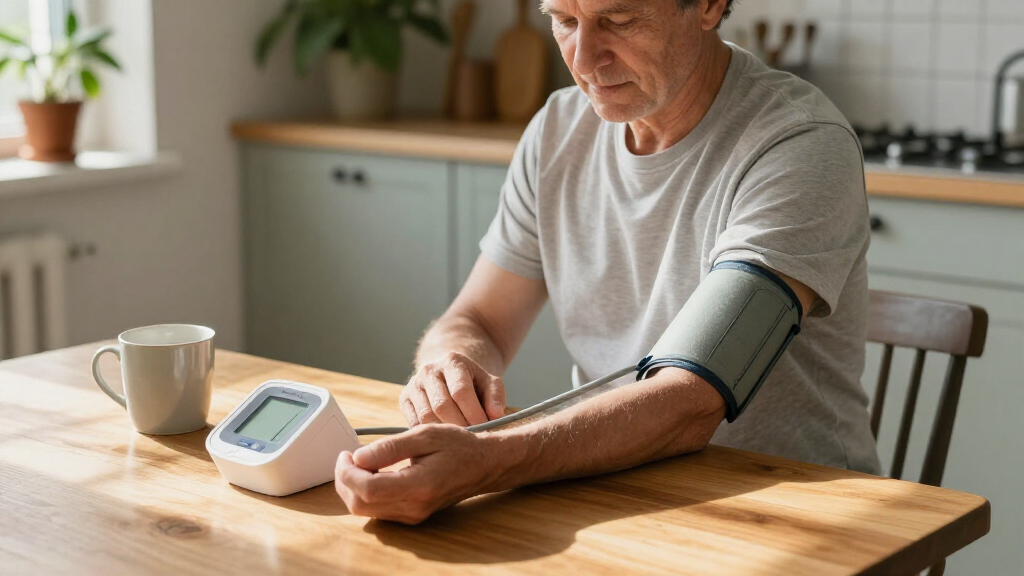

Home blood pressure monitors have become the standard way to track cardiovascular health between doctor visits, but the gap between an accurate, reliable unit and a frustrating one comes down to validation, cuff design, and how easily you can read and store your readings. In this comparison, the OMRON Platinum earns the top spot for its high-contrast display, multi-user memory, and app connectivity for long-term trend tracking, while the OMRON Bronze stands out as the smart pick for anyone who wants validated accuracy without paying for features they won’t use. On the value end, the Automatic Upper Arm Monitor with Two Cuffs and the Sinocare Upper Arm Monitor prove that budget models can cover the basics well, though they typically trade away app syncing and multi-user memory. The main tension in this category is arm-versus-wrist convenience versus accuracy, along with whether extra features like rechargeable batteries and wide-range cuffs justify the price. Read on for the full breakdown of all 15 models and which one matches your needs.

Get health and wellness essentials delivered free with Prime
- Fast, free delivery on millions of items
- Prime Video, Amazon Music and more included
- Member-only deals all year
Key Takeaways
- Omron‘s validated upper-arm models (Platinum, Silver, Bronze, Iron) separated themselves from unbranded competitors mainly through clinically validated accuracy claims and consistent cuff inflation behavior — the single biggest differentiator in this lineup.
- Cuff range matters more than any screen feature: models with wide-range or two-cuff bundles fit far more arm sizes, while narrow-cuff budget units like the CAVN barrel-style monitor risk inaccurate readings for many users.
- Wrist monitors in this comparison (the Oklar Rechargeable) are genuinely more convenient but demand strict positioning discipline — wrist height relative to the heart causes reading errors that arm models largely avoid.
- Spending more in this category mostly buys memory depth, multi-user profiles, and app connectivity rather than better core measurement; the actual sensor quality plateaus around the mid-tier OMRON Silver.
- Several budget options share nearly identical hardware with different branding, so choice among them should come down to cuff fit, display size, and warranty rather than the name on the box.
| A&D Medical UA-767FAC Upper Arm Blood Pressure Monitor with AC Adapter |  | Best Overall for Multi-User Households | Model: UA-767FAC | Monitor type: Automatic digital upper arm monitor | Users: Up to 4 | VIEW LATEST PRICE | See Our Full Breakdown |
| Zdeer Automatic Upper Arm Blood Pressure Monitor with No-Wrap Cuff |  | Best No-Wrap Design for Solo Users | Cuff type: Barrel-style, no-wrap | Arm circumference: 8.5–15.7 inches | User profiles: 3 | VIEW LATEST PRICE | See Our Full Breakdown |
| Oklar Upper Arm Blood Pressure Monitor |  | Best Budget Pick for Two-User Homes | Measurement type: Upper arm blood pressure | Users supported: 2 | Reading storage: 120 readings per user (240 total) | VIEW LATEST PRICE | See Our Full Breakdown |
| CAVN Barrel-Style Upper Arm Blood Pressure Monitor |  | Best for Wide Arm Ranges and Rechargeable Convenience | Design: Barrel-style, no-wrap upper arm cuff | Arm circumference: 7.1–16.5 in | Display: Large LCD with three-color backlight | VIEW LATEST PRICE | See Our Full Breakdown |
| OMRON Silver Upper Arm Blood Pressure Monitor |  | Best for App-Based Tracking and Doctor Sharing | Type: Upper arm blood pressure monitor | Memory: Stores up to 30 readings on the monitor | Connectivity: Bluetooth | VIEW LATEST PRICE | See Our Full Breakdown |
| Oklar Rechargeable Wrist Blood Pressure Monitor |  | Best for Travel and Shared Use | Measurement time: About 35 seconds | Memory: Up to 240 readings for two users | Display: Large backlit LED | VIEW LATEST PRICE | See Our Full Breakdown |
| OMRON Iron Upper Arm Blood Pressure Monitor |  | Best for Accuracy-Focused Beginners | Brand: OMRON | Monitor type: Upper arm blood pressure monitor | Cuff fit: Arms 9–17 inches | VIEW LATEST PRICE | See Our Full Breakdown |
| OMRON Bronze Upper Arm Blood Pressure Monitor |  | Best App-Connected Value | Measurement type: Upper arm blood pressure | Cuff fit: 9–17 inches | On-device memory: Up to 14 readings | VIEW LATEST PRICE | See Our Full Breakdown |
| Automatic Upper Arm Blood Pressure Monitor with Two Cuffs |  | Best for Larger Arms and Two-User Households | Cuff sizes: L: 8.7–16.5 in; XL: 13–21 in | Memory: Up to 199 readings per user for 2 users | Voice broadcast: Reads blood pressure results aloud | VIEW LATEST PRICE | See Our Full Breakdown |
| iHealth Track Upper Arm Blood Pressure Monitor with Wide-Range Cuff |  | Best Display and Data Balance | Measurement location: Upper arm | Reading storage: Up to 99 readings on the monitor; unlimited in the smartphone app | Connectivity: Bluetooth 4.0 or later | VIEW LATEST PRICE | See Our Full Breakdown |
| OMRON Platinum Upper Arm Blood Pressure Monitor |  | Best for Heart Rhythm Screening | Measurement location: Upper arm | AFib screening: Automatic with each measurement | User profiles: 2 | VIEW LATEST PRICE | See Our Full Breakdown |
| Acenis Automatic Upper Arm Blood Pressure Monitor with Large Color Screen |  | Best Budget Display Pick | Monitor type: Automatic upper arm | Operation: Automatic, one-touch | Measurement time: About 40 seconds | VIEW LATEST PRICE | See Our Full Breakdown |
| Sinocare Upper Arm Blood Pressure Monitor for Home Use |  | Best Smart Features on a Budget | Display: 3.6 inches | Cuff size: 8.6–16.5 inches | Pressure accuracy: ±3 mmHg (±0.4 kPa) | VIEW LATEST PRICE | See Our Full Breakdown |
| FDA-Cleared Blood Pressure Monitor with One-Touch Operation and Wide Cuff |  | Best for No-Nonsense Reliability | Monitor type: Upper-arm blood pressure monitor | Operation: One-touch automatic | Display: Large digital display | VIEW LATEST PRICE | See Our Full Breakdown |
| Vive Automatic Upper Arm Blood Pressure Monitor |  | Best Simple Travel Companion | Monitor type: Digital automatic upper arm | Measurements: Blood pressure and heart rate | Operation: One-touch | VIEW LATEST PRICE | See Our Full Breakdown |
| home blood pressure monitor | Power | Memory |
|---|---|---|
| A&D Medical UA-767FAC Upper Ar | 4 AA batteries or included AC adapter | Up to 60 readings per user |
| Zdeer Automatic Upper Arm Bloo | USB cable or 4 AA batteries | 199 readings per user |
| Oklar Upper Arm Blood Pressure | 3 AA batteries or Type-C cable (not rechargeable) | — |
| CAVN Barrel-Style Upper Arm Bl | — | 99 readings for each of 2 users |
| OMRON Silver Upper Arm Blood P | 4 AA batteries (included) | Stores up to 30 readings on the monitor |
| Oklar Rechargeable Wrist Blood | Rechargeable battery; Type-C cable included | Up to 240 readings for two users |
| OMRON Iron Upper Arm Blood Pre | — | — |
| OMRON Bronze Upper Arm Blood P | — | — |
| Automatic Upper Arm Blood Pres | 4 AAA batteries (not included) or USB cable | Up to 199 readings per user for 2 users |
| iHealth Track Upper Arm Blood | 4 AAA batteries | — |
| OMRON Platinum Upper Arm Blood | AC adapter or 4 AA batteries | — |
| Acenis Automatic Upper Arm Blo | — | — |
| Sinocare Upper Arm Blood Press | 4 AAA batteries or USB-C | — |
| FDA-Cleared Blood Pressure Mon | Batteries or USB | Two users |
| Vive Automatic Upper Arm Blood | Included batteries | Up to 198 readings |
More Details on Our Top Picks
A&D Medical UA-767FAC Upper Arm Blood Pressure Monitor with AC Adapter
This model stands out for balancing four-user support with the kind of no-nonsense reliability a clinical-style brand like A&D Medical is known for. Compared with the OMRON Silver, which only stores 30 readings on the device, the UA-767FAC keeps 60 readings per user, which matters for tracking trends between doctor visits without needing a phone. The wide-range cuff (8.6–16.5 inches) covers most arms out of the box, and snapshot averaging smooths out single-reading spikes.
The tradeoff is connectivity: unlike the OMRON Silver’s Bluetooth sync, the Heart Track app requires manual logging of measurements, and a replacement cuff for different arm sizes is a separate purchase.
Pros:- Stores readings for up to four users with 60 readings each
- Wide-range cuff fits arms from 8.6 to 16.5 inches
- Includes AC adapter, batteries, and carrying case
- Snapshot averaging helps establish a reliable baseline
Cons:- Heart Track app measurements must be logged manually
- Compatible replacement cuffs are sold separately
Best for: Multi-user households (up to four people) who want reliable readings, generous on-device memory, and app sharing without depending on a smartphone
Not ideal for: Buyers who want automatic Bluetooth syncing, since measurements must be entered into the app by hand
- Model:UA-767FAC
- Monitor type:Automatic digital upper arm monitor
- Users:Up to 4
- Memory:Up to 60 readings per user
- Cuff size:8.6–16.5 in (22–42 cm)
- Power:4 AA batteries or included AC adapter
- App compatibility:A&D Heart Track (iOS 12.0+, Android 5.0+)
- Additional features:One-button operation; snapshot averaging
Our verdict“This is the pick for households where several people need consistent, well-stored readings without leaning on an app.”
Zdeer Automatic Upper Arm Blood Pressure Monitor with No-Wrap Cuff
The barrel-style no-wrap cuff is the whole story here: instead of threading and securing a velcro wrap, you slide your arm in and press one button, which makes it genuinely usable one-handed. That’s a real advantage over the Oklar Upper Arm model, which still requires wrapping a conventional cuff. With 199 readings per user across three profiles, it actually out-stores both the OMRON Silver and the Oklar, and FDA clearance adds a layer of confidence for home use.
The compromises are clear, though: the cuff tops out at 15.7 inches, so larger arms should look at the CAVN barrel-style monitor (up to 16.5 inches), and there’s no smartphone connectivity for trend sharing.
Pros:- No-wrap barrel cuff enables easy one-handed operation
- 199 readings of storage per user across three profiles
- Large display with simple one-touch operation
- Dual power via USB cable or AA batteries
Cons:- Cuff fit limited to arms 8.5–15.7 inches
- No smartphone connectivity or app support
Best for: People with arthritis, limited dexterity, or shoulder mobility issues who struggle with traditional wrap cuffs and want maximum on-device memory
Not ideal for: Larger-arm users above 15.7 inches, or anyone who wants to sync readings to an app or share reports with a doctor digitally
- Cuff type:Barrel-style, no-wrap
- Arm circumference:8.5–15.7 inches
- User profiles:3
- Memory:199 readings per user
- Power:USB cable or 4 AA batteries
- Features:One-touch operation; large display; irregular pulse reminder
- Clearance:FDA-cleared for home use
Our verdict“This makes the most sense for solo or small households who value effortless cuff handling over digital features.”
Oklar Upper Arm Blood Pressure Monitor
For straightforward, no-frills monitoring, this Oklar model covers the basics well: one-button operation, a backlit display readable in dim bedrooms, and separate storage for two users at 120 readings each — double the on-device capacity of the more app-focused OMRON Silver. Readings complete in about a minute, which is plenty for a twice-daily routine.
Compared with the A&D UA-767FAC, you give up two user profiles, the averaging feature, and the AC adapter; and unlike the CAVN barrel model, it’s not rechargeable — the Type-C port powers the unit but doesn’t charge a battery. The cuff range of 8.7–15.7 inches also excludes larger arms.
Pros:- Simple one-button operation with quick one-minute readings
- Backlit display with clear digits for low-light use
- Stores 120 readings for each of two users
- Flexible power from three AA batteries or Type-C cable
Cons:- Not rechargeable — Type-C provides power only
- Cuff won’t fit arms outside the 8.7–15.7 inch range
Best for: Couples or roommates on a budget who want a dependable basic monitor with solid memory and no app dependencies
Not ideal for: Anyone wanting rechargeable convenience or with arms outside the 8.7–15.7 inch cuff range
- Measurement type:Upper arm blood pressure
- Users supported:2
- Reading storage:120 readings per user (240 total)
- Power:3 AA batteries or Type-C cable (not rechargeable)
- Cuff range:8.7–15.7 inches (22–40 cm)
- Reading time:About 1 minute
Our verdict“A sensible low-cost choice for two people who just want accurate numbers and memory, not smart features.”
CAVN Barrel-Style Upper Arm Blood Pressure Monitor
Where the Zdeer barrel-style monitor caps out at 15.7 inches, this CAVN stretches its auto-fit barrel design to cover arms from 7.1 to 16.5 inches — one of the widest ranges in this roundup — so a single device can serve very different household members. The built-in 2000 mAh rechargeable battery with Type-C charging also eliminates the recurring battery cost that the Oklar and OMRON Silver models impose, and the three-color backlight gives an instant visual cue about where a reading falls.
The caveats: proper measurements require holding the device at heart level, which takes some discipline, and the listing provides no accuracy data or independent validation to verify against.
Pros:- Fits an exceptionally wide 7.1–16.5 inch arm range
- Rechargeable 2000 mAh battery with USB Type-C charging
- Three-color backlight offers instant reading feedback
- One-touch no-wrap design with two-user memory
Cons:- Requires careful arm positioning at heart level for accurate results
- No published accuracy figures or independent validation
Best for: Households with a wide mix of arm sizes — including larger arms up to 16.5 inches — who want a rechargeable, no-wrap design
Not ideal for: Anyone unwilling to position the device carefully at heart level, or who prioritizes independently validated accuracy data
- Design:Barrel-style, no-wrap upper arm cuff
- Arm circumference:7.1–16.5 in
- Display:Large LCD with three-color backlight
- Memory:99 readings for each of 2 users
- Battery:Built-in rechargeable 2000 mAh
- Charging:USB Type-C
- Regulatory status:FDA 510(k) cleared
Our verdict“Choose this when arm-size flexibility and rechargeable power matter more than app features and documented accuracy data.”
OMRON Silver Upper Arm Blood Pressure Monitor
This is the option for buyers whose priority is turning readings into shareable data: Bluetooth syncs to the OMRON Connect app, which integrates with Apple Health and Google Fit and generates reports you can hand to a cardiologist. It also adds irregular heartbeat detection and a hypertension indicator — safety features the budget Oklar and most no-wrap models skip. The ComFit cuff fits arms 9–17 inches, edging past the CAVN at the top end.
The weak spot is on-device memory: just 30 readings, far behind the Zdeer’s 199 or the A&D’s 60 per user. If you don’t sync regularly, history fills up fast, and the smart features demand a compatible smartphone.
Pros:- Bluetooth sync to OMRON Connect with Apple Health and Google Fit integration
- Detects irregular heartbeats and flags elevated readings
- ComFit cuff fits arms up to 17 inches
- Includes storage case and batteries
Cons:- Only 30 readings of on-device memory
- App features require a compatible smartphone
Best for: Tech-comfortable users managing hypertension with a doctor who wants trend reports and irregular-heartbeat flagging
Not ideal for: Anyone without a compatible smartphone, or who wants deep on-device storage without relying on the app
- Type:Upper arm blood pressure monitor
- Memory:Stores up to 30 readings on the monitor
- Connectivity:Bluetooth
- App compatibility:OMRON Connect; Apple Health; Google Fit
- Cuff size:Fits arms 9–17 inches
- Power:4 AA batteries (included)
- Health features:Irregular heartbeat detection; hypertension indicator
Our verdict“If your care plan depends on digital trend tracking and report sharing, this model earns its place despite its small memory.”
Oklar Rechargeable Wrist Blood Pressure Monitor
Most monitors in this roundup wrap around your upper arm, which is accurate but awkward away from home. This Oklar flips that tradeoff: a wrist cuff that slips into a bag, paired with a rechargeable battery so there are no AAA cells to replace mid-trip. Compared with the iHealth Track, which also runs on disposable batteries, the Type-C charging here is genuinely more convenient for frequent travelers. Memory is generous too — 240 readings across two users, well beyond the OMRON Bronze’s 14-reading on-device limit.
The catch is inherent to wrist designs: positioning matters more, so readings demand careful technique. The 4.92–8.46 inch cuff range also excludes larger wrists, and the charging adapter isn’t in the box. It’s a smart portable pick, not a clinical-grade workhorse.
Pros:- Rechargeable via included Type-C cable — no battery replacements
- 240-reading memory split across two users
- Voice broadcast with adjustable volume or mute
- Large backlit display readable in dim rooms
Cons:- Wrist measurement is more sensitive to positioning than upper arm cuffs
- Cuff only fits wrists 4.92–8.46 inches
- Charging adapter not included
Best for: Travelers and couples who want a compact, rechargeable monitor that two people can share on the road
Not ideal for: Anyone prioritizing maximum accuracy — upper arm models like the OMRON Iron are more forgiving of measurement technique
- Measurement time:About 35 seconds
- Memory:Up to 240 readings for two users
- Display:Large backlit LED
- Voice broadcast:Adjustable volume or off
- Power:Rechargeable battery; Type-C cable included
- Charging adapter:Not included
- Wrist cuff range:4.92–8.46 inches
Our verdict“Buy this if portability and shared two-user tracking matter more than lab-grade accuracy; skip it if you have larger wrists or need hands-off simplicity.”
OMRON Iron Upper Arm Blood Pressure Monitor
OMRON’s place in this category is built on reliability, and the Iron distills that into a one-touch, no-app, no-frills monitor. Where the OMRON Bronze adds Bluetooth and the iHealth Track leans on smartphone syncing, the Iron stays deliberately analog in workflow — press one button, get a reading, done. That simplicity is the point: fewer steps means fewer chances to compromise the measurement.
Its two smartest features are guardrails, not gadgets. Irregular heartbeat detection and body movement alerts flag readings that might be inaccurate, something budget models like the Acenis skip entirely. The 9–17 inch wide-range cuff covers most arms, though households needing plus-size fit beyond that should look at the two-cuff model from Product 9 instead. The absence of app connectivity is a real limitation for anyone who wants long-term trend charts.
Pros:- Detects irregular heartbeats during measurements
- Alerts when body movement may have skewed a reading
- Genuinely simple one-touch operation
- Wide-range D-ring cuff fits arms 9–17 inches
Cons:- No Bluetooth or app connectivity for trend tracking
- No specified on-device memory capacity
- Fewer included extras than similarly positioned rivals
Best for: Buyers — especially seniors or the tech-averse — who want a trusted-brand, one-button monitor with accuracy safeguards and zero app setup
Not ideal for: Data trackers who want to chart trends over months; the Bronze or iHealth Track handle that far better
- Brand:OMRON
- Monitor type:Upper arm blood pressure monitor
- Cuff fit:Arms 9–17 inches
- Detection features:Irregular heartbeat detection, body movement detection
- Operation:One-touch measurement
- Included:Monitor, wide-range D-ring cuff, instruction manual, quick start guide
Our verdict“This pick makes the most sense for anyone who values dependable readings and simplicity over smartphone features.”
OMRON Bronze Upper Arm Blood Pressure Monitor
The Bronze sits in a useful middle ground: OMRON’s Advanced Accuracy Technology at a lower rung of the lineup than the Platinum, but with the OMRON Connect app included. That Bluetooth link is what separates it from the OMRON Iron — readings sync automatically to your phone for unlimited storage and trend charts, with export options for sharing reports with a doctor. On-device memory is a paltry 14 readings, but that hardly matters if your phone is doing the record-keeping.
Everything ships ready to go: cuff, storage case, and four AA batteries. Irregular heartbeat and elevated-reading alerts add a safety layer many entry-level monitors omit. The tradeoff is dependence on a compatible smartphone — without one, you’re left with a capable but memory-starved device. Compared with the iHealth Track’s 99-reading onboard capacity, standalone users get noticeably less.
Pros:- Bluetooth syncing to OMRON Connect with unlimited app storage
- Detects irregular heartbeats and elevated readings
- Complete package includes cuff, case, and batteries
- Works with Apple Health and Google Fit
Cons:- Only 14 readings stored on the device itself
- App features require a compatible smartphone
- No voice broadcast for low-vision users
Best for: App-comfortable buyers who want brand-name accuracy plus long-term trend tracking and doctor-ready reports on a budget
Not ideal for: Anyone without a smartphone — the 14-reading on-device limit fills up in two weeks of twice-daily checks
- Measurement type:Upper arm blood pressure
- Cuff fit:9–17 inches
- On-device memory:Up to 14 readings
- Connectivity:Bluetooth
- App compatibility:OMRON Connect, Apple Health, Google Fit
- Detection features:Irregular heartbeat detection, elevated reading alerts
- Included accessories:Storage case, instruction manual, quick start guide, four AA batteries
Our verdict“The strongest choice for connected health tracking without stepping up to premium pricing, provided you’ll actually use the app.”
Automatic Upper Arm Blood Pressure Monitor with Two Cuffs
Cuff fit is where budget monitors quietly fail, and this model answers that directly with two cuffs in the box — a standard L size (8.7–16.5 in) and an XL reaching 21 inches. That upper range beats the OMRON Iron and Bronze, both capped at 17 inches, and makes it the clear choice for bigger arms in this batch. An ill-fitting cuff doesn’t just feel tight; it distorts readings, so the second cuff is an accuracy feature in disguise.
Memory is another strong suit: 199 readings per user across two profiles, dwarfing the Bronze’s 14 and the iHealth Track’s 99. The large color-coded screen and spoken results help low-vision users, and dual USB/battery power adds flexibility. Against all that, the missing AAA batteries feel petty but real — you’ll need to supply cells before first use.
Pros:- Two included cuffs fit arms from 8.7 up to 21 inches
- 199 readings per user across two profiles
- Voice broadcast reads results aloud
- Runs on AAA batteries or USB power
Cons:- AAA batteries not included in the box
- No Bluetooth or app syncing for long-term trend analysis
- Unbranded device with less established support network than OMRON or iHealth
Best for: Households with larger arms or two users who need deep on-device memory without relying on a smartphone app
Not ideal for: Buyers wanting a recognized brand name and app integration — this is a generic-brand device with no connectivity
- Cuff sizes:L: 8.7–16.5 in; XL: 13–21 in
- Memory:Up to 199 readings per user for 2 users
- Voice broadcast:Reads blood pressure results aloud
- Display:Large color-coded screen showing systolic, diastolic, pulse, date, and time
- Power:4 AAA batteries (not included) or USB cable
Our verdict“If cuff size or two-user memory is your deciding factor, this is the practical pick; brand-conscious buyers should weigh the tradeoff.”
iHealth Track Upper Arm Blood Pressure Monitor with Wide-Range Cuff
The iHealth Track earns its spot through polish where cheaper monitors cut corners. The large color-coded backlit display color-codes results so you can gauge a reading at a glance — friendlier for older users than the plain screens on entry-level units like the Zdeer or CAVN. Two-button operation keeps the interface uncluttered, and meeting ESH 2010 performance standards gives it independently-oriented validation credibility.
It splits the difference between the OMRON Iron and Bronze: like the Bronze it syncs via Bluetooth to iOS and Android apps with unlimited cloud storage, but it also holds 99 readings onboard — seven times the Bronze’s capacity — so it works standalone too. Rhythm-disturbance alerts add a clinical safety net. Tradeoffs: like the OMRON Bronze it needs a smartphone for syncing, the cuff tops out at 16.5 inches, and the manual rewards a careful read before first use to nail technique.
Pros:- 99 readings on the monitor plus unlimited storage in the app
- Large color-coded backlit display readable at a glance
- Alerts to detected heart rhythm disturbances
- Validated to ESH 2010 performance standards with 12-month warranty
Cons:- App syncing requires a compatible smartphone and Bluetooth
- Cuff maxes out at 16.5 inches
- Instructions require careful reading before first use for accurate results
Best for: Buyers who want strong on-device memory and app syncing together, with a display that’s easy on aging eyes
Not ideal for: Users with arms above 16.5 inches — the two-cuff model covers that range better
- Measurement location:Upper arm
- Reading storage:Up to 99 readings on the monitor; unlimited in the smartphone app
- Connectivity:Bluetooth 4.0 or later
- iOS compatibility:iOS 12.0 or later
- Android compatibility:Android 9.0 or later
- Cuff fit:Upper-arm circumference 8.7–16.5 in (22–42 cm)
- Power:4 AAA batteries
- Standards:Meets ESH 2010 performance standards
- Warranty:12 months
Our verdict“A balanced all-rounder for buyers who want validated readings, a readable display, and flexibility between standalone and app-based tracking.”
OMRON Platinum Upper Arm Blood Pressure Monitor
This option stands out as the only monitor in this batch that screens for possible atrial fibrillation with every reading, which matters if your doctor has flagged rhythm concerns or you have a family history of AFib. Compared with the Sinocare Upper Arm Monitor, it trades a slightly smaller on-device memory (100 readings per user versus 99, effectively a wash) for a far more developed app ecosystem — the OMRON Connect app lets you export trend reports you can hand to a cardiologist. The cuff spans 9–17 inches, one of the widest ranges here, and the bundled AC adapter, case, and batteries mean nothing extra to buy. The tradeoff: all that connectivity and AFib screening pushes it toward the premium end, and buyers who just want occasional spot checks will pay for features they never touch.
Pros:- Automatic atrial fibrillation screening with each measurement
- Two user profiles with 100 stored readings each
- Bluetooth app tracks trends and generates shareable reports
- Complete accessory bundle including AC adapter, case, and batteries
Cons:- Premium feature set costs more than simpler rivals like the Vive monitor
- App dependency adds setup friction for less tech-comfortable users
Best for: Adults monitoring for atrial fibrillation or anyone who wants doctor-shareable trend reports via an app
Not ideal for: Budget-focused buyers who only check blood pressure occasionally and don’t need AFib screening or Bluetooth
- Measurement location:Upper arm
- AFib screening:Automatic with each measurement
- User profiles:2
- On-device memory:Up to 100 readings per user
- Connectivity:Bluetooth; OMRON Connect app
- Cuff size:Fits arms 9–17 inches
- Power:AC adapter or 4 AA batteries
- Included:Cuff, adapter, storage case, batteries, manuals
Our verdict“This pick makes the most sense for buyers whose priority is rhythm screening and long-term trend tracking they can share with a doctor.”
Acenis Automatic Upper Arm Blood Pressure Monitor with Large Color Screen
If reading tiny monochrome digits is your main frustration with home monitors, this model’s large color screen is the whole reason it earns a spot. Readings arrive in about 40 seconds with one-touch operation, and the color display makes systolic and diastolic numbers easier to separate at a glance than the standard gray-on-gray screens found on the Vive Automatic Monitor. The adjustable cuff accommodates most adults comfortably. The honest tradeoff: Acenis provides no stated accuracy certification or measurement range, while the FDA-cleared monitor later in this roundup offers documented regulatory clearance. That gap matters if clinical reliability is your top concern. This model is better suited to casual, convenience-first monitoring than to medically serious tracking where every mmHg counts.
Pros:- Large color screen is easier to read than typical monochrome displays
- One-touch operation with results in about 40 seconds
- Adjustable cuff designed for comfortable fitting
- Straightforward design with almost no learning curve
Cons:- No accuracy certification or measurement range disclosed
- No user profiles or multi-user memory mentioned
Best for: Buyers who prioritize an easy-to-read color display and simple operation at a low price
Not ideal for: Anyone managing hypertension seriously who wants documented accuracy certification
- Monitor type:Automatic upper arm
- Operation:Automatic, one-touch
- Measurement time:About 40 seconds
- Display:Large color screen
- Cuff:Large adjustable upper arm cuff
Our verdict“Choose this for display readability and simplicity, not for verified clinical accuracy.”
Sinocare Upper Arm Blood Pressure Monitor for Home Use
Sinocare manages to pack posture detection, irregular heartbeat alerts, and color-coded readings into a package that undercuts the OMRON Platinum while covering many of the same safety bases. The 3.6-inch display is generous for this price tier, and the 8.6–16.5 inch cuff range actually starts slightly smaller than OMRON’s, fitting slimmer arms better. Published accuracy specs of ±3 mmHg also give it an edge over the Acenis monitor, which discloses none. Dual power via AAA batteries or USB-C adds placement flexibility the Vive can’t match. The compromises are real, though: the USB-C cable isn’t included, there’s no app connectivity, and you lose OMRON’s AFib screening and report-sharing workflow — the irregular heartbeat alert flags issues but doesn’t log them anywhere exportable.
Pros:- Posture detection and irregular heartbeat alerts encourage more accurate readings
- Two user profiles with up to 99 stored readings each
- Published accuracy ratings of ±3 mmHg for pressure
- Flexible power via AAA batteries or USB-C
Cons:- USB-C cable not included in the box
- No app connectivity or exportable reports
Best for: Couples who want dual-user tracking, posture prompts, and accuracy specs without paying premium prices
Not ideal for: Buyers who want app-based trend tracking and doctor-shareable digital reports
- Display:3.6 inches
- Cuff size:8.6–16.5 inches
- Pressure accuracy:±3 mmHg (±0.4 kPa)
- Pulse accuracy:Within ±5%
- User profiles:2 (99 readings each)
- Power:4 AAA batteries or USB-C
- Extras:Posture detection, irregular heartbeat alerts, color-coded indicators
Our verdict“This model delivers the best feature-to-price balance for two-user households that track trends on-device.”
FDA-Cleared Blood Pressure Monitor with One-Touch Operation and Wide Cuff
For buyers who care most about verified regulatory clearance, this monitor’s FDA-cleared status is a meaningful differentiator in a category crowded with uncertified options like the Acenis and Vive models. Operation is exactly as simple as it should be: one touch, automatic inflation, and systolic, diastolic, and pulse readings on a large display. The 8.7–16.5 inch cuff range covers most adults, and two-user memory plus auto shutoff round out a sensible feature set. What you give up is everything modern: there’s no smartphone app, no Bluetooth, and no trend export, so compared with the Sinocare you also lose extras like posture detection and color-coded feedback. This is a tool for taking trustworthy readings and writing them down yourself — nothing more, and for many buyers, that’s precisely the point.
Pros:- FDA-cleared status provides documented regulatory assurance
- One-touch automatic measurement with quick results
- Wide 8.7–16.5 inch cuff range fits most adults
- Two-user memory and automatic shutoff for convenience
Cons:- No smartphone tracking or app support
- Cuff won’t fit arms outside the stated range
- Battery or USB power details are vague compared with rivals
Best for: Buyers who want FDA-cleared accuracy and basic two-user tracking with zero tech complexity
Not ideal for: Data-focused users who want app syncing, trend charts, or shareable reports
- Monitor type:Upper-arm blood pressure monitor
- Operation:One-touch automatic
- Display:Large digital display
- Cuff fit:8.7–16.5 inches
- Memory:Two users
- Power:Batteries or USB
- Regulatory status:FDA-cleared
Our verdict“If documented clearance and dead-simple operation matter more than smart features, this is the safe choice.”
Vive Automatic Upper Arm Blood Pressure Monitor
Vive wins on simplicity and portability: one-touch operation, batteries in the box, a compact body, and a 60-day guarantee that lowers the risk of a first-time purchase. With 198 stored readings, its memory pool is the largest single-user capacity in this batch — though note it doesn’t split into two profiles like the Sinocare or the FDA-cleared monitor, so sharing the device muddles your history. The 8.66–16.53 inch cuff covers the same practical range as most rivals here. Compared with the OMRON Platinum, you obviously lose AFib screening and app reports, but you also skip the setup friction entirely. The genuine weaknesses are the unspecified display size and the lack of any alternative power source — if the included batteries die, there’s no USB fallback like Sinocare offers.
Pros:- Stores up to 198 readings for trend tracking
- Compact and lightweight for home or travel use
- Batteries included with a 60-day guarantee
- Wide-range cuff fits arms from 8.66 to 16.53 inches
Cons:- No separate user profiles despite large shared memory
- No USB power option or specified display size
Best for: Solo users and travelers who want a lightweight, no-setup monitor with generous memory
Not ideal for: Two-person households needing separate profiles, or anyone wanting USB power or app tracking
- Monitor type:Digital automatic upper arm
- Measurements:Blood pressure and heart rate
- Operation:One-touch
- Memory:Up to 198 readings
- Cuff size:8.66–16.53 inches
- Power:Included batteries
- Guarantee:60-day Vive guarantee
Our verdict“A low-risk, grab-and-go pick for one person who values portability and simplicity over smart features.”
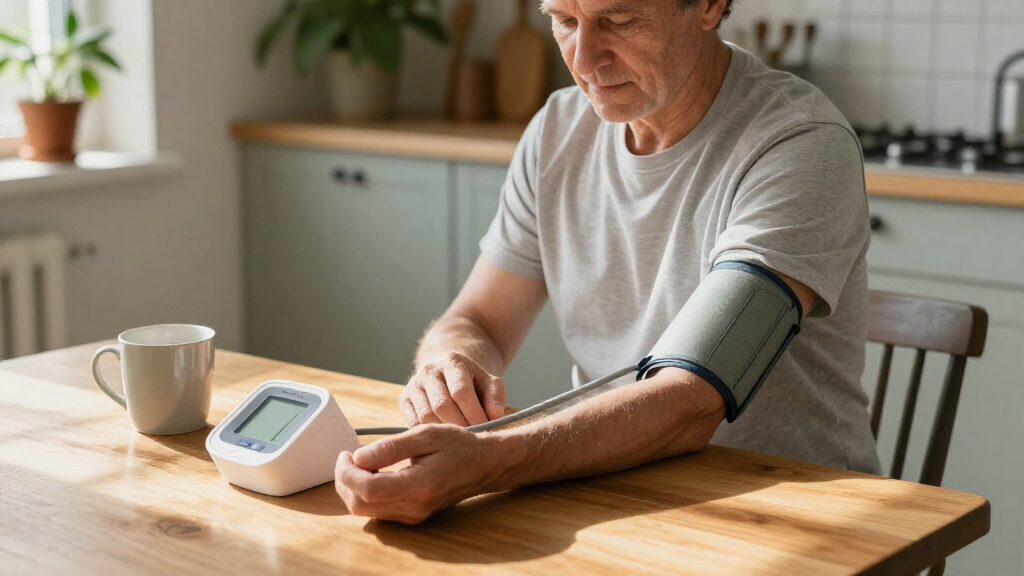
How We Picked
I evaluated these 15 home blood pressure monitors against the factors that actually change a reading’s usefulness: validation and accuracy claims, cuff size range, display readability, memory capacity, and day-to-day usability. Because a monitor that gives inconsistent numbers is worse than no monitor at all, clinically validated models — a claim Omron makes prominently and most budget brands gloss over — were weighted heavily. Cuff range was the next filter, since a cuff that doesn’t fit the user’s arm produces systematically wrong readings regardless of the sensor quality inside.
From there, I ranked on practical ownership factors: how many readings and users the memory supports, whether data can sync to an app or only be viewed on the device, power options (batteries, AC adapter, or rechargeable), and overall build feel. Value was judged relative to what each model omits — a cheap unit with a full-size display and a wide cuff can outperform a pricier one that skimps on fit. That logic explains the ordering: validated accuracy first, then fit flexibility, then convenience features, with pure price appeal anchoring the budget end of the list.
Factors to Consider When Choosing Home Blood Pressure Monitors
Before settling on a specific model, it helps to understand what actually drives accuracy and long-term satisfaction with home blood pressure monitors. These are the factors I weighed most heavily, along with the mistakes buyers commonly make with each one.Validation and Accuracy Standards
The most important spec on the box is also the one budget brands tend to bury: whether the device is clinically validated to recognized standards such as those used for FDA clearance. Validation means the monitor’s readings were compared against a mercury manometer or intra-arterial reference across a range of patients and arm sizes. Without it, you’re trusting marketing rather than measurement science, and small calibration drifts can go unnoticed for years. A common mistake is assuming any FDA-listed monitor is equally accurate — clearance is a floor, not a guarantee of equivalence. If your readings will inform medication decisions, this factor should outweigh every convenience feature combined. Bring your monitor to a medical appointment at least once and compare its reading against the clinician’s equipment to confirm it agrees within a few points.
Cuff Size and Arm Fit
More inaccurate home readings come from poorly fitting cuffs than from faulty sensors. A cuff that’s too small overestimates blood pressure; one that’s too large underestimates it — and errors of 10 mmHg or more are common. Measure your upper arm circumference with a soft tape before buying, and match it against the cuff’s stated range, not the product’s generic “one size” claim. Buyers with larger arms should prioritize wide-range cuffs (typically 8.7–16.5 inches) or two-cuff bundles, and anyone whose arm is outside standard ranges should consider a validated wrist model rather than forcing a bad fit. Also check whether the cuff wraps with a pre-formed ring (easier for one-handed use) or requires manual threading, which matters if you monitor alone.
Upper Arm Versus Wrist Design
Wrist monitors tempt buyers with portability and no sleeve removal, but they trade accuracy for convenience unless used carefully. The wrist must sit at heart level during measurement, and even a few inches of mispositioning skews results. Upper-arm monitors anchor the cuff at the right spot mechanically, which is why virtually every clinical guideline and every validated device in this roundup sits at the upper arm. Wrist models make sense for specific situations: very large upper arms where standard cuffs fail, arrhythmia patients advised against arm compression, or travel-heavy lifestyles where a compact device gets used more often. For everyone else, the arm model’s consistency wins. If you do choose wrist, take two readings and average them, and cross-check against an arm monitor occasionally.
Memory, Users, and Data Tracking
Monitoring blood pressure is about trends, not single readings, so storage capacity has real medical value. A 60-reading single-user memory is fine for one person doing occasional checks; two users sharing a household should demand at least 100 readings per profile with clearly separated storage, or your doctor sees a blended dataset that means nothing. App connectivity adds another layer — syncing readings to your phone creates shareable reports and eliminates transcription errors, which is why it justifies the premium on models like the OMRON Platinum for anyone managing hypertension long term. The mistake to avoid is over-buying: if you’ll write readings in a logbook anyway, paying extra for Bluetooth is wasted. Conversely, if you know you’ll never keep a paper log, app sync isn’t a luxury — it’s the difference between data you use and data you lose.
Display Readability and Ease of Use
A monitor lives or dies by whether you can actually read the result — and the buyer this affects most is often the older adult doing the monitoring. Look for large digits (ideally close to an inch tall), high contrast, and backlighting for dim rooms. Beware of color screens that look great in product photos but wash out in daylight or split information across multiple screens you must scroll through. One-touch operation reduces error: models that start measurement with a single button remove steps where users fumble settings or select the wrong profile. Irregular-heartbeat detection and averaging modes (like automatic three-reading averages) add genuine value because they flag measurement contexts doctors want to know about. Test the button layout logically before buying — if you can’t figure out the memory recall without the manual, an older relative won’t either.
Power, Accessories, and Long-Term Costs
Power sourcing sounds trivial until a monitor dies mid-measurement or you’re buying AAA batteries every month. Models that include an AC adapter (like the A&D Medical UA-767FAC) or offer rechargeable batteries (the Oklar wrist model) reduce ownership friction considerably, especially for users who check their pressure daily. Check what’s actually in the box: some budget monitors advertise a low price but ship with cheap generic batteries and no adapter, narrowing the value gap with better-equipped brands. Also look at the cuff’s replacement availability and cost — cuffs wear out, crack, and lose elasticity after a few years of daily use, and a monitor whose proprietary cuff is hard to source becomes e-waste. Finally, a longer warranty signals the manufacturer’s confidence in sensor longevity, which matters for a device you may keep for five to ten years.
Frequently Asked Questions
How do I know if a home blood pressure monitor is giving accurate readings?
The most reliable method is a clinical cross-check: bring your monitor to a medical appointment, sit for five minutes, and take a reading on your device immediately before or after the clinician measures with professional equipment. If the two readings differ by less than about 5 mmHg systolic, your unit is performing well. At home, watch for consistency signals — readings that swing 20–30 points when nothing has changed suggest a cuff fit problem or a positioning error rather than true blood pressure variation. Models with clinically validated accuracy claims, which Omron states clearly across its lineup, tend to hold calibration better than unbranded alternatives. If your monitor ever shows a consistent drift compared with clinical readings, contact the manufacturer, since many validated brands offer recalibration or replacement.
Are wrist blood pressure monitors accurate enough to rely on?
Wrist monitors can be accurate, but they are far more sensitive to technique than upper-arm models. The wrist must be positioned at heart level — resting on a table or pillow at chest height — and held still throughout the measurement; even a few inches too low can inflate readings meaningfully. In this comparison, the Oklar Rechargeable wrist monitor makes sense for people whose arm size rules out standard cuffs, those with conditions where arm compression is uncomfortable, or frequent travelers who value portability. For everyone else, an upper-arm monitor like the OMRON Bronze removes the positioning variable mechanically and delivers more repeatable results. If you do use a wrist model, take two or three readings a minute apart and average them, and periodically verify against an arm cuff to catch technique errors.
Is it worth paying more for an app-connected monitor?
It depends entirely on whether you’ll use the data. App connectivity earns its price when you’re managing hypertension long term and sharing trends with a physician — a synced history of months of readings produces better clinical conversations than scattered single numbers, and it eliminates transcription mistakes from paper logs. The OMRON Platinum justifies its premium this way for data-driven users. On the other hand, if you check occasionally and jot numbers in a notebook, a basic validated model like the OMRON Bronze or the Sinocare unit measures blood pressure just as accurately, because the sensor itself doesn’t improve with Bluetooth. One middle path: some mid-tier models store multi-user memory on-device, which covers basic trend tracking without any app at all. Pay for connectivity only if you’ll realistically open the app.
What cuff size do I need, and what happens if it’s wrong?
Measure your upper arm at its midpoint with a soft tape measure, relaxed, and compare that number to the cuff’s stated range before buying anything. Standard adult cuffs typically cover roughly 9–13 inches, while wide-range cuffs extend to 16.5 inches or beyond; the two-cuff bundle and the iHealth Track in this lineup exist precisely because so many buyers fall outside standard ranges. A cuff that’s too tight or too small can overestimate blood pressure by 10 mmHg or more — enough to push a normal reading into “elevated” territory and potentially trigger unnecessary medication changes. A loose or oversized cuff underestimates instead, which can hide genuine hypertension. The cuff should fit snugly with room for about one finger underneath, and it should be positioned on bare skin at heart level, not over clothing.
Can two people share one home blood pressure monitor?
Yes, but only if the model supports separate user profiles — otherwise shared readings contaminate each person’s trend data. Monitors with dual-user memory, like several of the Omron models in this comparison, store readings in independent slots so each partner’s history stays clean for doctor visits. Without that feature, one of you ends up keeping a manual log to sort out whose reading is whose, which defeats the purpose of built-in memory. Also check total capacity: 60 readings per user fills fast with daily monitoring, while 100-plus per profile gives you months of history. Before a shared purchase, confirm the cuff fits both users’ arms — a couple with very different arm sizes is exactly who the two-cuff and wide-range options are designed for. When in doubt, the slightly higher cost of a dual-profile validated model is cheaper than a second device.
Conclusion
After comparing all 15 models, the right choice comes down to who’s doing the monitoring and why. For best overall, the OMRON Platinum combines validated accuracy, generous dual-user memory, and app-based trend tracking in one package — the model I’d point most buyers toward if budget allows. For best value, the OMRON Bronze delivers the same core validated measurement as its pricier siblings while cutting features many users never touch, with the Sinocare Upper Arm Monitor as the even leaner budget alternative. For best premium features without the flagship price, the OMRON Iron and the iHealth Track with its wide-range cuff sit in a sweet spot for users who want bigger displays and flexible fit. For beginners and simplicity seekers, the one-touch FDA-Cleared Monitor with Wide Cuff and the Vive Automatic keep the process to a single button press. For specific needs: the Oklar Rechargeable Wrist Monitor for travel or oversized arms, the Two-Cuff bundle for multi-size households, the A&D Medical UA-767FAC for plug-in reliability with its AC adapter, and the Acenis with its large color screen for anyone who needs maximum display readability. Whichever direction you take, prioritize validated accuracy and correct cuff fit first — everything else is convenience layered on a foundation you can’t compromise on.
Halloween Picks
halloween
As an affiliate, we earn on qualifying purchases.